

7 Ways to Improve Cold Brew Coffee Flavor
Table of Contents
- Start With the Best Coffee Beans for Cold Brew
- Nail Your Cold Brew Coffee Ratio
- Get the Grind Size Right for Better Cold Brew Flavor
- How Long to Steep Cold Brew for Peak Taste
- Improve Water Quality and Filtration
- Master Straining and Filtration Techniques
- Troubleshoot Off-Flavors: Sour, Bitter, or Weak Cold Brew
- Flavor Additives, Infusions, and Sweeteners
- Frequently Asked Questions
Last Updated: October 2, 2026
Start With the Best Coffee Beans for Cold Brew
The single biggest lever on cold brew flavor is the bean itself.
This guide from Mocha Me Crazy covers 7 ways to improve cold brew coffee flavor this week, ranked by how much they actually move the needle.
Cold brew coffee is an immersion brewing method that steeps coarse coffee grounds in cold water for an extended period, producing a smooth, low-acid concentrate.
Freshness is the part most guides gloss over.
Why Freshness and Roast Profile Matter
Medium and medium-dark roasts work best for cold brew. They carry enough caramelized sugar to survive a long steep without turning hollow.
The best coffee beans for cold brew share three traits: a roast date you can read, a coarse grind, and a flavor profile you actually enjoy hot.
Mocha Me Crazy roasts every order on demand, so the bag that lands at your door was roasted days, not months, before.
Nail Your Cold Brew Coffee Ratio
The cold brew coffee ratio decides whether you get a syrupy concentrate or a weak glass of brown water. Use 1:5 by weight for concentrate and 1:15 for ready-to-drink. Weigh your coffee; scoops vary too much to trust.
Here's the breakdown:
| Style | Coffee : Water (by weight) | Best For |
|---|---|---|
| Concentrate | 1:5 | Diluting with milk or water |
| Strong ready-to-drink | 1:10 | Iced coffee, no dilution |
| Mild ready-to-drink | 1:15 | Sipping straight |
Concentrate vs. Ready-to-Drink Ratios
A concentrate gives you flexibility: pour it over ice, cut it with milk, or add water to taste. Ready-to-drink ratios save a step but lock in the strength. For most home setups, brewing concentrate and diluting per glass is the smarter play.
A common mistake is measuring coffee by volume. A "scoop" of coarse grounds can swing wildly depending on grind and settling. A $15 kitchen scale removes the guesswork entirely.
Get the Grind Size Right for Better Cold Brew Flavor
Grind size controls extraction rate, and cold brew needs a coarse grind. Think sea salt, not table salt. Too fine and you get mud and bitterness; too coarse and you get weak, sour coffee.
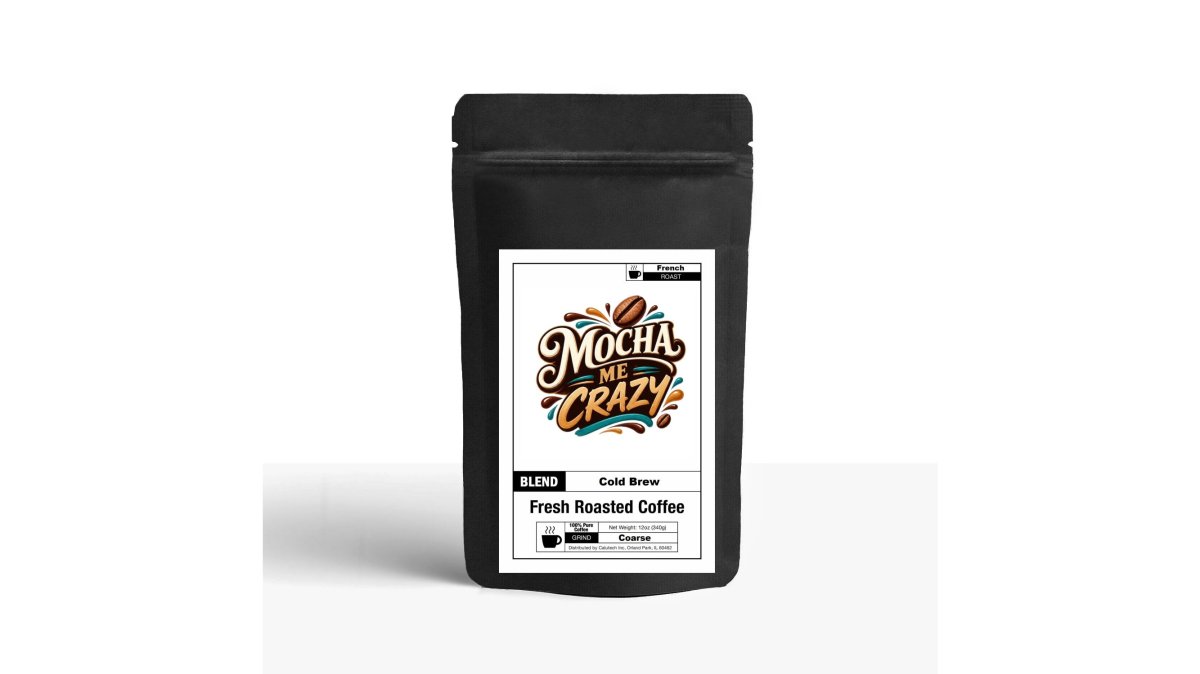
If your grinder only does fine espresso, buy pre-ground coarse coffee instead. Mocha Me Crazy's Cold Brew Coffee is a dark French roast blended specifically for cold brew, and the grounds are very coarse out of the bag. No grinder required.

How Long to Steep Cold Brew for Peak Taste
Steep cold brew for 12 to 18 hours at room temperature, or 18 to 24 hours in the fridge. Shorter steeps taste brighter and more acidic; longer steeps taste rounder but risk bitterness and a woody edge.
The exact window depends on your grind and ratio. Start at 16 hours, taste it, and adjust. Keep notes, because small changes compound fast.
Temperature-Controlled Steeping for Cleaner Flavor
Temperature is the variable most home brewers ignore. Room-temperature steeping extracts faster and can pull harsh compounds if your kitchen runs warm. Refrigerator steeping slows extraction and produces a cleaner, sweeter cup.
If you want repeatable results, pick one temperature and stick with it. A fridge set at a steady 38-40°F removes the seasonal swing that makes summer batches taste different from winter ones.
Improve Water Quality and Filtration
Water makes up more than 98% of your finished cup, so the minerals dissolved in it do more flavor work than most brewers realize.
Here's the mechanism. Magnesium and calcium ions bind to flavor compounds in coffee and carry them into solution. Too little mineral content and the water can't pull those compounds, so the cup tastes flat and hollow even with a perfect grind and ratio.
What Each Water Variable Actually Does
| Variable | Target Range | What Happens Outside It |
|---|---|---|
| Total dissolved solids | 75-125 ppm | Below: flat, lifeless cup. Above: muddy, muted flavors |
| Hardness (as CaCO₃) | 50-175 ppm | Low: under-extraction. High: scale, chalky bitterness |
| pH | 6.5-7.5 | Acidic water reads sour; alkaline water reads dull |
| Chlorine / chloramine | 0 ppm | Reacts with aromatics, produces a medicinal, pool-like note |
Practical Fixes, Ranked by Effort
Carbon filter pitcher or faucet mount. Removes chlorine and some chloramine, plus a slice of sediment.
Bottled spring water. Look for a brand that publishes its mineral analysis, many spring waters land naturally in the 50-150 ppm range.
Third-wave water packets or drops. Products built for coffee add a controlled blend of magnesium, calcium, and bicarbonate to distilled or RO water.
This is the cheapest upgrade on the list and often the most noticeable, but only if you diagnose first. A $10 carbon pitcher solves chlorine; it does nothing for hardness. Match the fix to the actual problem in your water.
Master Straining and Filtration Techniques
Straining separates good cold brew from gritty cold brew. A paper filter gives the cleanest cup with the best flavor clarity. Cheesecloth and mesh strainers are faster but let sediment through.
A two-stage approach works best: strain through a mesh sieve first to catch the bulk of the grounds, then run it through a paper filter for polish. Yes, it takes longer.
Troubleshoot Off-Flavors: Sour, Bitter, or Weak Cold Brew
When troubleshooting, off-flavors almost always trace back to extraction, not the bean, one of the 7 ways to improve cold brew coffee flavor. Sour or weak cold brew means under-extraction: grind finer, steep longer, or add more coffee.
| Problem | Likely Cause | Fix |
|---|---|---|
| Sour, thin | Under-extraction | Finer grind, longer steep |
| Bitter, harsh | Over-extraction | Coarser grind, shorter steep |
| Weak, watery | Ratio too low | Add coffee, not time |
| Muddy, gritty | Grind too fine | Coarsen grind, double-filter |
Work through one variable at a time. Changing grind, time, and ratio all at once makes it impossible to know what fixed it.
Flavor Additives, Infusions, and Sweeteners
Add flavor after brewing, not during. Infusing during the steep muddies the extraction, the added ingredients compete with coffee grounds for the water's solvent capacity and make results unpredictable batch to batch. Once your concentrate is strained, you have a clean, consistent base to build on.
Sweeteners: Why Simple Syrup Wins
Granulated sugar barely dissolves in cold liquid. It sinks, clumps, and leaves grit at the bottom of the glass. Simple syrup, equal parts sugar and water by volume, heated until the sugar dissolves, then cooled, mixes instantly into cold concentrate.
| Sweetener | Ratio to Concentrate | Notes |
|---|---|---|
| Simple syrup (1:1) | 1-2 tsp per 8 oz serving | Neutral; lets coffee flavor lead |
| Rich syrup (2:1 sugar:water) | 1 tsp per 8 oz serving | Sweeter per volume, less dilution |
| Honey | 1 tsp per 8 oz, stirred vigorously | Adds floral notes; clumps in cold liquid |
| Maple syrup | 1-2 tsp per 8 oz serving | Pairs well with medium and dark roasts |
| Flavored syrups | 1-2 pumps (about ¼-½ oz) per 8 oz | Vanilla, caramel, hazelnut; widely available |
Sweeten to taste after dilution, not before. A concentrate sweetened at full strength will taste cloying once you cut it with milk or water.
Infusions: Timing and Temperature
Infusing the finished concentrate is where home brewers can match what cafés charge extra for. The key variables are time, temperature, and surface area.
- Vanilla. Split one bean lengthwise, scrape the seeds into the concentrate, and drop in the pod. Steep 12-24 hours in the fridge, then strain. One bean flavors roughly 2 cups of concentrate.
- Cinnamon. Use 1-2 cracked sticks per 2 cups of concentrate. Steep 4-8 hours; longer pulls a woody, astringent note. Ground cinnamon clouds the brew, use sticks.
- Citrus. Two wide strips of peel (no pith) per 2 cups, steeped 2-4 hours. Pith adds bitterness, so trim it off.
- Cocoa nibs. 2 tablespoons per 2 cups, steeped 12 hours, then double-filtered. Adds a dry, unsweetened chocolate depth.
- Fresh herbs. Mint or basil, 4-6 leaves per cup, steeped 1-2 hours. Longer turns grassy.
Steep infusions in the refrigerator, not at room temperature. Warm infusion pulls bitter compounds from spices and peel far faster than you want, and the window between 'flavored' and 'over-steeped' is narrow.
Layering Without Overpowering
The best flavored cold brew tastes like coffee first and flavor second. A useful rule: if you can't identify the base coffee underneath the addition, you've used too much. Start with half the amount you think you need, taste, and add in small increments.
For a shortcut with real depth, try Mocha Me Crazy's second Cold Brew Coffee blend, with smooth chocolate, toffee, and floral tones. It's built for cold brew or nitro and needs no doctoring.

Store concentrate in the fridge in a sealed jar. It holds its flavor for about a week, though freshness fades after the first few days.
Frequently Asked Questions
How to make cold brew more flavorful?
Start with freshly roasted, coarse-ground beans and a 1:8 coffee-to-water ratio for concentrate. Steep for 16-18 hours at room temperature or 24 hours in the fridge. Use filtered water, and try a medium or medium-dark roast like Mocha Me Crazy's Cold Brew Coffee blend. After straining, dilute with water, milk, or simple syrup to taste.
What is the ideal coffee-to-water ratio for cold brew?
For a concentrate you'll dilute later, use a 1:4 to 1:8 ratio by weight (coffee to water). A common starting point is 1 cup coarse grounds to 4 cups filtered water. If you prefer ready-to-drink cold brew, go with 1:15. Mocha Me Crazy's Cold Brew Coffee is blended specifically for cold brew, so it works well at a 1:5 ratio for a rich concentrate you can cut with water or milk.
How long should I steep cold brew for the best taste?
Steep for 12 to 18 hours at room temperature, or 18 to 24 hours in the refrigerator. Shorter steeps (12-14 hours) give a brighter, more acidic cup, while longer steeps (18-24 hours) pull out deeper chocolate and caramel notes. If your cold brew tastes sour, steep longer; if it's bitter, shorten the time or use a coarser grind. Temperature-controlled steeping in the fridge slows extraction and reduces bitterness.
Why does my homemade cold brew taste sour or bitter?
Sour cold brew usually means under-extraction: the grind is too coarse, the steep was too short, or the water was too cold. Bitter cold brew points to over-extraction: too fine a grind, steeping past 24 hours, or water that's too warm. Adjust one variable at a time. Also check your water; heavily chlorinated tap water can add off-flavors. Using filtered water and a consistent coarse grind fixes most sour or bitter batches.
Does the roast level of coffee beans affect cold brew flavor?
Yes. Dark roasts like Mocha Me Crazy's Cold Brew Coffee (dark French roast) deliver bold, chocolatey, low-acid cold brew. Medium roasts such as Brazil Santos or Colombia bring balanced cocoa and citrus notes. Light roasts can taste thin or sour in cold brew because cold water extracts less from them. For the best cold brew flavor, choose a medium to dark roast blended or single-origin bean.
Seven small changes, one much better glass. The tricky part is sourcing beans fresh enough to make any of it count, and that's where most home setups fall short. Mocha Me Crazy roasts every order on demand, ships fast, and offers carefully sourced single origins and blends built for cold brew, so your starting point is already ahead. Order a bag of Cold Brew Coffee and taste what fresh, coarse-ground beans do for your next batch.