

How to Identify High Quality Matcha Tea
Table of Contents
- Why High Quality Matcha Tea Looks, Smells, and Tastes Different
- Ceremonial vs Culinary Grade Matcha: What the Labels Actually Mean
- Shade-Growing, First Flush, and Why Origin Matters
- Reading the Packaging: Oxidation, Testing, and Sourcing Transparency
- Price-Per-Gram Analysis: What High Quality Matcha Actually Costs
- Is Matcha Tea Good for Weight Loss?
- How to Store Matcha Powder for Freshness
- Conclusion
Last Updated: August 20, 2026
Why High Quality Matcha Tea Looks, Smells, and Tastes Different
High quality matcha is immediately distinguishable from lower-grade powder before you add water. The differences in color, scent, and texture reflect the entire growing, harvesting, and processing chain, they are not cosmetic details. At Mocha Me Crazy, we source our matcha specifically for these markers.

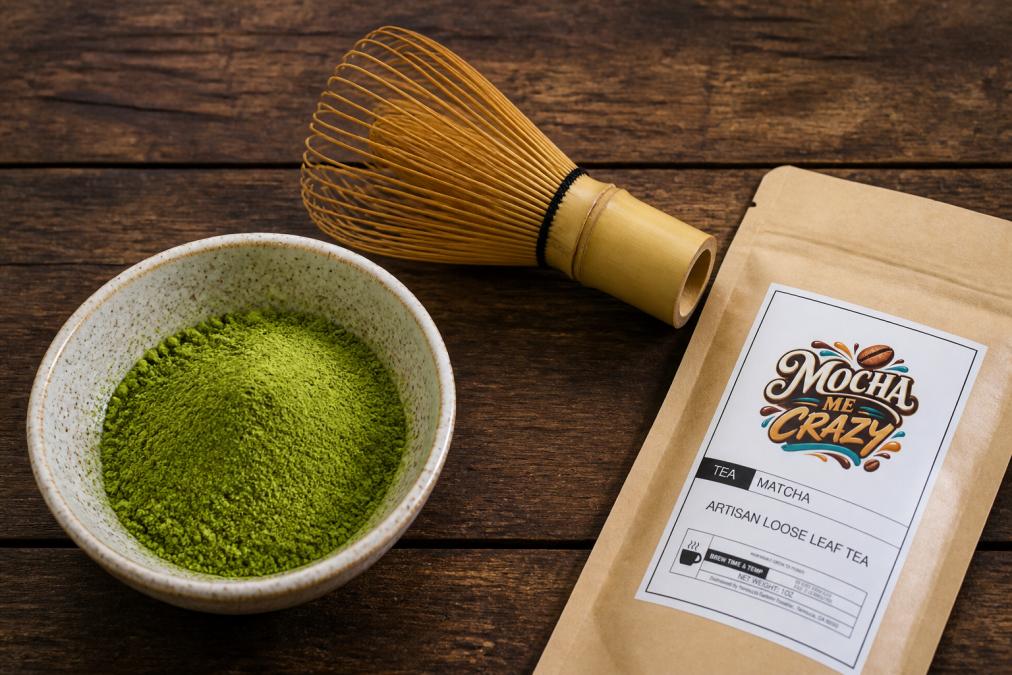
Color: Vibrant Green vs. Dull Yellow
Genuine high quality matcha should be a deep, vivid green, not olive, khaki, or yellow-green. This shade comes directly from chlorophyll, which accumulates when tea leaves are shade-grown for three to four weeks before harvest. That shading forces the plant to produce more chlorophyll and amino acids as it reaches for limited light.
Dull, yellowish, or brownish matcha signals improper shade-growing, late-season harvest, or oxidation after processing. Any of these means a flat, bitter, astringent cup rather than sweet and vegetal. Hold a small amount under natural light. If it glows, you are on the right track. If it looks like dried lawn clippings, put it back.
Aroma: What Fresh Matcha Actually Smells Like
Fresh, high quality matcha has a grassy, almost oceanic scent with subtle sweetness underneath, similar to fresh-cut grass or steamed edamame. That aroma comes from L-theanine and other amino acids concentrated during shade-growing.
Stale or low-grade matcha smells flat, dusty, or like hay. Some batches smell faintly of fish, signaling poor processing or storage. Open the bag and take a slow breath. A vibrant, clean scent means the powder is fresh. Anything muted or off-putting is a pass.
Texture and Particle Size
Genuine ceremonial-grade matcha is stone-ground to an exceptionally fine powder, typically around 5 to 10 microns per particle. This fineness allows it to dissolve smoothly and produce a stable, creamy froth when whisked.
Rub a pinch between your fingers. High quality matcha should feel like silk with no grittiness. Culinary-grade matcha feels slightly rougher, which is acceptable for baking and lattes but produces grainier texture in traditional bowl preparation. If the powder clumps easily and feels coarse, the particle size is too large for quality preparation.
Ceremonial vs Culinary Grade Matcha: What the Labels Actually Mean
The ceremonial vs. culinary grade distinction is real, but labeling is completely unregulated.
In practice, meaningful differences come down to leaf selection, harvest timing, and grinding method:
| Feature | Ceremonial Grade | Culinary Grade |
|---|---|---|
| Leaf source | Youngest leaves, first flush | Older leaves, later harvest |
| Color | Vivid, deep green | Olive to yellow-green |
| Flavor | Sweet, umami-forward, low bitterness | Stronger, more bitter |
| Texture | Ultra-fine, silky | Coarser grind |
| Best use | Traditional bowl preparation, plain with water | Lattes, smoothies, baking |
| Price per gram | Higher | Lower |
Ceremonial grade uses tencha from the youngest, most tender growth at the top of the plant, stone-ground slowly to preserve amino acid content. The result is naturally sweet, umami-forward flavor that needs nothing added.
Culinary grade uses older leaves with higher catechin concentration and more bitterness. That bitterness works well in lattes or cake batter but tastes harsh in plain traditional preparation.
Bottom line: for standalone bowl matcha, ceremonial grade is correct. For cooking, culinary grade performs just as well at lower cost.
Shade-Growing, First Flush, and Why Origin Matters
When tea farmers cover plants for three to four weeks before harvest, the leaves overproduce chlorophyll and L-theanine in response to reduced sunlight. L-theanine is the amino acid responsible for matcha's smooth, sustained energy. It moderates caffeine's stimulating effect, which is why matcha drinkers often report alertness without jitteriness.
Origin matters because shade-growing practices, soil quality, and processing standards vary enormously by region. Uji in Japan has centuries of documented matcha production and tightly controlled practices. Look for a specific prefecture or farm name on the label, not just a country of origin. Vague sourcing is a red flag.
According to the World Tea Academy's guidance on tea quality and origin, transparency in sourcing is one of the most reliable proxies for quality in specialty tea.
How Harvest Timing Affects Flavor and Nutrition
First flush matcha, harvested in early spring, represents peak growing season. Plants have spent winter storing nutrients, and first new growth concentrates the highest levels of L-theanine, chlorophyll, and amino acids. The flavor is sweeter and more complex.
Second flush and later harvests produce leaves with higher catechin and caffeine but lower L-theanine. Flavor shifts toward bitterness. A reputable producer will list the harvest date or season on packaging. If no harvest date appears, treat that as a quality signal.
Reading the Packaging: Oxidation, Testing, and Sourcing Transparency
Packaging tells you almost as much as the powder itself. Well-made matcha will have specific information: harvest date, origin, grade, and storage instructions. Vague labels with marketing language and no specifics are warning signs.
Oxidation Indicators to Check Before You Buy
Oxidation is matcha's primary enemy and happens faster than most expect. Matcha begins oxidizing the moment it is ground, and exposure to light, heat, air, and moisture accelerates the process. Oxidized matcha turns dull yellow-brown, loses aroma, and develops flat, stale bitterness.
Check for these oxidation indicators before purchasing:
- Color has shifted toward olive, yellow, or brown
- Aroma is flat, dusty, or absent
- Powder has clumped despite never being opened
- No harvest date or production date on packaging
- Packaging is clear or translucent rather than opaque and airtight
Properly packaged matcha comes in an opaque, airtight tin or bag with nitrogen flush or oxygen absorber. Resealable pouches with one-way valves are acceptable. Clear packaging is a dealbreaker.
Pesticide Testing Standards and What to Look For
Matcha is a concentrated product: you consume the entire ground leaf, not just a brewed extract. Any pesticide residue on the leaf ends up in your cup at higher concentration than in steeped tea.
The FDA's import monitoring program for tea screens imported teas for pesticide residues, but routine screening does not catch every batch. Look for third-party lab testing documentation from the producer. Reputable brands publish Certificates of Analysis showing pesticide residue levels, heavy metals, and microbial counts. If a brand cannot produce this documentation on request, that is a significant quality concern.
Certified organic labeling provides a baseline, but independent third-party lab testing is stronger. USDA organic certification covers pesticide use during growing but does not verify post-harvest contamination or processing conditions.
Price-Per-Gram Analysis: What High Quality Matcha Actually Costs
Price is not a perfect quality indicator, but the economics of genuine ceremonial grade matcha set a real floor. Stone-grinding is slow, shade-growing requires additional labor and infrastructure, and first flush harvests are limited by season.
Divide the total price by the number of grams in the package. Many buyers get drawn to large, inexpensive bags without doing this math. A 100-gram bag at low per-gram price often signals culinary grade or older leaf material, regardless of labeling. Ceremonial grade matcha priced very low should prompt scrutiny.
Mocha Me Crazy's matcha is priced at $23.99 per package, crafted for traditional preparation and mindful daily rituals. That positions it clearly in the premium tier, where genuine ceremonial grade product belongs.
According to specialty tea sourcing guidance from the Specialty Food Association, premium artisan teas command higher prices because of verifiable differences in sourcing, processing, and freshness.
Whisking Performance as a Quality Metric
High quality matcha, properly stone-ground to fine particle size, will froth quickly and produce a stable foam layer when whisked in a zigzag motion with a bamboo whisk. The froth should be fine-bubbled and hold for at least 30 to 60 seconds.
Low quality or coarsely ground matcha produces large, unstable bubbles that collapse immediately. The powder may settle visibly at the bottom rather than staying suspended. This test works because froth stability relates directly to particle fineness and amino acid content.
Is Matcha Tea Good for Weight Loss?
Matcha tea may support weight management as part of a balanced diet, but it is not a standalone weight loss solution. The relevant compounds are L-theanine, caffeine, and catechins, particularly epigallocatechin gallate, which research has examined for potential metabolic support.
Because matcha is a whole-leaf powder rather than a steeped extract, the concentration of these compounds is meaningfully higher than in conventional green tea. The combination of caffeine and L-theanine supports sustained energy and focus, which many find helpful for maintaining consistent exercise habits.
Matcha is a genuinely nutritious beverage with real compounds that support overall health. Expecting significant weight loss on its own is unrealistic. Expecting it to be useful in a health-conscious daily routine is entirely reasonable.
For anyone replacing high-calorie, high-sugar morning beverages, switching to quality matcha is a straightforward upgrade. The key word is quality. Matcha loaded with sugar or milk additives loses most nutritional advantage.
As noted in the National Institutes of Health's review of green tea catechins and metabolism, evidence for catechins supporting metabolic function is promising but should be interpreted within the context of overall diet and lifestyle.
How to Store Matcha Powder for Freshness
Proper storage is where good matcha goes wrong. Even high quality product degrades quickly under wrong conditions. The enemies are light, heat, air, and moisture.
Follow these storage guidelines:
- Store in an airtight container, ideally the original tin or opaque resealable bag
- Keep refrigerated after opening, particularly in warm climates
- Allow the container to reach room temperature before opening to prevent condensation
- Use within four to six weeks of opening for peak flavor and color
- Never store near strong-smelling foods, as matcha absorbs odors readily
- Keep away from direct sunlight even in storage
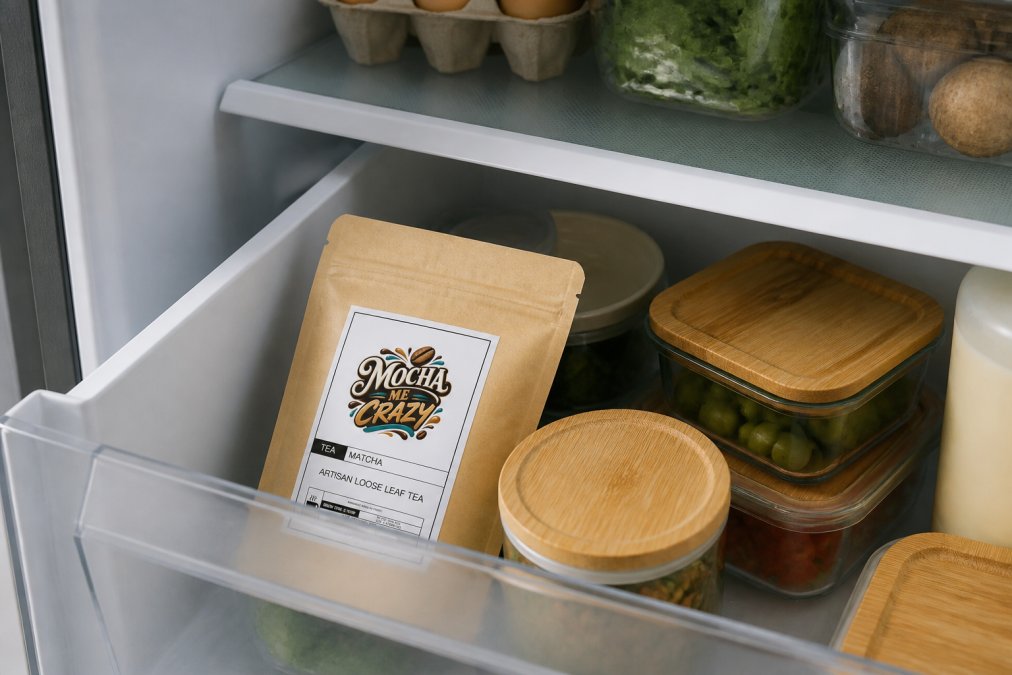
An unopened, properly packaged matcha stays fresh for 12 months from production date. Once opened, the clock accelerates. Buying smaller quantities more frequently is better than buying in bulk and watching quality degrade.
| Quality Indicator | High Quality Matcha | Low Quality Matcha |
|---|---|---|
| Color | Vivid, deep green | Dull yellow or olive |
| Aroma | Fresh, grassy, slightly sweet | Flat, dusty, or absent |
| Texture | Silky, ultra-fine | Gritty or coarse |
| Froth | Fine, stable bubbles | Large, collapses quickly |
| Harvest info | Date or season listed | No date on packaging |
| Testing | Third-party lab docs available | No documentation |
| Sourcing | Specific farm or prefecture | Vague country of origin |
Learning to identify high quality matcha takes a few minutes of practice and pays off every morning. The color, aroma, texture, sourcing transparency, and whisking performance all tell a coherent story about what is in the bag. Mocha Me Crazy's matcha is crafted specifically for traditional preparation and mindful daily rituals, carefully sourced and ready to deliver the kind of cup that makes the process worth it. Get started with Mocha Me Crazy and experience the difference that genuine freshness and thoughtful sourcing make from the very first bowl.
Frequently Asked Questions
How do you know if matcha is high quality?
High quality matcha shows a vivid, vibrant green color with no yellow or brown tones, which signals high chlorophyll content from proper shade-growing. The powder should feel silky fine between your fingers, smell grassy and slightly sweet, and dissolve smoothly when whisked. Dull color, a harsh bitter taste, or a gritty texture are all signs the matcha is low grade, oxidized, or made from older tea leaves harvested later in the season.
What is the difference between ceremonial and culinary grade matcha?
Ceremonial grade matcha comes from the youngest, first-flush tea leaves and is stone-ground into an ultra-fine powder intended for drinking straight with water. It has a smooth, umami-forward flavor with minimal bitterness. Culinary grade uses older leaves harvested later, producing a stronger, more astringent taste that holds up well when mixed into lattes, baked goods, or smoothies. For daily drinking rituals, ceremonial grade is the better choice.
Does the color of matcha indicate quality?
Yes, color is one of the most reliable quality indicators. Shade-grown tencha leaves produce high levels of chlorophyll and amino acids, which give premium matcha its signature vibrant green hue. A yellow or brownish tint typically means the leaves were exposed to more sunlight, harvested later in the season, or have started oxidizing after improper storage. Always compare the powder against natural light before buying when possible.
How should I store matcha powder to keep it fresh?
Store matcha in an airtight container away from light, heat, and moisture. Once opened, keep it in the refrigerator and use it within four to eight weeks for the best flavor and color. Avoid leaving the container out on a counter near a stove or window. Oxygen and humidity accelerate oxidation, which turns the powder dull and bitter. Buying smaller quantities more frequently is a practical way to ensure you always have fresh matcha on hand.
This article was written using GrandRanker