

How to Store Artisan Tea at Home
Table of Contents
- Why Proper Storage Matters for Artisan Tea
- The Four Enemies of Tea: Heat, Light, Moisture, and Air
- Best Containers for Loose Leaf Tea
- Ideal Temperature and Humidity for Tea Storage
- How Long Does Loose Leaf Tea Last
- Storing Matcha vs. Loose Leaf Tea
- Signs Your Tea Has Gone Bad and Common Storage Mistakes
- Storage Solutions for Travel and Long-Term Preservation
- Frequently Asked Questions
Last Updated: September 1, 2026
Why Proper Storage Matters for Artisan Tea
Premium loose leaf tea and matcha represent an investment in flavor, aroma, and freshness. Once you bring them home, improper storage degrades those qualities within weeks. At Mocha Me Crazy, we understand that sourcing exceptional artisan tea is only half the battle. How you store it determines whether you experience the full complexity the tea master intended or a flat, stale approximation.
Tea leaves absorb moisture, degrade when exposed to light and heat, and lose their volatile oils, the compounds responsible for flavor and aroma, over time. Proper storage preserves the tea's oxidation state, maintains its aromatic profile, and extends shelf life by months. This guide covers the science and practice of storing artisan tea at home, whether you're storing Japanese matcha, Chinese oolong, or Indian black tea blends like our Masala Chai.

The Four Enemies of Tea: Heat, Light, Moisture, and Air
Every factor that degrades tea falls into one of four categories.
Heat accelerates oxidation and evaporates volatile oils. Tea stored above 75°F begins losing quality noticeably within days (peer-reviewed research). Pantries and cool closets are far better than warm kitchen cabinets or shelves near stoves.
Light, especially UV rays, breaks down chlorophyll and flavor compounds. This is why premium loose leaf tea comes in opaque packaging. Clear glass jars expose tea to constant light damage, causing degradation over weeks.
Moisture is perhaps the most destructive enemy. Tea leaves absorb water from humid air, triggering mold growth and accelerating oxidation. Humid bathrooms or kitchens near sinks are terrible storage locations. Moisture also causes loose leaf tea to clump and matcha to cake.
Air contains oxygen, which oxidizes tea leaves over time. This post-purchase oxidation stales the tea, dulling its flavor and aroma. Exposure to air also allows tea to absorb odors from its environment.
These four factors work together. A warm, humid, brightly lit kitchen cabinet creates the perfect storm for tea degradation. Remove all four from the equation, and your artisan tea stays fresh far longer.
Best Containers for Loose Leaf Tea
The right container is the foundation of good tea storage. Your goal is an airtight vessel that blocks light and doesn't absorb odors.
Glass vs. Metal vs. Ceramic
Glass containers are popular but problematic for long-term storage. Clear glass offers no UV protection; tea inside degrades quickly. Frosted or opaque glass is better, but even these allow some light penetration. Glass is chemically inert and won't absorb flavors, but use it only for tea you plan to consume within 1-2 weeks.
Metal containers, especially stainless steel or tin, are excellent for artisan tea. They block all light, don't absorb odors, and provide superior insulation against temperature fluctuations. Stainless steel is ideal. The downside: you can't see the tea inside, so label containers clearly with the tea type and purchase date.
Ceramic containers offer a middle ground. Quality glazed ceramic doesn't absorb odors, blocks light, and looks attractive. Unglazed ceramic is porous and will absorb moisture and odors, avoid it. Glazed ceramic works well for short-term storage but doesn't insulate as effectively as metal.
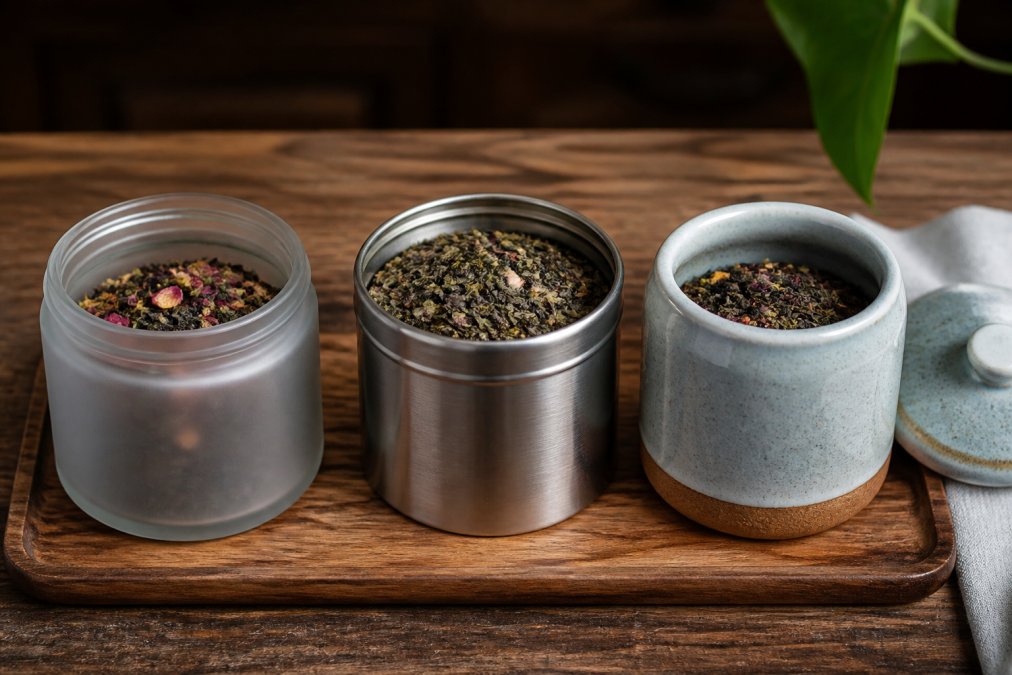
For serious tea collectors, opaque metal containers with airtight seals are the gold standard.
Why Airtight Seals Are Essential
An airtight seal is non-negotiable. Every time you open a tea container, oxygen-rich air replaces what was inside. Over time, this constant air exchange degrades the tea. Look for containers with rubber gaskets or bayonet-style lids that create a true seal. Screw-top lids work if they're tight enough that you feel resistance when opening them.
Test your container's seal by filling it with water, sealing it, and inverting it over a sink. If water drips, the seal isn't airtight. For maximum protection, some tea enthusiasts use vacuum-seal bags inside containers to remove most oxygen, dramatically slowing oxidation.
Ideal Temperature and Humidity for Tea Storage
Temperature and humidity work together. The ideal environment is cool, dry, and stable.
Temperature: Store artisan tea between 50°F and 70°F (the FDA). Temperatures above 75°F accelerate degradation noticeably. Below 50°F, tea can absorb moisture from condensation when containers are moved to warmer areas. Consistency matters more than hitting a specific number.
Humidity: Keep relative humidity between 30% and 50% (usda.gov). Above 60%, moisture absorption becomes serious. A hygrometer helps you monitor your storage area. Many tea enthusiasts store tea in a cool closet, interior pantry, or basement where temperatures stay stable and humidity remains low.
For short-term storage (1-2 weeks), room temperature is acceptable. For longer storage, cooler is better. Some collectors refrigerate or freeze tea in airtight containers, which extends shelf life significantly. If you refrigerate tea, bring it to room temperature before opening to prevent condensation.
How Long Does Loose Leaf Tea Last
Tea doesn't expire like food, but it loses quality over time. Properly stored loose leaf tea stays fresh for 6-12 months. Black teas, which are fully oxidized, tend to hold up longer than delicate white or green teas. Oolong teas fall in the middle. Herbal infusions and blended teas like our Earl Grey can vary depending on ingredients.
Poorly stored tea degrades within 2-4 weeks. Matcha and powdered teas are more fragile; once opened, matcha should be consumed within 1-2 months. The fine powder exposes more surface area to oxygen, speeding oxidation.
Tea stored in a cool, dark, airtight container at stable humidity can last 12-18 months without significant quality loss. Some high-quality oolongs and aged puer teas actually improve with time in proper storage. Label all containers with the tea type and the date you opened it.
Storing Matcha vs. Loose Leaf Tea
Matcha and loose leaf tea have different storage needs because of their physical form and oxidation state.
Loose leaf tea is whole or broken leaves with lower surface area exposed to oxygen. It's relatively stable when stored properly using the principles covered earlier: cool, dark, dry, airtight.
Matcha is finely ground powder. Every particle is exposed to air, making it far more susceptible to oxidation and moisture absorption. Matcha also contains chlorophyll, which is sensitive to light and heat.
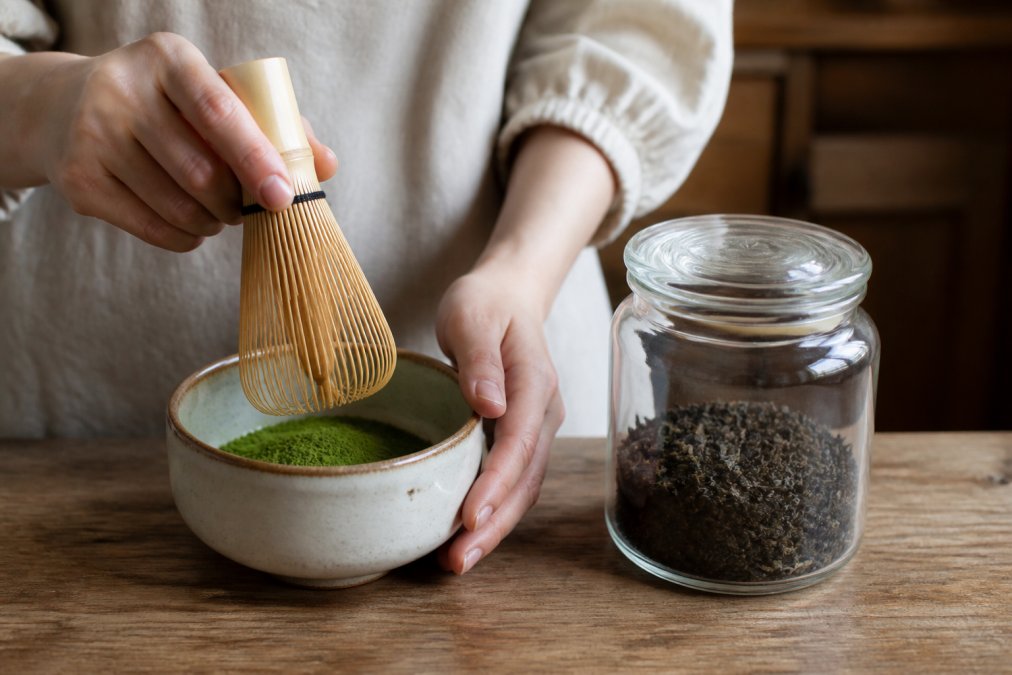
For matcha specifically:
- Use opaque, airtight containers only
- Store in a cool environment (ideally below 70°F)
- Keep humidity low (below 50%)
- Consume within 1-2 months of opening
- Consider refrigeration for extended storage
Many tea enthusiasts keep matcha in the refrigerator in an airtight container, bringing it to room temperature before opening to avoid condensation. This extends matcha's shelf life to 2-3 months.
Signs Your Tea Has Gone Bad and Common Storage Mistakes
Recognizing when tea has degraded helps you avoid brewing stale tea and informs better storage habits.
Signs of degradation:
- Flat, muted aroma: Fresh tea has a strong, complex smell. Faint or one-dimensional aroma indicates oxidation has progressed.
- Dull color: Brewed tea that looks pale has lost flavor compounds.
- Off-flavors: Musty, cardboard-like, or sour tastes indicate mold growth or excessive oxidation.
- Clumping in loose leaf tea: Moisture absorption causes leaves to stick together, indicating too-humid storage conditions.
- Matcha that's brown instead of green: Oxidation turns matcha brown; it's still safe but has lost its characteristic flavor.
Common storage mistakes:
Many people store tea in the kitchen near the stove or coffee maker. Heat and steam degrade tea rapidly. Move tea to a cool, stable location immediately.
Clear glass jars on open shelves expose tea to constant light damage. Use opaque containers instead. Storing tea in the refrigerator without proper sealing causes condensation every time you open it. If you refrigerate tea, use airtight containers and let them reach room temperature before opening.
Leaving tea in its original packaging after opening is problematic. Once opened, tea needs an airtight, opaque container. Mixing different teas in one container causes cross-contamination; keep each type in its own sealed container.
Storage Solutions for Travel and Long-Term Preservation
Travel storage and long-term preservation require different approaches than everyday home storage.
For travel, use small airtight containers or sealed bags that hold just what you need. Vacuum-seal bags work well because they're lightweight and protect tea from air exposure. Never leave tea in a hot car or exposed to sunlight during travel.
For long-term preservation beyond a year, vacuum sealing removes oxygen, dramatically slowing oxidation. Seal tea in food-grade vacuum bags, then store the bags in opaque containers in a cool location. This method preserves tea for 2-3 years with minimal quality loss.
Freezing works for high-end teas you want to preserve for extended periods. Place sealed containers in the freezer and bring them to room temperature before opening to prevent condensation. Frozen tea can last 3-5 years, though quality begins declining after about 2 years.
Some collectors use desiccant packets inside airtight containers to absorb residual moisture, adding an extra layer of protection in humid climates. The key to any long-term preservation method is consistency.
Proper tea storage is straightforward once you understand the fundamentals. Mocha Me Crazy's artisan teas, including premium blends like our Jasmine and English Breakfast, are crafted to deliver exceptional flavor and aroma. Protect that quality with airtight, opaque containers in a cool, stable environment. Your daily cup will taste noticeably better, and your tea investment will last far longer than tea stored carelessly.


Frequently Asked Questions
Q: Is it better to store tea in glass or metal containers?
Glass is chemically inert and won't absorb flavors, but clear glass offers no UV protection. Metal containers, especially stainless steel or tin, are excellent for artisan tea as they block all light and don't absorb odors. Ceramic is acceptable if fully glazed. The most important factor is that your chosen container has an airtight seal to prevent oxidation and moisture absorption, regardless of material.
Q: How long does loose leaf tea stay fresh?
High-quality loose leaf tea typically stays fresh for 6-12 months when stored properly in an airtight container away from heat, light, and moisture. Black teas tend to last longer than delicate greens or whites. Herbal infusions may remain flavorful for up to 2 years. Check for color changes and aroma loss as indicators that your tea has degraded. Proper storage in cool, dark conditions significantly extends shelf life.
Q: What's the difference between storing matcha and loose leaf tea?
Matcha requires more protection because its fine powder form exposes more surface area to oxidation. Store matcha in an airtight, opaque container in a cool environment, ideally below 70°F, and keep humidity low. Loose leaf tea can be stored at room temperature in a cool, dark place. Matcha's volatile oils degrade faster, so use it within 1-2 months of opening. Both benefit from airtight storage, but matcha demands stricter temperature control.
Q: Can you store different types of tea together?
No. Different teas should be stored separately to avoid cross-contamination. Delicate teas like white or green tea will absorb scent from stronger varieties like Masala Chai or Earl Grey. Each tea has its own aromatic profile, and mixing storage containers allows flavors to transfer. Keep each type in its own airtight container in separate locations if possible, especially if storing highly aromatic blends.
This article was written using GrandRanker