

How to Tell If Coffee Beans Are Fresh
Table of Contents
- Why Freshness Makes or Breaks Your Cup
- How to Tell If Coffee Beans Are Fresh: 5 Sensory Tests
- The Coffee Bloom Test: Your Most Reliable Freshness Check
- Signs of Stale Coffee Beans (And What Caused Them)
- Coffee Roast Date vs. Expiration Date: What Actually Matters
- How to Store Coffee Beans to Preserve Freshness
- How Fresh Coffee Beans Are Different by Roast and Processing
- Conclusion
Last Updated: August 19, 2026
Why Freshness Makes or Breaks Your Cup
Fresh coffee beans are the foundation of every great cup. The flavor compounds that make coffee complex, aromatic, and satisfying are volatile. Once roasted, beans begin releasing carbon dioxide and absorbing oxygen, a chemical clock that cannot be paused. What you brew in week one and week six from the same bag are genuinely different drinks.
Most people underestimate how fast that decline happens. A bag sitting on a grocery store shelf for months may still smell faintly of coffee, but the nuance, brightness, body, and specific notes a roaster developed are already gone. What remains is flat, one-dimensional, and often bitter in ways unrelated to your brewing technique.
Freshness also affects extraction. Stale beans extract unevenly, which means your grind consistency and brew ratios stop working as intended. You adjust repeatedly, chasing a result the beans simply cannot deliver anymore.
At Mocha Me Crazy, we built our entire model around this problem. Roasting every order on demand means your beans ship within hours of leaving the roaster, not weeks. Below, we'll walk through exactly how to tell if coffee beans are fresh, what causes staleness, and how to protect your beans once they arrive.
How to Tell If Coffee Beans Are Fresh: 5 Sensory Tests
Knowing how to tell if coffee beans are fresh comes down to repeatable sensory evaluation. These five tests take under two minutes and give you a reliable read on any bag of beans.
| Test | What to Do | Fresh Sign | Stale Sign |
|---|---|---|---|
| Smell | Open bag, inhale deeply | Strong, complex aroma | Faint, flat, or papery |
| Visual | Examine surface under light | Slight sheen or oil migration | Dull, chalky, or waxy |
| Grind | Grind a small amount | Consistent particle size | Clumping or uneven grind |
| Taste | Brew and sip without additives | Bright acidity, clear notes | Flat, hollow, or bitter |
| Bloom | Pour hot water over grounds | Active bubbling within 30 seconds | Minimal or no bubbling |
Step 1: Smell the Beans
Open the bag and take a slow, deliberate inhale. Fresh beans carry a fragrance that is immediately distinct: rich, layered, and specific to their origin. A light roast might smell floral or fruity. A dark roast will hit you with deep chocolate or smoky notes. The aroma should be assertive.
Stale beans smell muted, faintly of coffee, cardboard, or nothing at all. If you must push your nose into the bag to catch any scent, the beans are past their prime. Aroma is the fastest, most reliable freshness indicator available.
Step 2: Inspect the Color and Surface Oil
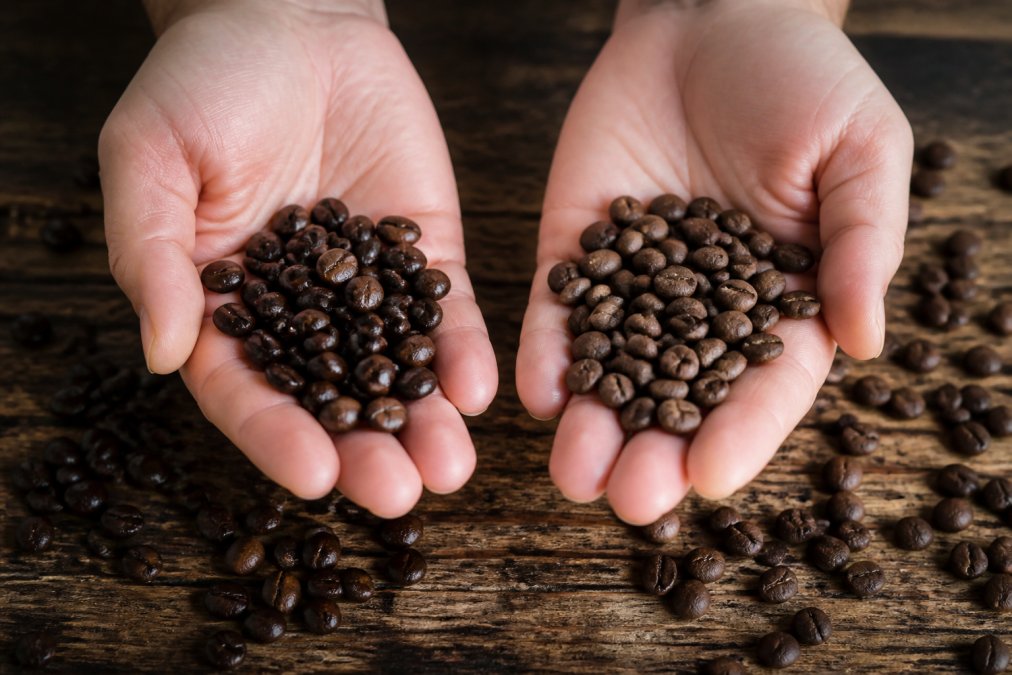
Hold a few beans up to natural light. Freshly roasted beans, especially medium and dark roasts, develop oil migration as they rest. A slight sheen signals that the beans are degassing actively and the oils are intact.
A chalky, dull, or waxy surface with no visible oil indicates oxidation has set in. Excessively wet or pooling oil suggests the beans have gone rancid. The sweet spot is a subtle gloss, not a grease slick.
Step 3: Check for Grind Consistency
Grind a small amount and observe the result. Fresh beans grind cleanly, producing relatively uniform particles. Stale beans clump and crumble inconsistently because moisture damage and oxidation have altered the bean's density. Poor grind consistency leads directly to uneven extraction, showing up as bitterness or sourness regardless of your technique.
Step 4: Taste for Flatness or Acidity Loss
Brew a small batch without milk, sweetener, or anything that masks the base flavor. Fresh coffee has a lively quality: pleasant acidity, noticeable body, and distinct flavor notes. Stale coffee tastes hollow, acidity is gone, replaced by dull bitterness, and the finish is short. If your coffee tastes like hot brown water, the beans are the likely culprit.
The Coffee Bloom Test: Your Most Reliable Freshness Check
The coffee bloom test is the single most objective freshness check available to home brewers. When hot water hits freshly roasted grounds, trapped carbon dioxide escapes rapidly, creating visible bubbling and expansion. This reaction tells you immediately whether your beans are still degassing or have exhausted their CO2.
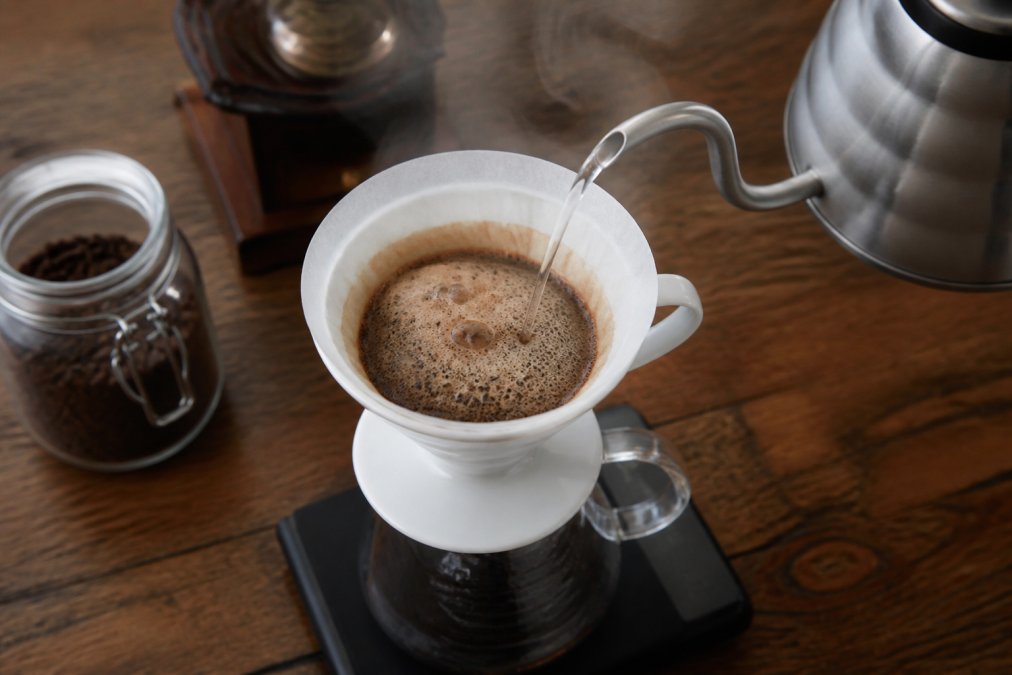
Add your grounds to a pour-over or French press and pour just enough hot water to saturate them. Wait 30 to 45 seconds and watch. Fresh beans bubble actively and the grounds swell noticeably. Stale beans produce little to no reaction.
According to the Specialty Coffee Association's brewing standards, the bloom phase is not just a freshness indicator, it is a functional brewing step. Allowing CO2 to escape before full extraction prevents the gas from interfering with water absorption, which directly improves flavor clarity and body.
Timing note: Beans roasted within the past two weeks bloom reliably. Beans between two and four weeks old may bloom moderately. Anything older than four to six weeks shows minimal activity, regardless of storage.
Signs of Stale Coffee Beans (And What Caused Them)
Stale coffee is not one thing. The flavor of staleness depends on what actually happened to the beans.
The most common culprit is simple age. Coffee beans have a realistic flavor shelf life of two to four weeks post-roast when stored correctly, according to coffee freshness research from the Coffee Quality Institute. Beyond that window, volatile aromatics dissipate and the cup tastes flat.
The second culprit is improper storage, which accelerates aging dramatically. Exposure to light, heat, moisture, and oxygen all degrade beans faster than time alone.
Oxidation vs. Moisture Damage: Spotting the Difference
Oxidation happens when oxygen reacts with the oils and aromatic compounds in roasted beans. Oxidized coffee tastes flat, slightly cardboard-like, and missing acidity. The beans often look dull or chalky. This is the most common form of staleness and is primarily a function of air exposure.
Moisture damage is different and often worse. When beans absorb humidity, they lose structural integrity. The grind becomes inconsistent, beans may clump or feel slightly soft, and brewed coffee tastes musty or sour rather than simply flat. Moisture damage can also encourage mold growth in extreme conditions.
The practical distinction matters because the fixes differ. Oxidation calls for better airtight storage. Moisture damage calls for a drier storage environment and possibly a container with a desiccant.
Coffee Roast Date vs. Expiration Date: What Actually Matters
An expiration date on a bag of coffee is a manufacturer's safety estimate, not a flavor guarantee. It tells you the product will not harm you, not that it will taste good.
The roast date is what actually matters. For most brewing methods, the ideal window is between 5 and 21 days post-roast. Within the first few days, beans are still degassing heavily, which can make extraction inconsistent. After three to four weeks, flavor degradation becomes noticeable to most palates.
According to research published in the journal Food Chemistry on coffee aroma stability, volatile aroma compounds in roasted coffee begin degrading within days of roasting, with the rate of loss accelerating significantly after three weeks without vacuum sealing.
If a bag has no roast date printed on it, that is a red flag. Specialty roasters who are proud of their freshness print the roast date prominently. The absence of that date usually means the beans were roasted in bulk, warehoused, and packaged later.
How to Store Coffee Beans to Preserve Freshness
Proper storage does not reverse staleness, but it significantly slows degradation. The four enemies of fresh coffee are oxygen, moisture, light, and temperature fluctuations. Eliminate them and you extend your beans' peak flavor window meaningfully.
The baseline rules:
- Store beans in an airtight container, not the original bag unless it has a one-way valve
- Keep the container in a cool, dark location away from heat sources
- Avoid the refrigerator, which introduces moisture and absorbs ambient odors
- Buy quantities you will use within two to three weeks
A one-way valve bag allows CO2 to escape during degassing without letting oxygen in. These are the standard for specialty roasters because they protect freshness during the critical first days post-roast without requiring vacuum sealing.
Troubleshooting Your Home Storage Container
Most people do not think critically about their storage container until they notice their coffee going stale faster than expected.
The container is not actually airtight. Many canisters marketed as "airtight" let in measurable amounts of oxygen over time. Test yours by pressing the lid down firmly and listening for any air release. A true airtight seal should require slight effort to open after being closed for 24 hours.
You are opening the container too frequently. Every time you open it, you introduce fresh oxygen. If you brew daily, consider splitting your beans into a small weekly portion and keeping the rest sealed.
The container is too large for the quantity of beans. A half-empty container holds more air than beans. Use a smaller container or fill the space with food-safe nitrogen if available.
The container is near a heat source. A canister next to the espresso machine or on a sunlit counter is exposed to temperature fluctuations that accelerate oxidation. Move it to a cabinet away from heat.
How Fresh Coffee Beans Are Different by Roast and Processing
Not all fresh beans behave the same way, and understanding the variables helps you set the right expectations for each bag.
Roast level affects degassing rate. Dark roasts release CO2 more aggressively than light roasts because the roasting process produces more gas. Dark roast beans may need 24 to 72 hours before hitting their flavor peak. Light roasts degas more slowly and often benefit from a longer rest, sometimes up to a week.
Processing method affects density and moisture content. Natural-processed beans (dried with the fruit intact) tend to be less dense than washed beans and absorb moisture more readily in storage. Washed beans are generally more stable but still benefit from airtight storage. Honey-processed beans fall between the two.
Bean density matters for grind consistency. High-altitude, dense beans require more grinder pressure to achieve a consistent grind. As these beans age and lose moisture, their density changes, which can subtly shift your grind setting. If your grind suddenly feels easier or your extraction tastes off, age-related density loss may be a factor.
The practical takeaway: buy beans with a clear roast date, understand that different roasts and processing methods have slightly different freshness curves, and treat every bag as its own sensory evaluation.
Mocha Me Crazy sources beans carefully and roasts every order on demand, which means the beans you receive are at the very beginning of their flavor window, not the middle or end of it. That distinction shows up in the bloom test, the aroma, and ultimately in the cup.
The hardest part about stale coffee is that it sneaks up on you. You adjust your technique, blame your grinder, switch your water temperature, and never think to question the beans. Freshness is the variable most home brewers overlook, and it is the one that matters most. Mocha Me Crazy's roast-to-order model removes that variable entirely: your beans are roasted when you order them, shipped fast, and arrive ready to brew at their peak. Check out our current selection and experience what genuinely fresh coffee tastes like.
Frequently Asked Questions
Do coffee beans have an expiration date or a roast date, which one matters more?
The roast date is far more useful than an expiration date when judging fresh coffee beans. Expiration dates on coffee packaging are often set 12-24 months out and reflect food safety minimums, not peak flavor. The roast date tells you when the beans were actually roasted, which is the clock that counts. For the best flavor profile, most specialty roasters recommend brewing whole beans within 2-4 weeks of the roast date and grinding just before brewing.
How does the bloom test indicate coffee freshness?
When you pour hot water over freshly roasted grounds, trapped carbon dioxide escapes rapidly, causing the coffee bed to swell and bubble, that reaction is called the bloom. Fresh beans produce a vigorous, domed bloom within seconds. Stale beans release little or no gas, so the grounds stay flat and wet. A strong bloom is one of the most reliable signs that your beans still hold the volatile compounds responsible for aroma, body, and complex flavor notes.
How long does coffee stay fresh after it has been ground?
Ground coffee goes stale much faster than whole beans because grinding dramatically increases surface area exposed to oxygen. At room temperature in an open container, ground coffee loses noticeable aroma and flavor within 30 minutes. Stored in an airtight container away from light and heat, pre-ground coffee holds acceptable flavor for up to a week, though the nuanced notes fade quickly. For the freshest cup, grind whole beans immediately before brewing rather than storing pre-ground coffee.
Are old coffee beans still safe to drink?
Old coffee beans are generally safe to consume, coffee does not spoil in a way that causes illness the way dairy or meat does. However, beans exposed to moisture can develop mold, which is a different concern. The real issue with aged beans is flavor: oxidation and degassing leave you with a flat, dull, or rancid-tasting cup that lacks the acidity, body, and aroma of freshly roasted coffee. Safety and quality are two separate questions, and old beans fail hard on quality long before they pose any safety risk.
This article was written using GrandRanker