

Is Fresh Roasted Coffee Worth the Price?
Table of Contents
- What Makes Fresh Roasted Coffee Different
- How to Tell if Coffee Beans Are Fresh
- Coffee Roast Date vs. Expiration Date: What Actually Matters
- Cost Analysis: Fresh Roasted vs. Supermarket Coffee
- How to Store Coffee Beans for Maximum Freshness
- The Real Value: Brewing Method and Sensory Experience
- Sustainability and Ethical Sourcing in the Premium Market
- Is the Premium Worth It? Making Your Decision
What Makes Fresh Roasted Coffee Different
Fresh roasted coffee tastes fundamentally different from beans that have sat in a warehouse for months. When coffee is roasted, it undergoes a complex chemical transformation that releases hundreds of flavor compounds and aromatic oils. The moment roasting stops, those compounds begin to degrade almost immediately.
The Science of Coffee Freshness and Degassing
Immediately after roasting, coffee beans release carbon dioxide (CO2) created during the roast. This degassing happens rapidly in the first 24-48 hours, then slows considerably over the following weeks. CO2 protects delicate flavor compounds inside the bean. As CO2 escapes, oxygen replaces it and oxidation begins breaking down the compounds that create complex flavor notes. This is why coffee tastes best in a narrow window, after enough CO2 has released for clean brewing, but before oxidation has destroyed nuanced flavors.
Most supermarket coffee was roasted weeks or months ago. By the time it reaches your cup, much CO2 has escaped and significant oxidation has occurred. The flavor profile has flattened, bitterness increases, and sweetness, acidity, and complexity have degraded. Fresh roasted coffee still contains active CO2 and hasn't experienced this oxidative breakdown.
The degassing window is typically 3-10 days after roasting, depending on roast profile and bean density. Light roasts release CO2 faster than dark roasts. High-altitude beans degas more slowly than lower-altitude beans. This is why specialty coffee shops recommend waiting a few days after roasting before brewing, you want enough CO2 escaped for clean extraction, but not so much that oxidation has destroyed flavor.
Flavor Profile Differences: Fresh vs. Store-Bought
Fresh roasted beans deliver bright acidity, complex flavor notes (citrus, chocolate, caramel, floral), and a clean finish with vibrant, layered aroma. Store-bought commodity coffee tastes flat by comparison, muted or sour acidity, barely perceptible flavor notes, bitter or ashy finish, and thin one-dimensional aroma. This isn't because the original beans were bad; oxidation has destroyed the compounds that created interesting flavors.
Consider a single origin Ethiopian coffee. Fresh roasted, it shows milk chocolate, fruity sweetness, and caramel with clean, balanced body. Six months after roasting, the same beans taste muddy and bitter with almost no flavor complexity. This difference is why specialty coffee drinkers pay premium prices, they're paying for the window of time when that bean actually tastes good.

How to Tell if Coffee Beans Are Fresh
The most reliable way to identify fresh coffee is the roast date printed directly on the bag. If you see an expiration date instead or no date at all, the coffee is not from a specialty roaster and likely isn't fresh.
Look for roast dates within the last 2-4 weeks. Coffee peaks roughly 3-10 days after roasting but remains excellent for about 2-4 weeks. After 4-6 weeks, flavor degradation becomes noticeable. After 2-3 months, most coffee has lost significant complexity.
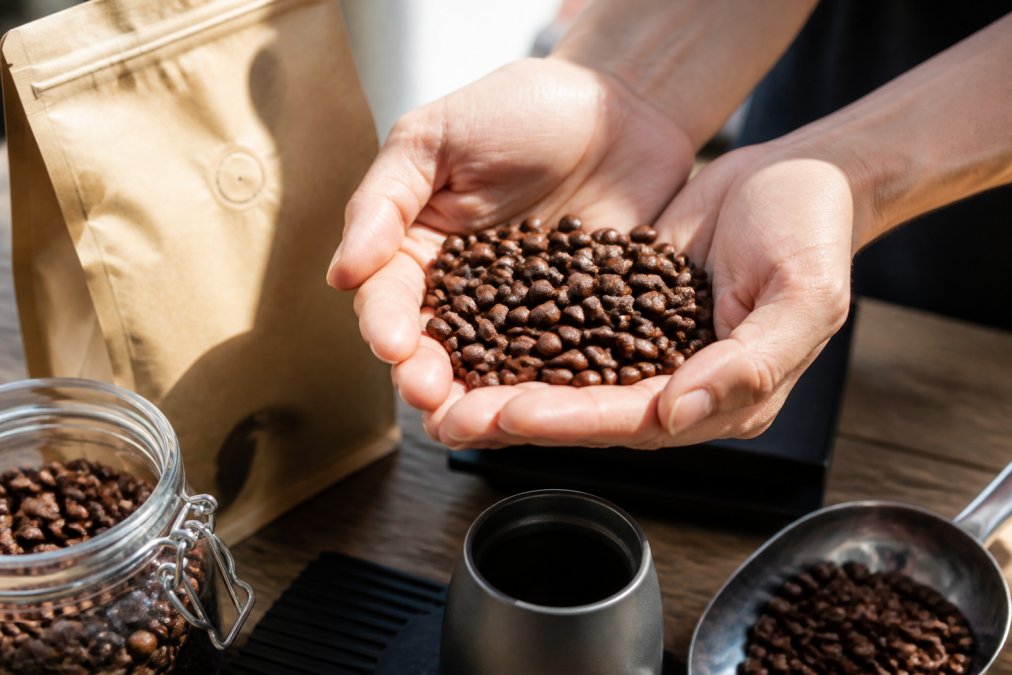
Fresh roasted beans have a subtle sheen on the surface (especially darker roasts), vibrant even color, and strong layered aroma with multiple distinct scents. Stale beans look dull and dry with flat color, barely any aroma, and brittle texture.
Coffee Roast Date vs. Expiration Date: What Actually Matters
An expiration date tells you when the product becomes unsafe to consume. A roast date tells you when the product was roasted. For coffee, the roast date matters for quality.
Coffee doesn't expire in the safety sense for a very long time, roasted beans can technically be consumed safely for a year or more. But quality degrades long before that. Supermarket coffee often displays an expiration date 12-18 months in the future, creating false freshness perception. That coffee might have been roasted 6-12 months before purchase. Specialty roasters display the roast date because it's the relevant information. If you see only an expiration date and no roast date, assume the coffee is not fresh.
Cost Analysis: Fresh Roasted vs. Supermarket Coffee
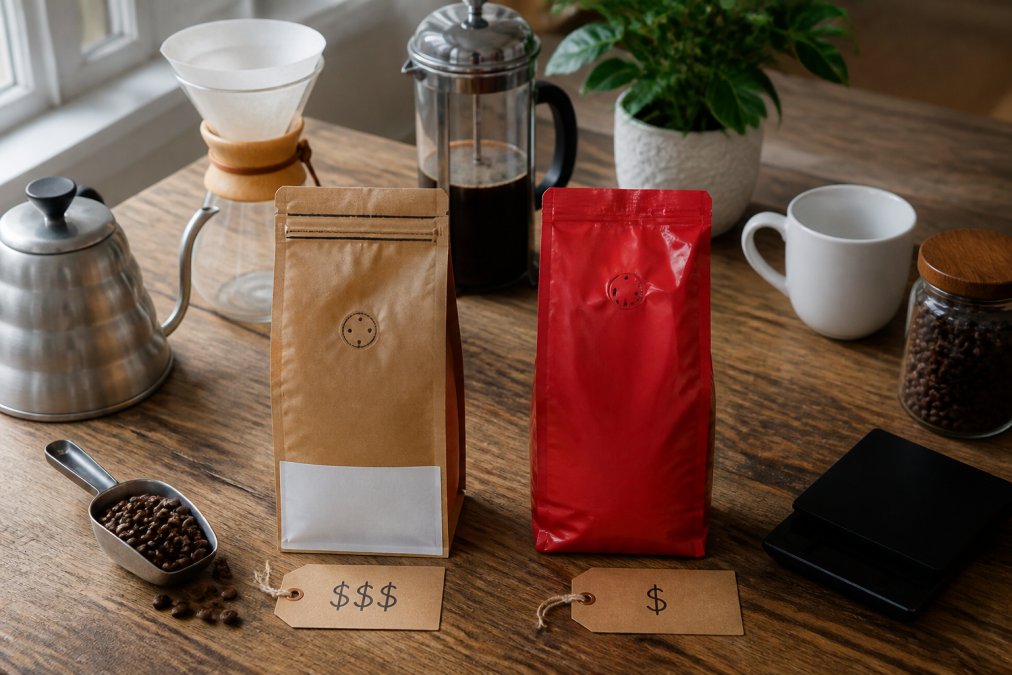
Fresh roasted coffee costs more upfront, most specialty roasters charge $20-$30 per pound, while supermarket coffee runs $5-$12 per pound. But cost-per-cup tells a different story. A pound yields roughly 16 cups. At Mocha Me Crazy, fresh roasted single origin coffees at $24.99 per pound work out to approximately $1.56 per cup. Supermarket coffee at $8 per pound costs about $0.50 per cup, a $1 difference per cup.
Cost-Per-Cup Breakdown
The real question is whether you're getting proportional value. If you drink coffee primarily for caffeine and don't notice flavor differences, supermarket coffee is rational. If you care about flavor, appreciate complex notes, and brew properly, fresh roasted is worth the premium. The math changes if you're brewing poorly, fresh roasted beans won't help much with a basic drip machine and stale water. If you're willing to invest in proper brewing technique, fresh roasted delivers proportional returns.
How to Store Coffee Beans for Maximum Freshness
Store beans in an airtight container away from direct sunlight and heat. A sealed bag with a one-way valve (which lets CO2 escape but prevents oxygen from entering) is ideal. Avoid clear containers and don't store in the freezer or refrigerator, temperature fluctuations cause condensation that introduces moisture.
A cool, dark cupboard is best. Beans stay fresh for 2-4 weeks at room temperature in proper storage. After that, flavor degradation accelerates. If you want coffee to last longer, freezing is acceptable in an airtight container without repeated thawing. The key principle: minimize time between roasting and consumption. Buy smaller quantities more frequently rather than stockpiling.
The Real Value: Brewing Method and Sensory Experience
Fresh roasted coffee demands better brewing technique than stale coffee. With stale beans, mediocre equipment and poor technique work fine. With fresh beans, your technique matters dramatically.
Why Brew Method Matters with Fresh Beans
Fresh roasted beans contain volatile flavor compounds requiring specific brewing conditions. The bloom phase becomes critical, CO2 is still actively releasing, and improper blooming interferes with water contact and extraction. Grind size matters more with fresh beans. Too coarse and you under-extract; too fine and you over-extract bitter compounds. Water temperature and brew time require precision.
Fresh roasted coffee pairs best with methods giving you control: pour-over, French press, AeroPress, espresso machines. These let you adjust grind size, water temperature, bloom time, and total brew time. If you buy fresh roasted coffee and brew it in a basic automatic drip machine, you're wasting the premium.
Sustainability and Ethical Sourcing in the Premium Market
Premium fresh roasted coffee typically comes from roasters working directly with farms or cooperatives, often paying fair trade or direct trade prices significantly higher than commodity prices. This means farmers earn sustainable income and invest in better farming practices, resulting in higher-quality beans with more complexity and cleaner flavor profiles.
Supermarket coffee comes from commodity supply chains where price is the only variable. Farmers receive minimal payment, and environmental impact is often significant with monoculture, heavy pesticide use, and deforestation.
At Mocha Me Crazy, we source from smallholder farmers and cooperatives across coffee-growing regions. Our Ethiopia Natural comes from Indigenous Heirloom Cultivars in the Sidama Zone, processed by hand and dried on raised beds. Our Guatemala is grown by smallholder farmers in Antigua on volcanic loam soil. These are direct relationships with farmers who care about quality.

Is the Premium Worth It? Making Your Decision
Fresh roasted coffee is worth the premium if you notice and appreciate flavor differences, invest in proper brewing technique, and drink enough coffee that per-cup cost is meaningful. Fresh roasted is not worth it if you drink coffee primarily for caffeine, won't invest in better equipment or technique, or are indifferent to flavor differences.
Consider freshness at source. If you order online, 2-5 days pass before arrival. Ordering from a local roaster is ideal. If ordering online, look for roasters who roast to order and ship immediately. Mocha Me Crazy roasts every order on demand and ships the same day, so your coffee arrives at peak freshness.
The real value of fresh roasted coffee is in the commitment to freshness, quality sourcing, proper technique, and the sensory experience of drinking coffee that actually tastes like something. If that matters to you, the premium is worth it.
Choosing between fresh roasted and mass-produced coffee comes down to how much you value the ritual and sensory experience of your morning cup. If freshness matters, Mocha Me Crazy delivers roasted-to-order single origin coffees like our Guatemala and Colombia varieties at $24.99 per pound, with beans roasted within 24 hours of your order and shipped immediately. You get maximum flavor and aroma in every cup without warehouse storage compromise. Learn more about specialty coffee sourcing practices to understand what differentiates premium roasters from commodity suppliers, and explore how proper brewing technique impacts extraction to ensure you're getting full value from your fresh beans. For a deeper dive into coffee freshness science, the Specialty Coffee Association's cupping standards provide the framework that professional tasters use to evaluate coffee quality.

Frequently Asked Questions
Q: Is fresh roasted coffee really better than store-bought?
A: Yes. Fresh roasted coffee retains more volatile flavor compounds and aromatic oils that fade within weeks. Store-bought coffee typically sits in warehouses and on shelves for months, losing acidity, brightness, and complexity. The sensory difference is measurable: fresh beans produce clearer flavor notes (citrus, chocolate, caramel), while stale coffee tastes flat and bitter. Single origin fresh roasted beans show their roast profile more distinctly than commodity coffee.
Q: How long does fresh roasted coffee stay fresh after the roast date?
A: Peak flavor lasts 2-4 weeks from the roast date, depending on storage and brew method. The degassing window (when CO2 escapes) occurs over the first 5-7 days; coffee is often too gassy to brew optimally before day 3. After 4 weeks, oxidation accelerates and flavor clarity declines noticeably. Whole beans last longer than ground coffee. Proper storage in an airtight container away from light and heat extends freshness significantly.
Q: What is the cost-per-cup difference between fresh roasted and supermarket coffee?
A: Fresh roasted coffee at $24.99 per bag yields roughly 16 cups, equaling approximately $1.56 per cup. Standard supermarket coffee costs $0.50-$0.80 per cup. The premium is $0.76-$1.06 per cup. However, fresh beans often require less coffee per brew due to superior extraction efficiency and flavor concentration, potentially narrowing the gap. Direct trade and specialty single origin options justify the premium through quality, ethical sourcing, and measurable flavor superiority.
Q: How do I know if coffee beans are actually fresh when I buy them?
A: Check the roast date on the bag, not the expiration date. Beans roasted within 1-2 weeks are optimal. Look for vibrant color and a slight sheen, indicating retained oils. Smell the beans: fresh coffee has a strong, complex aroma with distinct notes. If the bag has a one-way valve, that's a positive sign for proper degassing control. Avoid pre-ground coffee and beans with vague or missing roast dates. Reputable roasters like Mocha Me Crazy print the exact roast date and often roast to order, guaranteeing maximum freshness.
This article was written using GrandRanker