

Best Grind Size for Pour Over Coffee (2026 Guide)
Table of Contents
- Start With Medium-Fine: The Best Grind Size for Pour Over Coffee
- Coffee Grind Size Chart: Match Your Grind to Your Dripper
- How Grind Size Changes Extraction, Flow, and Flavor
- How to Adjust Coffee Grind Size When a Cup Tastes Off
- Coffee-to-Water Ratio for Pour Over: The Numbers to Start With
- Pour-Over Coffee Brew Time: Reading the Drawdown
- Freshness, Roast Level, and Processing Change Your Starting Grind
- Grinder Calibration and Repeatability
- Conclusion: Dial In One Variable at a Time
- Frequently Asked Questions
Last Updated: October 7, 2026
Start With Medium-Fine: The Best Grind Size for Pour Over Coffee
The best pour over grind size is medium-fine, roughly the texture of table salt, with most particles landing between 600 and 800 microns. That single setting is where most pour over grind size questions should begin.
Here at Mocha Me Crazy, we roast every order on demand, so we hear the same question from customers constantly: what do I set my grinder to? Medium-fine is the answer for a standard cone dripper with a paper filter. It gives you enough surface area for full extraction without choking the water flow.
Get this one variable close and everything else gets easier.
Below, we'll show you exactly how to match grind to your brewer, read a bad cup, and dial in without guessing.
Coffee Grind Size Chart: Match Your Grind to Your Dripper
Grind size is not one universal number. It shifts with your dripper, your filter, and the shape of the coffee bed, and that is the part most guides skip.
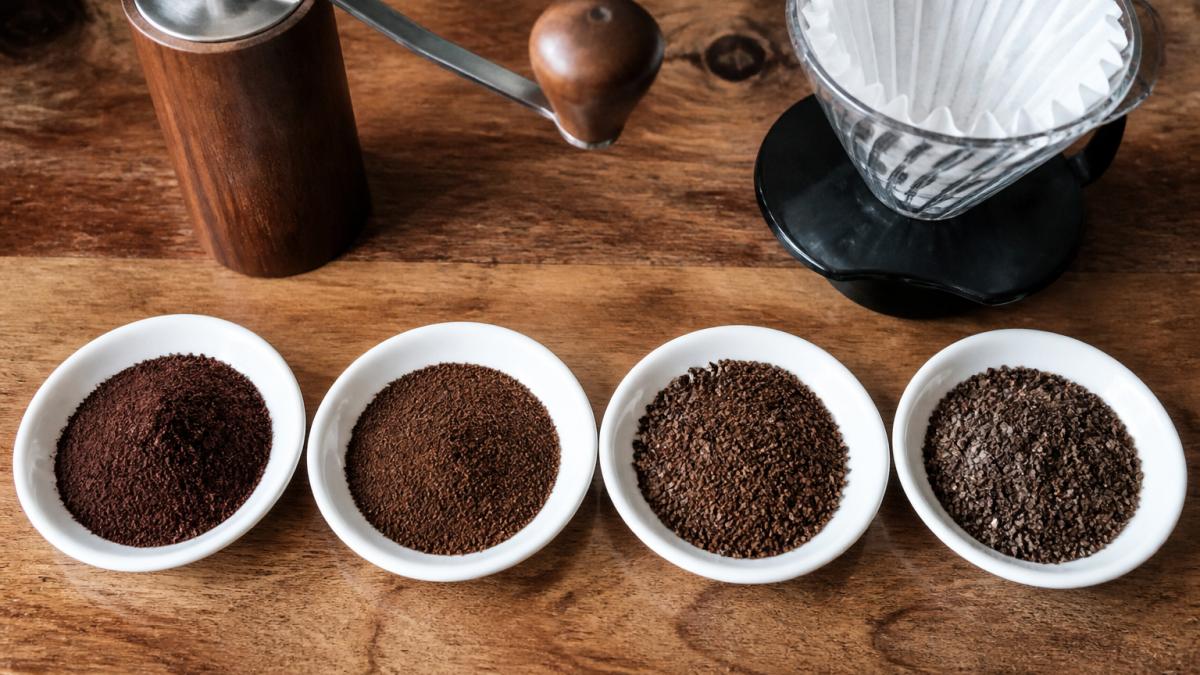
Two physical forces set your starting point. First, filter resistance: a thick paper filter slows water, so you grind coarser to compensate; a thin or metal filter drains fast, so you grind finer. Second, bed depth and shape: a tall conical bed forces water through more coffee, while a shallow flat bed spreads it across a wider area. Both change how long water contacts the grounds.
Here is a starting point for each common setup. Micron ranges are typical targets, not exact requirements, since every grinder labels its settings differently.
| Brewer Type | Starting Grind | Micron Target | Texture Reference | Typical Drawdown |
|---|---|---|---|---|
| Conical dripper, thin paper | Medium-fine | 600-800 | Table salt | 2:30-3:00 |
| Flat-bottom brewer, thick paper | Medium | 800-1000 | Coarse sand | 3:00-3:30 |
| Chemex, heavy filter | Medium-coarse | 900-1100 | Sea salt | 3:30-4:30 |
| Metal or cloth filter | Medium-coarse | 900-1100 | Sea salt | 2:30-3:30 |
| Single-cup cone, small dose | Medium-fine | 600-800 | Table salt | 2:00-2:45 |
Read the table as a direction, not a destination. If your brewer is not listed, match it by filter: thick paper pushes you coarser, thin or reusable filters push you finer.
How to Read Grind Texture Without a Sieve
You can estimate particle size by feel and sight before you ever buy a testing sieve:
- Table salt (medium-fine): grains cling slightly to your fingertip and feel like fine sand when rubbed.
- Coarse sand (medium): grains separate easily and feel gritty but not sharp.
- Sea salt (medium-coarse): individual particles are clearly visible and roll off your finger.
For a more objective check, a standard kitchen sieve or a set of testing sieves lets you see the spread of particle sizes. Shake a small sample through and look at what stays on top versus what falls through. A wide spread of fine and coarse particles signals an inconsistent grinder, not a wrong setting.
Why Bed Shape Matters
A conical dripper concentrates the bed into a deep cone, so water travels through more coffee and the grind needs to be finer to keep contact time in range. A flat-bottom brewer spreads the bed shallow and wide, so water moves through faster and the grind needs to be coarser. This is why the same grinder setting can taste under-extracted in one brewer and over-extracted in another.
Start with the table, brew once, then adjust based on taste and drawdown. The next section shows you how to read both.
How Grind Size Changes Extraction, Flow, and Flavor
Grind size controls two things at once: how fast water moves through the coffee bed and how much flavor the water pulls out.
Smaller particles have more surface area. More surface area means water dissolves more of the coffee, faster. Grind too fine and you get over-extraction: bitter, dry, hollow. Grind too coarse and you get under-extraction: sour, weak, thin.
Grind consistency matters just as much as average particle size. A grinder that produces a wide spread of fine and coarse particles will taste muddy no matter what setting you choose. That is why a burr grinder beats a blade grinder for pour over.
So grind size is really a flow control. Change it and you change brew time, resistance, and cup profile together.
How to Adjust Coffee Grind Size When a Cup Tastes Off
Taste is the only reliable signal. Learn to read it and you stop guessing. Most guides stop at "grind finer or coarser." The useful skill is connecting a specific symptom to a specific, repeatable adjustment, and changing only one variable at a time.
The Troubleshooting Decision Path
Work through this in order. Each step pairs a symptom with one adjustment.
- Sour, sharp, or weak? The water ran through too fast and pulled too little. Grind finer in small steps.
- Bitter, drying, or harsh? The water sat too long and pulled too much. Grind coarser in small steps.
- Both sour and bitter in the same cup? Your grind is uneven, not wrong. Check your grinder for a wide particle spread before changing the setting.
- Good flavor but thin body? Grind one notch finer and keep everything else the same.
- Good flavor but too slow? Grind coarser in small steps.
- Drawdown finishes far under your target time? Grind finer to slow flow.
- Drawdown stalls or stops before the bed drains? Grind coarser to speed flow.
Pair Taste With Drawdown
Taste tells you what happened; drawdown tells you why. Use both together.
| Symptom | Likely Cause | Adjustment |
|---|---|---|
| Sour, weak, fast drawdown | Under-extraction from too-coarse grind | Grind finer |
| Bitter, dry, slow drawdown | Over-extraction from too-fine grind | Grind coarser |
| Sour and bitter together | Uneven particle spread | Check grinder, sift a sample |
| Good taste, thin body | Slightly under-extracted | Grind one notch finer |
| Good taste, slow drawdown | Grind slightly too fine for the dose | Grind coarser or reduce dose |
Change One Variable at a Time
Move one or two clicks on a stepless grinder, or one numbered setting on a stepped one. Then brew again with the same dose, ratio, water temperature, and pour. If you change grind, ratio, and temperature in the same brew, you will not know which change helped, and you cannot repeat it.
A Simple Side-by-Side Dial-In Test
When you want to dial in a new bag quickly, run a controlled comparison:
- Fix your dose, ratio, water temperature, and pour technique.
- Brew one cup at your current setting and note the drawdown time and taste.
- Change only the grind, one or two steps finer or coarser.
- Brew again with everything else identical.
- Compare the two cups side by side and keep the better one as your new baseline.
This method turns grind adjustment from guesswork into a repeatable test. Record the winning setting so you can return to it next time.
Coffee-to-Water Ratio for Pour Over: The Numbers to Start With
A good coffee-to-water ratio for pour over is 1:15 to 1:17 by weight. That means 1 gram of coffee for every 15 to 17 grams of water.
Start with 1:16. For a single 12-ounce cup, use about 22 grams of coffee and 355 grams of water. Weigh both. Volume scoops vary too much to trust.
Dose and grind interact. A larger dose needs a slightly coarser grind to keep drawdown in range. A smaller dose can take a finer grind.
If the cup tastes right but you want more, scale the dose and water together and keep the ratio the same.
Pour-Over Coffee Brew Time: Reading the Drawdown
Pour-over coffee brew time is your fastest feedback signal, and total time should land between 2:30 and 4:00 depending on your brewer.
Drawdown is the final phase, when the last water drains through the brew bed. Watch it. A slow, stalling drawdown usually means the grind is too fine. A gush that finishes early means it is too coarse.
Pouring technique and agitation change flow too. A hard, high pour stirs the bed and speeds extraction. A gentle spiral pour keeps it even. Keep your pour consistent so grind stays the only variable you are testing.
Freshness, Roast Level, and Processing Change Your Starting Grind
Fresh coffee behaves differently in the brewer, and this is the angle most grind guides ignore.
Coffee that was roasted days ago still holds gas. That gas resists water, so a very fresh roast can drain slower than an older one at the same setting. Let it rest a few days after the roast date, then dial in.
Roast level shifts things too. Lighter roasts are denser and often need a finer grind. Darker roasts are more porous and can run coarse.
Processing matters as well. Natural coffees like our Ethiopia Natural tend to produce more fines and can drain slower. Washed coffees like our Colombia run more predictably. Expect to nudge your grinder when you open a new bag.


Grinder Calibration and Repeatability
A grinder you cannot repeat is a grinder you cannot dial in.
Calibrate once, then note where your burrs touch. That zero point is your reference. From there, write down the setting that worked for each brewer. Next time you open a bag, you start from a known number instead of memory.
Stepped grinders repeat easily but limit your range. Stepless grinders give fine control but drift if you bump the dial. Mark your working settings with tape or a photo.
If your grinder produces a lot of fines, sift a sample through a kitchen sieve. Seeing the spread tells you whether the problem is your setting or your equipment.
Conclusion: Dial In One Variable at a Time
The best grind size for pour over coffee is medium-fine, but the real skill is adjusting it with purpose. Change one thing, taste, and repeat.
That is why we roast to order at Mocha Me Crazy. Fresh beans, sourced with care and shipped fast, give you a stable starting point to dial in from. No inventory sitting around, just maximum flavor and aroma in every cup.
Get started with Mocha Me Crazy and brew a cup worth adjusting for.
Frequently Asked Questions
What grind size is best for pour-over coffee?
Medium-fine is the starting point for most pour-over setups. On a burr grinder scale of 1 to 40, that lands around 18 to 22, roughly the texture of table salt. Cone drippers with paper filters usually want the finer end, while flat-bottom brewers and thicker filters want medium or medium-coarse. Treat that as a starting point, then adjust based on how the cup tastes and how fast the water drains.
How do I adjust coffee grind size if my pour-over tastes bitter or sour?
Sour, thin, or weak cups mean the water moved through too fast and did not pull enough out of the grounds, so grind finer in small steps. Bitter, dry, or harsh cups mean the water sat too long and pulled out too much, so grind coarser. Change one notch at a time and keep every other variable, including dose, water weight, and temperature, exactly the same.
What is the golden ratio for coffee pour over?
Most pour-over recipes sit between 1:15 and 1:17 coffee to water by weight. A common starting point is 20 grams of coffee to 320 grams of water, which is 1:16. If the cup tastes thin or watery, tighten the ratio toward 1:15 by adding a gram or two of coffee. If it tastes heavy or muddled, loosen it toward 1:17. Weigh both the coffee and the water; volume scoops vary too much to be reliable.
Is there a trick to pour over coffee?
The bloom is the closest thing to a trick. Pour about twice the coffee's weight in water, wait 30 to 45 seconds while the grounds degas, then continue in slow circles. That step prevents the bed from channelling and gives you an even extraction. After that, keep the water level steady, avoid pouring directly onto the paper filter, and let the bed drain flat rather than domed.