

Best Ways to Store Coffee Beans at Home
Table of Contents
- Why Proper Storage Matters for Coffee Freshness
- Best Coffee Storage Container Options
- Where to Store Coffee Beans for Maximum Freshness
- How Long Do Coffee Beans Last After Opening
- Can You Freeze Coffee Beans: Step-by-Step Guide
- Storage Strategy Based on Consumption Rate
- Common Storage Mistakes That Ruin Coffee Beans
- Frequently Asked Questions
Last Updated: October 14, 2026
Why Proper Storage Matters for Coffee Freshness
Coffee beans start losing flavor the moment they're roasted. Air, light, heat, and moisture are the enemies of freshness. How you store coffee beans at home determines whether you get that rich aroma and bright taste or a stale, flat cup.
The difference is dramatic. Beans stored properly stay fresh for weeks. Beans left exposed go bad in days. Since freshly roasted coffee is an investment worth protecting, understanding storage fundamentals saves money and elevates every brew.
At Mocha Me Crazy, we roast to order specifically because we know freshness matters. That commitment to peak flavor starts the moment beans arrive at your door. Your job is keeping them that way.
The stakes are simple: poor storage wastes premium beans. Good storage unlocks the full potential of what you've paid for.
Best Coffee Storage Container Options
The right container is your first line of defense against staleness. Not all containers work equally. Three main options dominate home storage, each with real trade-offs.
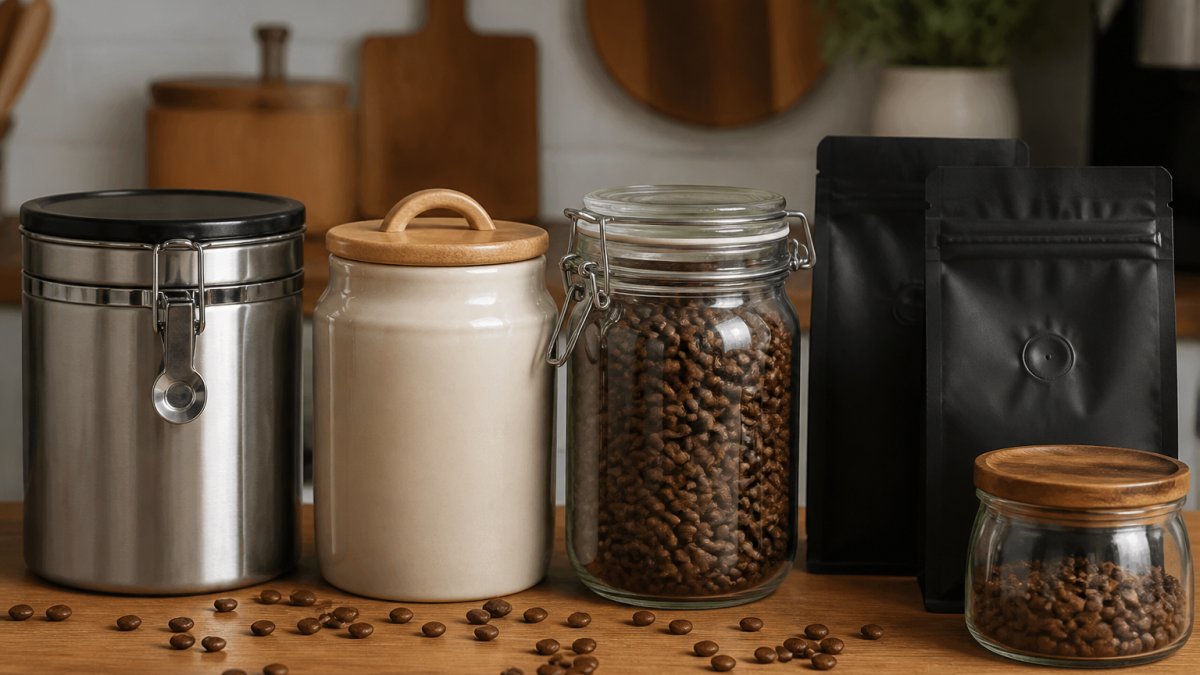
Airtight containers and why they work
An airtight container blocks oxygen. Oxygen accelerates the breakdown of the compounds that make coffee taste good. A truly sealed container keeps those flavor compounds intact far longer than an open bag or loose jar.
Look for containers with rubber gaskets or locking mechanisms. The seal must be tight enough that you feel resistance when opening and closing. Test it: if the lid pops off easily, it's not airtight enough.
Common mistakes include buying containers that look airtight but aren't. Many decorative jars claim to seal but have loose-fitting lids. Check reviews before buying.
Practical tip: Store beans in the smallest container that fits your supply. A half-full airtight container exposes beans to more air than a full one. Air takes up the empty space.
Opaque vs. transparent: light protection matters
Light degrades coffee beans. Direct sunlight accelerates this process, but even indoor light causes gradual damage over time. Opaque containers, those you can't see through, protect beans better than clear glass or plastic.
If you love seeing your beans, accept the trade-off: you're sacrificing some freshness for visual appeal. The difference isn't massive if beans are stored in a dark cupboard. But opaque containers consistently outperform transparent ones.
Stainless steel canisters offer the best light protection. Dark ceramic or opaque plastic containers come second. Clear glass jars are the weakest option for light protection, though they work fine if stored in a truly dark location.
What to avoid: Storing beans in clear containers on a sunny shelf or near a window. Even indirect sunlight adds up over weeks.
Original bags with one-way valves
The bag your beans arrived in isn't just packaging. Quality roasters use bags with one-way valves specifically designed for coffee storage. These valves let carbon dioxide escape (a natural byproduct of roasting) while preventing oxygen from entering.
Many roasters ship beans in bags built for storage. If your bag has a one-way valve, a small circular vent on the front, you can store beans directly in it.
One-way valve bags work surprisingly well for short-term storage, especially if you consume beans within two to three weeks. For longer storage, transfer to an airtight container. The original bag alone isn't airtight once opened.
Insider tip: Keep the original bag if it has a valve.
Where to Store Coffee Beans for Maximum Freshness
Location matters as much as the container. The best container fails if stored in the wrong place. Three factors determine the ideal location: temperature, light, and humidity.
Cool, dark places: pantry and cupboard locations
A cool, dark cupboard or pantry is ideal. Room temperature (around 65-70 degrees Fahrenheit) is fine. Cooler is better, but don't obsess over exact temperature. Consistency matters more than hitting a specific number.
Avoid locations near appliances that generate heat. Don't store beans above the stove, near the oven, or next to the coffee maker. Heat accelerates flavor loss.
Dark spaces protect beans from light damage. A sealed cupboard is superior to open shelving. If you must use open shelving, choose a location away from windows and direct light sources.
Common mistake: Storing beans on the counter for convenience. Countertops near windows get light exposure. Countertops near appliances get heat exposure. Both damage beans. Accept the extra step of retrieving beans from storage.
Avoiding heat, light, and moisture exposure
Heat speeds up oxidation, the chemical process that makes coffee taste stale. Even small temperature increases shorten shelf life. A pantry that stays around 65 degrees beats a kitchen counter that fluctuates between 65 and 75 degrees.
Light exposure compounds the problem. UV rays break down flavor compounds. Even low-level indoor light adds up over time. This is why opaque containers matter: they work harder when stored in brighter locations.
Moisture is equally destructive. Humid environments cause beans to absorb water, which promotes mold and off-flavors. Keep beans away from the sink, dishwasher, and other moisture sources. A bathroom cabinet is a poor choice despite being dark and cool.
The ideal location is a cool, dark, dry cupboard. Basements work if they stay dry. Closets work well. Pantries are often perfect.
How Long Do Coffee Beans Last After Opening
Freshness windows are real but not absolute. The timeline depends on storage method and consumption speed.
Peak freshness window and shelf life
Whole coffee beans peak in flavor 3-10 days after roasting. This window is when you get the brightest, most complex taste. Beans remain good for 2-4 weeks after roasting if stored properly. After a month, flavor noticeably declines.
This timeline assumes proper storage in an airtight container in a cool, dark place. Beans stored poorly, in open bags or clear containers on countertops, lose quality in days.
The roast date matters more than the purchase date. A bean roasted two weeks ago and stored properly tastes better than a bean roasted six weeks ago, even if you just bought it.
Practical reality: Most home brewers consume beans within two weeks. If you buy small amounts frequently, you'll stay in the peak freshness window naturally.
Roast date vs. purchase date: what matters
The roast date is printed on quality coffee bags. This is the date that counts. The purchase date tells you when a retailer received stock, not how fresh the beans actually are.
A bag purchased yesterday might have been roasted weeks ago if it sat in warehouse inventory. A bag purchased a month ago might have been roasted just days before purchase.
Look for bags labeled with a specific roast date. Avoid bags that list only a "best by" date or no date at all. These indicate either older inventory or a roaster that doesn't prioritize freshness tracking.
Retailers that roast to order ship beans roasted within 24 hours of your order. This guarantees maximum freshness compared to buying from retail shelves where beans may have sat for weeks.
Can You Freeze Coffee Beans: Step-by-Step Guide
Freezing extends the life of coffee beans significantly. Done correctly, frozen beans stay fresh for months. Done poorly, freezing damages them through condensation and ice crystal formation.
Preparing beans for the freezer
Freezing works best for beans you won't use within three to four weeks. For faster consumption, room-temperature storage is simpler and just as effective.
Prepare beans in small portions. Divide your supply into amounts you'll use within one to two weeks. Freeze each portion separately in its own airtight container or freezer bag.
Remove as much air as possible before sealing. Use a vacuum sealer if you have one. If not, squeeze out excess air from freezer bags by hand.
Label each container with the roast date and freeze date. You'll want to know how old the beans are when you thaw them.
Use airtight containers designed for freezing. Freezer bags work if sealed properly. Regular storage containers may allow freezer burn or air leakage.
Thawing without condensation damage
Condensation is the enemy of thawed beans. Moisture creates staleness and off-flavors. Proper thawing prevents this damage.
Remove the container from the freezer and leave it sealed. Let it sit at room temperature for 30 minutes to an hour before opening. This allows the container to warm gradually and prevents condensation from forming on the beans.
Once thawed and opened, use the beans immediately. Don't re-freeze thawed beans. Don't leave thawed beans sitting out for hours. Brew them the same day you thaw them.
This process is simple but easy to skip. Many people open frozen containers immediately, exposing beans to temperature shock and condensation. The extra 30 minutes of patience pays off in flavor.
Storage Strategy Based on Consumption Rate
How fast you consume beans should drive your storage approach. Different strategies work for different households.
Small batches for frequent brewers
If you brew coffee daily or multiple times daily, buy smaller quantities more often. This keeps beans fresher by default. A weekly order ensures you're always brewing beans less than two weeks old.
Frequent brewers don't need freezing. A small airtight container in a cool cupboard is sufficient. You'll consume beans before they have time to go stale.
Order what you'll use in 7-10 days. This might mean ordering twice a month instead of once. The extra freshness is worth the slightly more frequent ordering.
Freezing for slower consumption
If you brew occasionally or have a household with varying coffee habits, freezing makes sense. Buy a larger quantity and freeze portions.
Divide your order into weekly or bi-weekly portions before freezing. This way you only thaw what you'll use soon. You avoid repeatedly opening containers and exposing all your beans to temperature fluctuations.
Freezing extends your options. You can order larger quantities when sales happen or when you find a blend you love. You're not locked into consuming everything within weeks.
The trade-off: freezing requires more planning and an extra thawing step. Room-temperature storage is simpler if you have the discipline to buy smaller quantities more often.
Common Storage Mistakes That Ruin Coffee Beans
Most people make at least one of these errors. Knowing them helps you avoid wasting premium beans.
Leaving bags open or loosely sealed. An open bag exposes beans to air continuously. Flavor disappears fast.
Storing in clear containers on shelves. Light exposure adds up.
Buying more than you can consume in a month. Large quantities stored at home inevitably go stale.
Storing near heat sources. Beans stored above the stove or near the oven degrade faster.
Grinding in advance. Ground coffee goes stale within hours. Grind immediately before brewing.
Storing coffee beans properly is straightforward once you know the rules.
At Mocha Me Crazy, we roast to order because we're obsessed with freshness.
Frequently Asked Questions
How should I store coffee beans at home to keep them fresh?
Store whole coffee beans in an airtight container in a cool, dark place like a pantry or cupboard, away from direct sunlight, heat sources, and moisture. Keep beans in their original bag if it has a one-way valve, or transfer them to an opaque airtight container. For long-term storage beyond two weeks, freeze beans in an airtight container and thaw them in a sealed container at room temperature before brewing.
How long do coffee beans last after opening?
Whole coffee beans stay fresh for 2-4 weeks after opening when stored properly in an airtight container at room temperature. Peak freshness occurs within the first two weeks. The roast date matters more than the purchase date, beans begin losing flavor and aroma immediately after roasting as carbon dioxide escapes. For freshness beyond four weeks, freeze beans in small batches and thaw only what you need.
Can you freeze coffee beans without damaging them?
Yes, freezing coffee beans preserves freshness for 3-4 months when done correctly. Divide beans into small portions in airtight containers or freezer bags to minimize air exposure. Thaw frozen beans in a sealed container at room temperature for 1-2 hours before opening to prevent condensation from damaging the beans. Never refreeze thawed beans, and grind them immediately after thawing for best flavor.
What's the best coffee storage container for keeping beans fresh?
The best storage containers are opaque and airtight, protecting beans from light, air, and moisture. Look for canisters with tight-sealing lids or one-way valves that allow carbon dioxide to escape without letting oxygen in. Glass or ceramic containers work well if kept away from light. Avoid transparent containers and Ziploc bags, which don't provide adequate protection from air exposure and light penetration.