

Buy Freshly Roasted Coffee Beans Online: 2026 Guide
Table of Contents
- Why Freshness Changes Everything About Your Cup
- Quick Comparison: Single Origins and Sample Packs
- Single Origin Beans Worth Ordering
- Sample Packs: Try Before You Commit
- How to Tell If Coffee Beans Are Fresh
- How to Store Coffee Beans for Maximum Freshness
- What to Look For When You Buy Freshly Roasted Coffee Beans Online
- Frequently Asked Questions
Last Updated: September 15, 2026
Why Freshness Changes Everything About Your Cup
Freshly roasted coffee is coffee roasted within the last two to three weeks, and it tastes dramatically different from beans that have sat on a shelf for months. At Mocha Me Crazy, we roast every order on demand, so the freshly roasted coffee beans you buy online from us never sit in a warehouse. Oxygen, light, and moisture break down the oils and aromatic compounds that give a cup its character; within a month even well-sealed beans taste flat.
That timeline matters because most grocery store coffee is already weeks or months old before it reaches the shelf. The Specialty Coffee Association's freshness guidance notes that peak flavor typically falls within a window of a few days to a few weeks after roasting, depending on the bean and the brewing method.
Below, we'll show you how to buy freshly roasted coffee beans online, which single origins and sample packs are worth your money, and how to store them well.
Quick Comparison: Single Origins and Sample Packs
| Product | Price | Roast | Tasting Notes | Best For |
|---|---|---|---|---|
| Colombia | $24.99 | Medium | Dried orange, berry, chocolate | Balanced everyday cup |
| Guatemala | $24.99 | Medium | Dark chocolate, bright fruit, butterscotch | Chocolate-forward drinkers |
| Peru | $24.99 | Medium | Salted caramel, silky sweet, citrus | Sweet, smooth mornings |
| Ethiopia Natural | $24.99 | Med-light | Milk chocolate, fruity, caramel | Pour-over and filter brewing |
| Single Origin Favorites Sample Pack | $26.99 | Mixed | Six single origins, 2 oz each | First-time buyers |
| Best Sellers Sample Pack | $26.99 | Mixed | Six blends and origins, 2 oz each | Espresso and drip drinkers |
Start with a sample pack, then commit to a full bag of the one that stood out.

Single Origin Beans Worth Ordering
Single origin coffee comes from one growing region rather than a blend, so the cup reflects the soil, altitude, and processing of that place. Here are four worth ordering.

Colombia: Dried Orange and Berry
Grown by smallholder farmers in Medellin at 1,300 to 1,500 meters, this medium roast brings dried orange, berry, and chocolate into the cup. The fully washed process and solar drying keep the flavor clean.
Guatemala: Dark Chocolate and Butterscotch
Smallholder farmers in Antigua grow this at 1,200 to 1,616 meters on volcanic loam. Expect dark chocolate, bright fruit, and butterscotch. With a splash of milk, this bag holds its character.
Peru: Salted Caramel and Citrus
The Norandino cooperative in Piura grows this medium roast, with notes of salted caramel, silky sweet, and citrus.
Ethiopia Natural: Milk Chocolate and Caramel
This med-light roast comes from smallholder farmers in the Sidama zone at 1,700 to 1,900 meters. The full natural process, where the fruit dries onto the bean, produces milk chocolate, fruity, and caramel notes. Brew as pour-over or filter.
Sample Packs: Try Before You Commit
Sample packs solve the biggest problem with buying coffee online: you can't smell the bag before you order. The Single Origin Favorites Sample Pack gives you six 2 oz packs covering Brazil Santos, Colombia, Ethiopia, Honduras, and Tanzania, so you can taste across continents in a week. The Best Sellers Sample Pack leans toward blends and crowd-pleasers, including a dark-roast house blend.
Two ounces makes roughly two to three cups per pack, enough to know whether a coffee belongs in your rotation.
How to Tell If Coffee Beans Are Fresh
Fresh coffee beans smell sweet and complex, feel firm rather than brittle, and produce a visible bloom of bubbles when hot water hits the grounds. If they smell like cardboard or the bloom barely rises, the coffee is past its best. But the real skill is reading a bag before you buy, and that comes down to one line of print: the roast date.
How to Read a Roast Date on Packaging
Roast dates appear in a few common formats:
- A printed calendar date (for example, "Roasted 09/12/26") is the gold standard. It tells you the exact day the beans left the roaster.
- A Julian or batch code (for example, "2609" or "RO-2412-A") encodes the roast day into a production number. Reputable roasters will decode it for you on the product page or on request. If they won't, treat it as a red flag.
- A "best by" or "use by" date is not a roast date. It's a shelf-life estimate, often set 9 to 12 months out, and it tells you nothing about when the coffee was actually roasted. A bag with only a best-by date could have been roasted six months ago.
- No date at all means you're buying blind. Assume the worst.
The tighter the gap between roast date and ship date, the fresher the coffee when it lands. A roaster who prints the roast date and ships within 24 to 48 hours is telling you something; one who prints only a best-by date is hiding something.
Roasted-to-Order vs. Roasted-in-Batches
This distinction matters most.
Roasted-to-order means the roaster waits for your order, then roasts and ships your beans, usually the same or next day. Your bag is typically 1 to 3 days off the roaster when it arrives.
Roasted-in-batches means the roaster roasts a large volume on a fixed schedule, then holds inventory until orders come in. Your bag might be 1 to 4 weeks old by the time it reaches you, even though it was "freshly roasted" at some point.
Neither approach is dishonest, but only one puts a meaningful roast date on the bag. If a roaster batches and still prints an honest roast date, just check how old the bag is before you buy.
The Checks That Take Seconds
Once you have the bag in hand, run these:
- Roast date, not best-by date. Look for an actual roast date printed on the bag. If it's missing, the coffee is a gamble.
- The smell test. Fresh beans release a strong, sweet aroma. Stale beans smell flat or papery.
- The bloom. Pour hot water over fresh grounds and watch. Fresh coffee releases carbon dioxide and puffs up. Old coffee barely reacts.
- Texture. Fresh beans are hard and dense. Stale beans feel lighter and crumble more easily.
The National Coffee Association's guidance on coffee storage and freshness confirms that exposure to air, moisture, heat, and light are the main enemies of a good cup, which is why roast date transparency matters more than any marketing claim on the bag.
How to Store Coffee Beans for Maximum Freshness
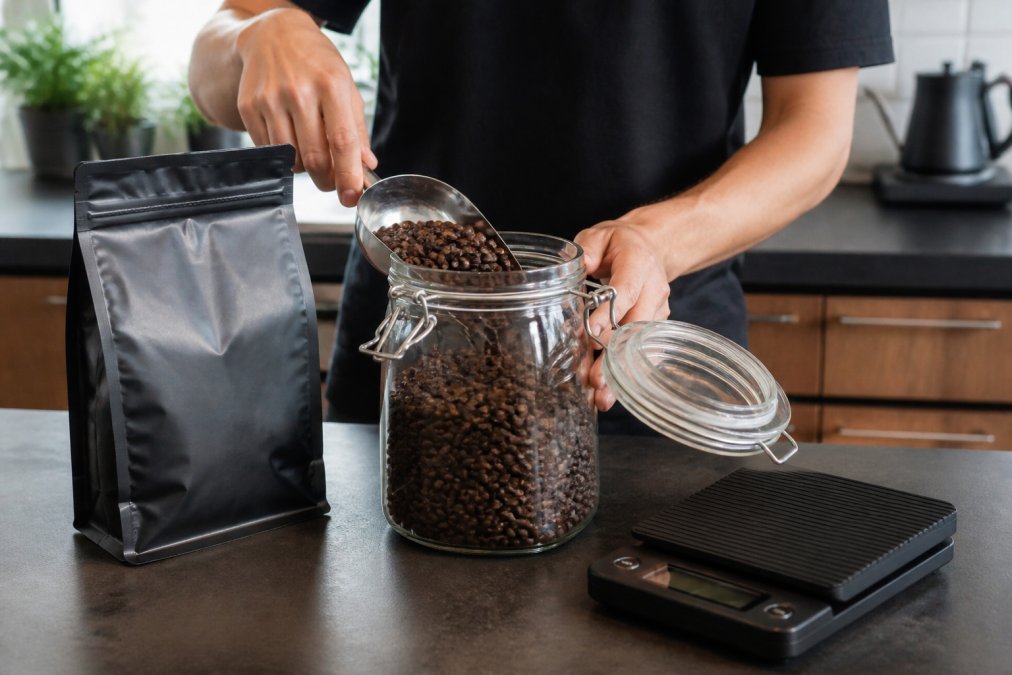
Store coffee beans in an airtight, opaque container at room temperature, away from light and heat, and grind right before brewing. Skip the refrigerator entirely. Whole beans kept this way hold their flavor about two weeks; ground coffee fades within days (Storage and shelf life - NCA). Knowing why these rules exist lets you make good decisions when your kitchen, schedule, or bag size doesn't match the ideal.
What's Actually Happening Inside the Bag
Freshly roasted beans go through two overlapping processes that determine how long they stay good:
Degassing. In the first few days after roasting, beans release carbon dioxide trapped during the roast.
The Storage Rules, and Why Each One Exists
Freezing: When It Helps and When It Hurts
A Realistic Shelf-Life Timeline
What to Look For When You Buy Freshly Roasted Coffee Beans Online
Use this checklist before you check out:
Frequently Asked Questions
How can you tell if coffee beans are freshly roasted?
Check the roast date on the bag, not just the best-by date. Freshly roasted coffee beans smell intensely aromatic when you open the bag, feel slightly oily or matte depending on roast level, and produce a bloom of bubbles when hot water hits the grounds. If the beans smell flat or stale, they are past their peak. Ordering from a roaster that prints the roast date, like Mocha Me Crazy, takes the guesswork out of it.
How long do freshly roasted coffee beans stay fresh?
Peak flavor lasts roughly 2 to 4 weeks after the roast date for whole bean coffee. After that, oxidation gradually dulls the aroma and tasting notes. Buying smaller quantities more often beats stocking up. Store beans in an airtight container away from light, heat, and moisture. If you buy freshly roasted coffee beans online, check the roast date on arrival and plan to finish the bag within a month.
Is it worth buying coffee beans online for home brewing?
Yes, if freshness matters to you. Grocery store bags often sit on shelves for months before you buy them. Online roasters ship within days of roasting, so you get beans closer to peak flavor. The trade-off is planning ahead for shipping time. Sample packs from Mocha Me Crazy let you try several single origins before committing to a full-size bag.
What should I look for when buying coffee beans online?
Look for a printed roast date, whole bean options, and clear origin information. Single origin beans list the region, altitude, and processing method, which tells you what flavor to expect. Sample packs are a smart first order if you are unsure which profile you prefer. Avoid listings that only show a best-by date with no roast date, since you cannot judge actual freshness.