

Best Atlas Coffee Club Alternatives for Freshness
Table of Contents
- What to Look for in a Coffee Subscription for Maximum Freshness
- Why Roast-to-Order Coffee Subscriptions Deliver Superior Freshness
- How Freshness is Measured: Roast Date, Oxidation, and Shelf Life
- Coffee Subscription with No Commitment: Flexibility That Matters
- How to Store Coffee Beans for Freshness After Delivery
- Single-Origin Beans and Sourcing Transparency: What Sets Alternatives Apart
- Choosing Your Next Coffee Subscription: Decision Framework
Last Updated: August 24, 2026
What to Look for in a Coffee Subscription for Maximum Freshness
When shopping for a coffee subscription, freshness is the difference between vibrant coffee and flat coffee. The best subscriptions prioritize roast-to-order models, transparent sourcing, and fast delivery because these factors directly control how fresh your beans are when they arrive. At Mocha Me Crazy, every order gets roasted on demand, so your coffee reaches peak flavor within days, not weeks.
Four measurable factors separate truly fresh subscriptions from the rest: a roast date printed on every bag, flexibility to pause or skip shipments, sourcing transparency with specific farm information, and fast shipping. A coffee subscription with no commitment matters because life changes and taste preferences shift, you're never forced to accept stale stock just to avoid fees.
Why Roast-to-Order Coffee Subscriptions Deliver Superior Freshness
Roast-to-order is fundamentally different from the warehouse-stock model that dominates the industry. When a roaster roasts beans in bulk and stores them for weeks before shipping, oxidation begins immediately. The beans lose aromatic compounds, oils turn rancid, and the acidity profile flattens.
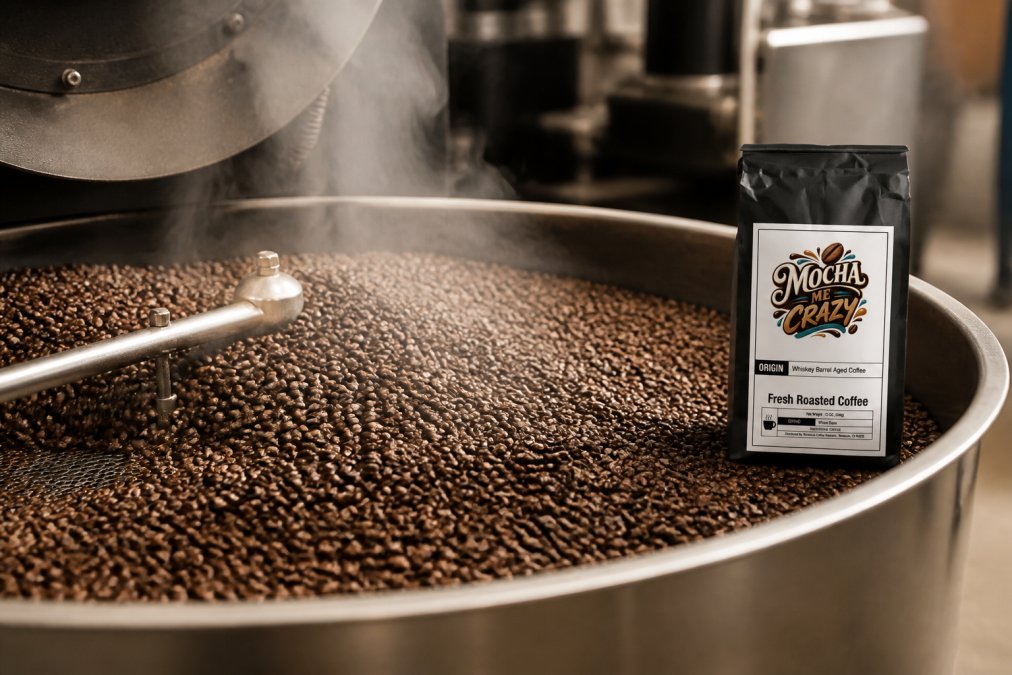
A roast-to-order model inverts this timeline. Your order triggers production. The roaster pulls green beans from inventory, runs them through the roaster to your specifications, lets them cool and degas for a few hours, packages them, and ships them out, often within 48 hours. The beans are still in their flavor prime when they arrive.
Fresh roasted beans produce more CO2 during the first few days post-roast, a process called degassing (peer-reviewed research). This CO2 contributes to a fuller body and richer mouthfeel when you brew. Beans that have already degassed over weeks in a warehouse won't produce that same effect. You'll notice it most in pour-over brewing, where the bloom stage is critical to extraction.
Roast-to-order subscriptions also give you real customization. You can request a specific roast level, medium, medium-dark, or dark, and get exactly what you want, roasted to order.
How Freshness is Measured: Roast Date, Oxidation, and Shelf Life
Freshness in coffee is measured primarily by roast date. From that moment forward, a clock starts ticking on the bean's flavor window.
Oxidation is the primary culprit in flavor degradation. Coffee beans are porous, and oxygen penetrates the bean structure over time. This oxidation turns the oils rancid and breaks down the aromatic compounds that make coffee taste complex and vibrant.
The shelf life of roasted coffee depends on storage conditions and packaging. In an airtight, opaque container away from heat and light, roasted beans maintain good flavor for about two to three weeks post-roast (peer-reviewed research). After four weeks, the flavor noticeably flattens. After eight weeks, most people can taste staleness clearly, the coffee becomes thin, the acidity becomes sharp in an unpleasant way, and the finish tastes hollow.
This is why a coffee subscription with no commitment makes practical sense. If you're receiving beans every two weeks, you'll always be brewing coffee that's between zero and two weeks post-roast, right in the optimal window.
| Roast Age | Flavor Profile | Oxidation Level | Best Brewing Method |
|---|---|---|---|
| 0-3 days | Bright, floral, complex aromatics | Minimal | Pour-over, French press |
| 3-10 days | Balanced, full body, peak sweetness | Low | Any method works well |
| 10-21 days | Still pleasant, slightly muted acidity | Moderate | Espresso, Aeropress |
| 21-30 days | Flat, thin body, sharp acidity | High | Strong brewing helps mask staleness |
| 30+ days | Noticeably stale, hollow finish | Very high | Avoid if possible |
The degassing process matters for measurement. Beans degas most rapidly in the first 24-48 hours post-roast (peer-reviewed research). This is when the beans are at their most aromatic and flavorful.
Coffee Subscription with No Commitment: Flexibility That Matters
A coffee subscription with no commitment removes the financial and logistical pressure to consume beans on a schedule that doesn't match your actual usage. Coffee consumption varies. Some weeks you're brewing four cups daily. Other weeks you're traveling or your routine shifts. A locked-in subscription forces you to accept shipments on a fixed calendar regardless of whether you've finished the previous bag.
When stuck with a commitment, you face a choice: brew stale beans to clear inventory before the next shipment arrives, or let beans sit untouched while they oxidize. A no-commitment model lets you pause shipments without penalty.
The operational advantage is equally important. Roast-to-order subscriptions require you to actively manage your subscription, pause it, resume it, adjust frequency. This active engagement means you're more likely to receive beans you actually want to drink and less likely to waste money on inventory that sits around.
Mocha Me Crazy's approach is straightforward: no subscription lock-in, no restocking fees, no hidden cancellation clauses. You order when you want fresh beans. You can adjust frequency, skip months, or cancel anytime.
How to Store Coffee Beans for Freshness After Delivery
Storage is the final frontier of freshness control. Even if you receive beans roasted 48 hours prior, poor storage can degrade them within days. The enemies are light, heat, oxygen, and moisture.
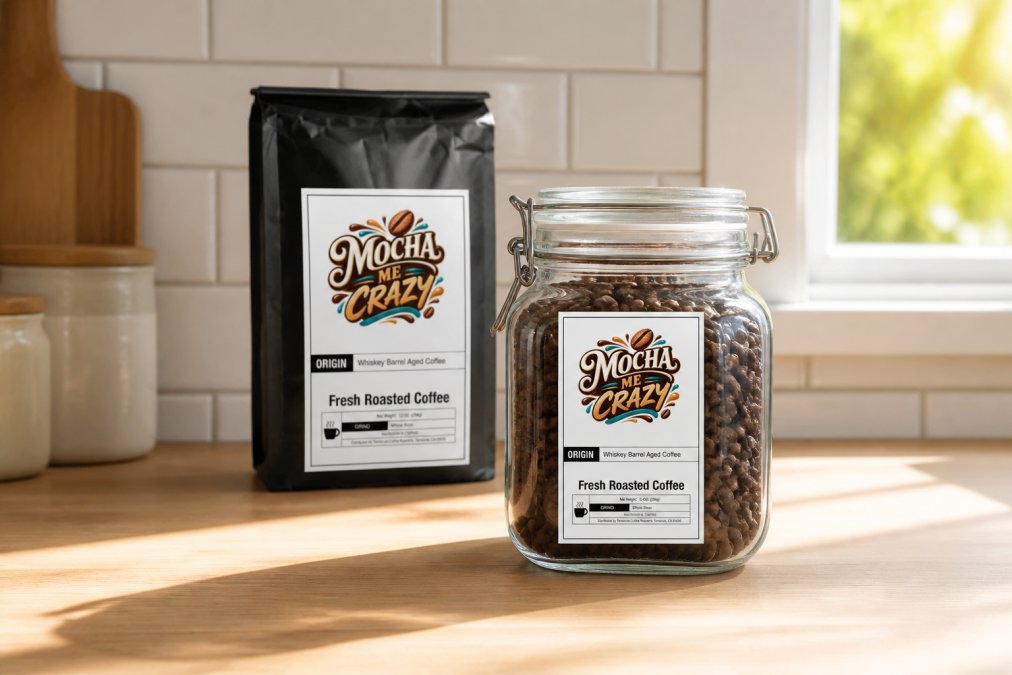
The ideal storage container is airtight, opaque, and kept in a cool location away from direct sunlight. Glass containers with airtight seals work well. Ceramic canisters with rubber gaskets are excellent. Avoid clear containers, light penetration accelerates oxidation.
Location matters as much as container. A kitchen cabinet away from the stove is ideal. A pantry works. Your freezer is a common recommendation, but it's actually suboptimal unless you're storing beans for months. Freezing introduces condensation when you remove beans to brew, which introduces moisture. For beans you'll consume within three to four weeks, room temperature in an airtight container is superior.
Never store beans in the refrigerator. Temperature fluctuations every time you open the door, combined with humidity, accelerate staleness.
The one-way valve on coffee bags lets CO2 escape while blocking oxygen from entering. Once you open the bag, that valve becomes useless. Transfer the beans to an airtight container immediately.
Grind size affects storage too. Whole beans store longer than pre-ground because grinding increases surface area, which accelerates oxidation. Choose whole bean and grind just before brewing. Pre-ground coffee should be used within two weeks of delivery. Whole beans stay fresh for three to four weeks in proper storage.
Single-Origin Beans and Sourcing Transparency: What Sets Alternatives Apart
Single-origin beans come from a specific farm, region, or cooperative, not a blend of beans from multiple origins. This specificity gives you traceability. You know exactly where your beans came from, what altitude they were grown at, what processing method was used, and often, the name of the farmer or cooperative that grew them.
Sourcing transparency goes beyond just stating the origin. The best coffee subscriptions provide detailed information: the specific farm name, the cooperative or exporter, the altitude, the varietal, the harvest date, and the processing method. This level of detail indicates a roaster invested in supplier relationships and quality control at every stage.
Why does this matter for freshness? Because sourcing transparency correlates with freshness practices. A roaster that cares enough to list farm altitude and processing method also cares about roast dates and roast-to-order models.
Single-origin beans also taste different from blends. The flavor profile is more distinctive, more tied to terroir. Ethiopian Natural beans taste fruity and floral. Brazilian Santos beans taste smooth and chocolatey. Kenyan beans taste bright and citrusy.
Mocha Me Crazy's single-origin offerings, Bali Blue, Brazil Santos, Colombia, Ethiopia Natural, are roasted to order specifically to preserve these flavor profiles. The Bali Blue comes from smallholder farmers in Kintamani at 1,200-1,600 meters altitude, processed using a wet-hull method, and roasted to a medium-dark level to bring out dark chocolate and molasses notes. Because it's roasted on demand, those flavor characteristics are at their peak when you brew it.

Direct trade and fair trade certifications are also transparency markers. Both indicate a roaster with supply chain integrity, which correlates with freshness practices.
Choosing Your Next Coffee Subscription: Decision Framework
Selecting a coffee subscription comes down to prioritizing what matters most to you. If freshness is your primary concern, roast-to-order is non-negotiable.
Start by asking: Does this subscription roast to order, or do they roast in bulk and warehouse stock? If they won't answer clearly, move on. A legitimate roast-to-order operation will tell you their standard roast-to-ship window. Mocha Me Crazy roasts within 48 hours of shipment, so your beans are typically less than three days old when they arrive.
Next, evaluate flexibility. Can you pause, skip, or cancel without penalty? Can you adjust frequency? Can you choose grind size and roast level? These options indicate a roaster confident in their product and not dependent on subscription lock-in.
Then assess sourcing transparency. Do they list specific farm information, altitude, varietal, and processing method? Do they offer single-origin options?
Finally, consider value. Price matters, but it's not the only factor. A subscription at $24.99 per bag that arrives roasted within 48 hours and stays fresh for three weeks offers better value than a cheaper option that arrives stale.
| Evaluation Criteria | What to Look For | Why It Matters |
|---|---|---|
| Roasting Model | Roast-to-order, 24-48 hour window | Ensures beans are at peak freshness on arrival |
| Commitment Terms | No lock-in, pause/skip/cancel anytime | Lets you control consumption pace and avoid waste |
| Sourcing Detail | Specific farm, altitude, varietal, process | Indicates quality focus and supply chain integrity |
| Customization | Choice of grind size, roast level, frequency | Lets you optimize for your brewing method and taste |
| Pricing | $20-30 per bag for specialty single-origin | Reflects quality sourcing and small-batch roasting |
| Shipping Speed | Delivery within 3-5 days of roasting | Minimizes oxidation time in transit |
Mocha Me Crazy fits this framework across every dimension. Single-origin beans roasted to order at $24.99 per bag, shipped within days of roasting, with no subscription lock-in. You choose your roast level, medium, medium-dark, or dark, and we roast accordingly. You can order one bag or set up a recurring shipment and pause anytime. The Whiskey Barrel Aged, Bali Blue, Brazil Santos, Colombia, and Ethiopia Natural options give you variety in flavor profile and sourcing region.

The decision ultimately comes down to this: Are you willing to pay slightly more for demonstrably fresher coffee, or are you optimizing for the lowest price? If freshness is your priority, roast-to-order subscriptions with transparent sourcing and no commitment will outperform warehouse-roasted alternatives every time.
Freshness in coffee isn't a luxury, it's the foundation of a good cup. A roast-to-order subscription eliminates the guesswork and staleness that comes with warehouse inventory. Mocha Me Crazy's commitment to roasting every order on demand, combined with single-origin sourcing and transparent farm information, ensures that your beans arrive at peak flavor. Start with our Brazil Santos or Ethiopia Natural to experience the difference freshness makes. No commitment, no restocking fees, just fresh coffee delivered to your door.
Frequently Asked Questions
How can you tell if coffee beans are truly fresh?
Fresh beans show a shiny, oily surface and release visible CO2 when first brewed (called bloom). Check the roast date on the bag, beans roasted within 2-4 weeks deliver optimal flavor and aroma. Stale beans appear dull and flat-looking. Taste is the final test: fresh coffee has bright acidity and complex flavor notes, while aged beans taste flat or bitter. Roast-to-order subscriptions eliminate guesswork by roasting immediately before shipment.
Does roast date matter for coffee subscription services?
Yes, roast date is the single most important freshness indicator. Beans peak in flavor 3-10 days post-roast as CO2 degasses naturally. After 4 weeks, oxidation degrades flavor compounds and acidity fades. A roast-to-order coffee subscription ensures your beans arrive within days of roasting, not weeks. Traditional warehouse-stocked subscriptions ship pre-roasted inventory, meaning your coffee may already be 2-3 weeks old on arrival. Always verify the roast date before purchasing.
What is the difference between roast-to-order and pre-packaged coffee in subscriptions?
Roast-to-order means beans are roasted after you place your order, then shipped immediately, typically arriving within 3-5 days. Pre-packaged subscriptions roast in bulk batches and store inventory in warehouses before shipping, meaning beans may be 2-4 weeks old when you receive them. Roast-to-order preserves more of the bean's natural acidity, aroma, and flavor profile. The trade-off: roast-to-order costs slightly more and requires longer shipping times, but delivers measurably fresher coffee.
How long does coffee stay fresh after the roast date?
Coffee peaks in flavor 3-10 days after roasting when CO2 has mostly degassed. It remains good for 2-4 weeks if stored properly in an airtight container away from light and heat. After 4 weeks, oxidation accelerates and flavor compounds break down noticeably. Whole beans stay fresher longer than pre-ground coffee, which oxidizes within days. Freezing can extend shelf life to 3-4 months, but thawing can introduce moisture. For best results, use beans within 3-4 weeks of the roast date.
Are artisan coffee subscriptions worth the extra cost compared to grocery store options?
Yes, if freshness and flavor matter to you. Artisan roasters prioritize single-origin sourcing, direct trade relationships with farmers, and roast-to-order freshness. Grocery store coffee is often 2-6 months old, pre-ground, and blended for consistency rather than character. Artisan subscriptions cost $20-30 per pound versus $8-12 for grocery brands, but deliver noticeably brighter acidity, complex tasting notes, and superior aroma. For home-office workers and coffee enthusiasts who brew daily, the difference in cup quality justifies the premium.
This article was written using GrandRanker