

Eco Friendly Coffee Packaging Options Explained
Table of Contents
- Why Coffee Packaging Choices Matter More Than Ever
- The Main Eco Friendly Coffee Packaging Options Compared
- Compostable Coffee Bags: What Actually Breaks Down
- Recyclable Coffee Packaging Materials and How to Choose Them
- Coffee Freshness and Packaging Standards: Barrier Properties That Protect Flavor
- Cost, Supply Chain, and Greenwashing: What Competitors Skip
- Conclusion: Choosing Packaging That Matches Your Brand
- Frequently Asked Questions
Last Updated: September 30, 2026
Why Coffee Packaging Choices Matter More Than Ever
Walk into any specialty roastery and you'll notice the bags have changed. Kraft paper is back, mono-material films are replacing multilayered laminates, and "compostable" labels are showing up on shelves that carried glossy foil pouches five years ago. Eco friendly coffee packaging options explained properly come down to one tension: coffee needs serious protection from oxygen and moisture, but the packaging protecting it often can't be recycled or composted in practice.
The Main Eco Friendly Coffee Packaging Options Compared
Three material families dominate sustainable coffee packaging today: kraft paper with a plastic liner, mono-material and post-consumer recycled films, and PHA or compostable film pouches. Each trades off barrier performance, cost, and end-of-life handling differently.
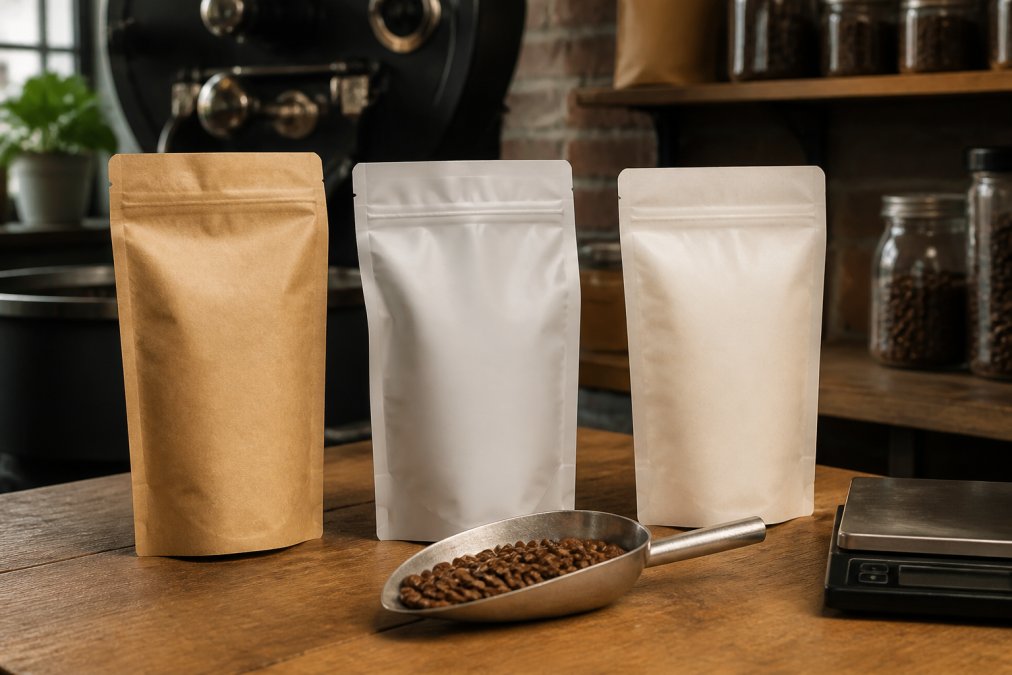
| Option | Barrier Strength | End-of-Life Reality | Best For |
|---|---|---|---|
| Kraft paper + LDPE liner | Moderate | Liner often landfilled | Short shelf life, local sales |
| Mono-material / PCR film | High | Store drop-off recycling | Retail with fast turnover |
| PHA / compostable film | Moderate | Industrial composting only | Local compost programs |
Kraft Paper and Low-Density Polyethylene Liners
Kraft paper bags with a low-density polyethylene liner are the most recognizable eco-friendly format, but the liner is the catch. Most curbside programs won't accept the combined material, so the bag usually ends up in landfill unless a store collection point exists. Paper without a liner sacrifices freshness fast.
Mono-Material and Post-Consumer Recycled Films
Mono-material structures use a single polymer type so the whole bag can be recycled as one unit. Post-consumer recycled content reduces virgin plastic demand. These films hold high-barrier properties well, which matters because oxygen transmission rate and moisture barrier determine shelf life.
PHA Pouches and Compostable Film
PHA pouches and compostable film break down in industrial composting conditions, not a backyard bin. They suit roasters selling locally where a commercial composting stream exists. Barrier performance is improving but still trails mono-material film for long storage.
Compostable Coffee Bags: What Actually Breaks Down
Compostable coffee bags only break down in industrial composting facilities that reach sustained high temperatures, not in a home compost pile or landfill. That distinction matters because a bag labeled compostable can sit intact for years if it never reaches the right facility. Certification standards, not marketing language, are what separate genuine compostable film from wishful labeling.
Recyclable Coffee Packaging Materials and How to Choose Them
Recyclable coffee packaging materials work best when the entire structure is one material, because recycling systems sort by material type. A doypack made from a single polymer streams cleanly; a foil-and-plastic laminate does not. But "mono-material" is a starting point, not a decision. Here is how to choose with specifics.
Read the Recycling Code, Not the Label
The resin identification code stamped on the bag tells you what a sorter will see. The codes most relevant to coffee packaging:
- #2 HDPE and #4 LDPE, flexible films in these resins are the ones most commonly accepted at store drop-off collection points for plastic bags and wraps. A mono-material LDPE or HDPE pouch has the clearest path.
- #5 PP, polypropylene mono-material pouches are increasingly recyclable but acceptance varies widely by program.
- #7 Other, includes many multi-material laminates and some bio-based films. Curbside programs almost never accept #7, and store drop-off usually will not either.
The Store Drop-Off Pathway
Most curbside programs do not accept flexible films, even mono-material ones, because the material wraps around sorting equipment. The realistic pathway for most coffee pouches is store drop-off: the collection bins at grocery and big-box retailers that accept plastic bags and wraps. That pathway has two requirements your customers must meet:
- The bag must be clean and dry.
- The bag must be a film the program accepts, typically #2 and #4.
A Decision Framework for Roasters
Work through these in order:
- What is your shelf-life requirement? High-barrier needs push you toward EVOH-containing mono-material films. Short shelf life and local sales open up kraft paper and compostable options.
- What disposal pathway do your customers actually have? If they are urban and near store drop-off, mono-material film is the strongest choice. If they are near a commercial compost facility, compostable film becomes viable. If neither, be honest about the trade-off.
- Does the barrier match the format? Verify oxygen transmission rate and moisture barrier against your target shelf life before committing.
- Does the cost fit your margin? Run the landed-cost comparison before you fall in love with a format.
- Can you verify the claim? Get the resin code, the certification, and the material composition in writing.
What to Ask Your Supplier
Before you commit to a sustainability claim, request:
- A written material composition sheet naming the exact polymer(s) and resin code.
- The recycled-content percentage and its certifying body, if applicable.
- The compostability certification and the standard it meets, if applicable.
- A lead-time range and the film's country of origin.
Mono-material and post-consumer recycled films remain the most reliable recyclable choice for roasters who want barrier performance without a laminate, but only when the resin code, the disposal pathway, and the customer instruction all line up.
Coffee Freshness and Packaging Standards: Barrier Properties That Protect Flavor
Coffee freshness and packaging standards revolve around two measurements: oxygen transmission rate and moisture barrier. Roasted beans release carbon dioxide for days after roasting and simultaneously degrade when exposed to oxygen. A high-barrier pouch slows both problems. Material science here is practical, not academic: EVOH layers block oxygen, foil blocks everything but complicates recycling, and mono-material films balance both.
Specialty Coffee Association guidance on freshness and storage
Understanding One-Way Degassing Valves
A one-way degassing valve lets carbon dioxide escape the bag while keeping oxygen out. Without it, a sealed bag of fresh coffee inflates and can burst. The valve is a small but essential component of packaging integrity, and it works on any material type, including kraft paper and compostable film.
Cost, Supply Chain, and Greenwashing: What Competitors Skip
Most guides stop at material properties. The decisions that actually determine whether a sustainable format survives past the first production run are cost, supply reliability, and whether your sustainability claim can survive a customer's scrutiny. Here is how to work through all three.
A Realistic Cost-Benefit Framework
Sustainable formats almost always carry a higher unit price than conventional foil-and-plastic laminates, but unit price is the wrong number to optimize. Build the comparison around four line items:
- Unit cost delta. Compostable film and PHA pouches typically run above conventional laminates per bag; mono-material and post-consumer recycled films sit closer to parity. Get quotes at your actual order quantity, not a sample-tier price.
- Minimum order quantity and cash tied up. Eco formats often carry higher MOQs because fewer converters run them. A higher MOQ at a lower unit price can still cost more in working capital than a smaller run at a higher unit price.
- Freight and lead time. Specialty films may ship from fewer facilities, adding transit time and freight cost. Factor both into landed cost, not just the invoice.
- Brand and retention value. A common pattern is that roasters recover the delta through positioning and repeat purchase rather than through the packaging line itself. Track whether customers cite packaging in reviews and reorders before assuming the premium pays for itself.
Supply Chain Logistics of Sustainable Materials
Availability is the quiet failure point. PHA and compostable films are produced by a limited number of suppliers, so lead times can stretch well beyond what converters quote for standard laminates. A practical approach:
- Ask your converter for the film's origin and whether it is stocked domestically or imported.
- Request a lead-time range, not a single number, and confirm it in writing.
- Qualify a second supplier before you commit to a format, even if you never use them.
- Order a small production run before a seasonal launch so a delay does not strand your roast schedule.
Greenwashing vs. Genuine Sustainability
"Eco-friendly," "green," and "biodegradable" are marketing words, not verified claims. The FTC Green Guides set the standard for environmental marketing claims, and the FTC has brought enforcement actions over overstated recyclability and compostability claims. Two habits protect you:
- Match the claim to a certification. For compostability, look for third-party certification marks such as BPI (Biodegradable Products Institute) in the U.S., which verifies a product meets ASTM compostability standards for industrial facilities. For recycled content, ask for the percentage and the certifying body.
- Match the claim to a real disposal pathway. A bag is only "recyclable" if your customers' local programs actually accept it. A bag is only "compostable" if a commercial facility is reachable. If neither is true, say so plainly on the bag.
End-of-Life Instructions Your Customers Can Actually Follow
This is the step most roasters skip, and it is the one that determines whether your packaging choice delivers its promised benefit. Print a short disposal line on the bag itself:
- Mono-material / PCR film: "Rinse and return to a store drop-off recycling location." Point customers to a store locator rather than a generic recycling symbol.
- Compostable film: "Industrial composting only, check your local commercial compost program." Do not imply backyard compostability unless the film is certified for it.
- Kraft paper with liner: "Separate the liner from the paper where your program allows; otherwise, dispose of as trash."
Conclusion: Choosing Packaging That Matches Your Brand
The right packaging matches your sales channel, your shelf life, and the disposal options your customers genuinely have. For roasters shipping freshly roasted coffee direct, the priority is barrier performance, which mono-material and post-consumer recycled films deliver without the recycling headaches of laminates. At Mocha Me Crazy, we roast every order on demand and focus on getting maximum flavor and aroma into every cup, with fast and reliable delivery and a simple ordering process.
Frequently Asked Questions
What are the most common eco friendly coffee packaging options?
The most common options are kraft paper bags with low-density polyethylene liners, mono-material flexible packaging, post-consumer recycled films, and compostable film pouches made from PHA or similar materials. Each has trade-offs between barrier performance, recyclability, and cost. Kraft paper offers a natural look but needs a liner for moisture barrier. Mono-material structures simplify recycling. Compostable pouches break down in industrial facilities but usually not in a home bin. Your choice depends on your roast volume, shelf life needs, and what your customers can actually dispose of locally.
How do I distinguish between compostable and recyclable coffee bags?
Check the certification label, not the marketing copy. Compostable coffee bags carry a certification showing they meet ASTM D6400 or similar standards for industrial composting. Recyclable coffee packaging materials are accepted in curbside programs, which usually means mono-material structures like all-polyethylene or all-paper designs. A bag labeled 'biodegradable' without a certification is neither reliably compostable nor recyclable. Look for the specific certification body and the disposal instructions printed on the bag itself. When in doubt, ask your supplier for the test documentation behind the claim.
Why is packaging material important for maintaining coffee freshness?
Coffee freshness and packaging standards revolve around three threats: oxygen, moisture, and light. Oxygen transmission rate measures how much oxygen passes through the film, and even small amounts cause stale, flat flavors within weeks. Moisture barrier keeps the beans from absorbing humidity and losing crispness. High-barrier structures using EVOH or metallized layers block both far better than single-layer films. A one-way degassing valve lets carbon dioxide escape after roasting without letting oxygen in. Without adequate barrier properties, even beans roasted the same day will taste old within a month.
Are all compostable coffee bags truly home-compostable?
No. Most compostable coffee bags are certified for industrial composting, which requires sustained high temperatures that a backyard pile rarely reaches. A bag may meet ASTM D6400 for industrial facilities but still sit intact in a home compost bin for years. If home composting matters to your customers, ask suppliers specifically for home-compostable certification, which is a separate and stricter standard. Many brands solve this by printing clear disposal instructions on the bag: 'Industrial composting only' or 'Check local facilities.' Being honest about end-of-life prevents the greenwashing problem that erodes customer trust.
What is the 15-15-15 coffee rule and how does it relate to packaging?
The 15-15-15 rule is a freshness guideline: green coffee stays good for about 15 months, roasted whole beans for about 15 weeks, and ground coffee for about 15 minutes before flavor drops noticeably. Packaging directly affects the middle number. A high-barrier bag with a degassing valve can hold roasted beans near peak for those 15 weeks. A low-barrier kraft bag without a valve might cut that to a few weeks. If your brand sells ground coffee, the rule shows why packaging integrity matters even more: the clock runs faster once the bean is broken.
How much more does sustainable coffee packaging cost compared to traditional options?
Sustainable packaging typically costs more per unit than conventional multi-layer film, though the gap varies widely by material and order volume. Compostable films and mono-material high-barrier structures often carry a premium because they use specialty resins and smaller production runs. Post-consumer recycled content can also add cost depending on supply availability. The offset comes from customer loyalty, reduced regulatory risk, and marketing value. For a small roaster, the practical move is to start with one SKU in a recyclable mono-material pouch, measure customer response, then expand if the numbers work.
What should I print on my coffee bags for end-of-life disposal?
Print clear, specific instructions based on what the bag actually is. For a mono-material recyclable pouch, say 'Recycle with soft plastics where accepted' and note that store drop-off programs often take them. For an industrially compostable bag, say 'Industrial composting only, not for home bins.' For a kraft paper bag with a liner, tell customers to separate the liner from the paper if their facility requires it. Vague symbols without words confuse people. Specific disposal instructions reduce contamination in recycling streams and show customers you thought about the full life cycle, not just the shelf.