

Freshly Roasted Coffee for Sensitive Stomachs
Table of Contents
- Why Regular Coffee Upsets Sensitive Stomachs
- Low Acid Coffee Benefits for Digestive Sensitivity
- Dark Roast vs Light Roast for Sensitive Stomach
- Brewing Methods That Reduce Acidity
- How to Tell If Coffee Beans Are Fresh
- Freshly Roasted Coffee Picks for Sensitive Stomachs
- Coffee Alternatives for Extreme Sensitivity
- Conclusion
Last Updated: August 22, 2026
Sensitive stomachs and coffee have a complicated relationship. Most people assume they just need to drink less, but the real issue is usually what kind of coffee they're drinking, how fresh it is, and how it was brewed. At Mocha Me Crazy, we hear this constantly: "I love coffee, but coffee doesn't love me back." The good news is that freshly roasted coffee for sensitive stomachs is a genuinely different experience from the stale, over-extracted options sitting on grocery store shelves. Below, we'll walk through exactly why certain coffees cause distress, what the science says about acidity and roasting, and which specific choices make the biggest difference for your gut.
Why Regular Coffee Upsets Sensitive Stomachs
Regular coffee triggers digestive discomfort through a combination of acids, brewing variables, and bean freshness.
Chlorogenic Acid, NMP, and Your Stomach Lining
Chlorogenic acid is the primary irritant in coffee for most people. This naturally occurring polyphenol stimulates gastric acid secretion, which can irritate the stomach lining and trigger heartburn and GERD symptoms. The fresher and lighter the roast, the higher the chlorogenic acid content.
Roasting creates N-methylpyridinium (NMP), a compound that works against this irritation. According to research published in Molecular Nutrition & Food Research, NMP inhibits the acid-producing enzyme in stomach cells, which is why darker roasts are often better tolerated by people with gastrointestinal distress. A dark roast from freshly roasted beans delivers more NMP and less chlorogenic acid than a light roast, making the chemistry work in your favor.

How Caffeine Content Plays a Role
Caffeine is a smooth muscle stimulant that relaxes the lower esophageal sphincter, the valve that keeps stomach acid from traveling back up into the esophagus. This is why caffeine sensitivity compounds the problem for people already dealing with GERD or chronic heartburn.
Decaf doesn't eliminate the issue entirely, since other acids remain, but it removes one of the biggest triggers. For those with extreme caffeine sensitivity, a high-quality decaf processed without harsh chemical solvents is often the most practical solution.
Low Acid Coffee Benefits for Digestive Sensitivity
Low-acid coffee has a reduced concentration of acidic compounds, particularly chlorogenic acids and quinic acid, that cause stomach irritation. Standard brewed coffee has a pH around 5, which is notably acidic. Low-acid options typically achieve a gentler pH through bean selection, roasting profile, and brewing method.
Many people find that switching to low-acid options reduces afterburn and allows them to drink coffee earlier in the morning without discomfort on an empty stomach.
Arabica vs. Robusta Beans and Gut Health
Arabica beans are the better choice for sensitive stomachs. They naturally contain less caffeine than Robusta beans, roughly half the amount, and carry a smoother flavor profile with lower overall bitterness. Robusta beans dominate mass-market blends because they're cheaper to grow, but their higher caffeine and chlorogenic acid content makes them harder on the gut.
Single-origin Arabica beans, particularly those grown at high altitude in regions like Peru, tend to produce a naturally lower-acid cup. The growing conditions slow bean development, which affects the final acid composition.
| Factor | Arabica | Robusta |
|---|---|---|
| Caffeine content | Lower (~1.2%) | Higher (~2.7%) |
| Chlorogenic acid | Lower | Higher |
| Gut friendliness | Better | Harsher |
| Flavor profile | Smooth, complex | Bitter, sharp |
| Common in | Specialty coffee | Mass-market blends |
Dark Roast vs Light Roast for Sensitive Stomach
Dark roast wins for sensitive stomachs. As beans roast longer at higher temperatures, chlorogenic acids break down and NMP concentration increases. Both changes work in favor of people with digestive sensitivity.
How Roasting Profiles Change pH Level and Acidity
Light roasts retain more chlorogenic acid because they spend less time at high heat. A light roast, despite often tasting brighter and less bitter, can cause more gastrointestinal distress than a dark roast. The dark roast's lower acidity also means a gentler pH level in the final cup.
Medium roasts sit in the middle, offering a balance of flavor complexity and reduced acidity. For most people with mild sensitivity, a medium roast is a reasonable starting point. For those with more significant GERD or acid reflux issues, a dark roast is the more reliable choice.

Brewing Methods That Reduce Acidity
The brewing method you choose can be as important as the bean itself. Extraction temperature, contact time, and filtration all influence the final acidity of your cup.
Cold Brew vs. Hot Brew for Digestion
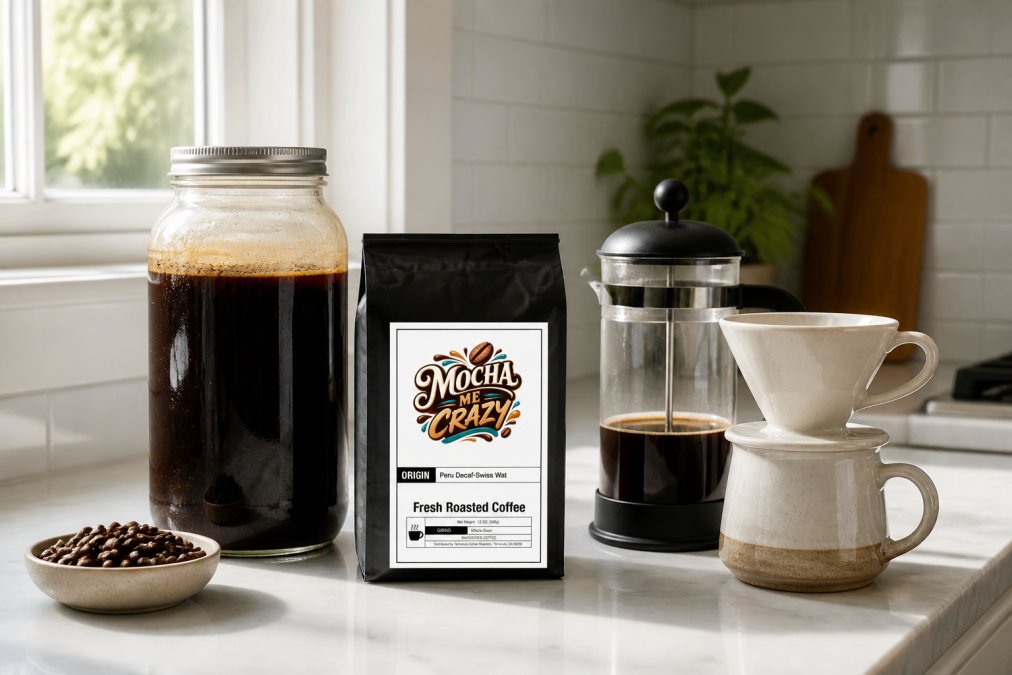
Cold brew is the gentlest brewing method for sensitive stomachs. Because cold brew extracts coffee using cold or room-temperature water over 12 to 24 hours, it produces a concentrate with significantly lower acid content than hot-brewed coffee. According to food chemistry analysis from the American Chemical Society, cold brew can be measurably less acidic than hot brew due to the temperature-dependent solubility of certain acidic compounds.
Hot drip coffee uses water near boiling, which accelerates the extraction of both desirable flavor compounds and acidic ones. Cold brew offers the lowest acidity and smoothest flavor, while pour-over with a paper filter removes most coffee oils and produces moderate acidity. Espresso's short extraction and concentrated format is often tolerated better than a full drip cup.
Water Chemistry and Mineral Content
Water chemistry has a direct impact on how acidic your brewed coffee tastes and how it interacts with your stomach. Water with higher magnesium content extracts coffee more thoroughly, pulling out more acidic compounds. Water with higher calcium content produces a softer, rounder extraction.
For sensitive stomachs, filtered water is a practical minimum. Water with a slightly higher pH, sometimes called alkaline water, can help buffer the natural acidity of the coffee without neutralizing it entirely.
How to Tell If Coffee Beans Are Fresh
Fresh coffee beans are those roasted within the past two to four weeks and properly stored to preserve their volatile aromatic compounds. Stale beans don't just taste flat; oxidized coffee oils produce compounds that increase bitterness and gastrointestinal distress.
Here's how to check freshness before you brew:
- Check the roast date, not the "best by" date. A roast date within the last 2-4 weeks is ideal.
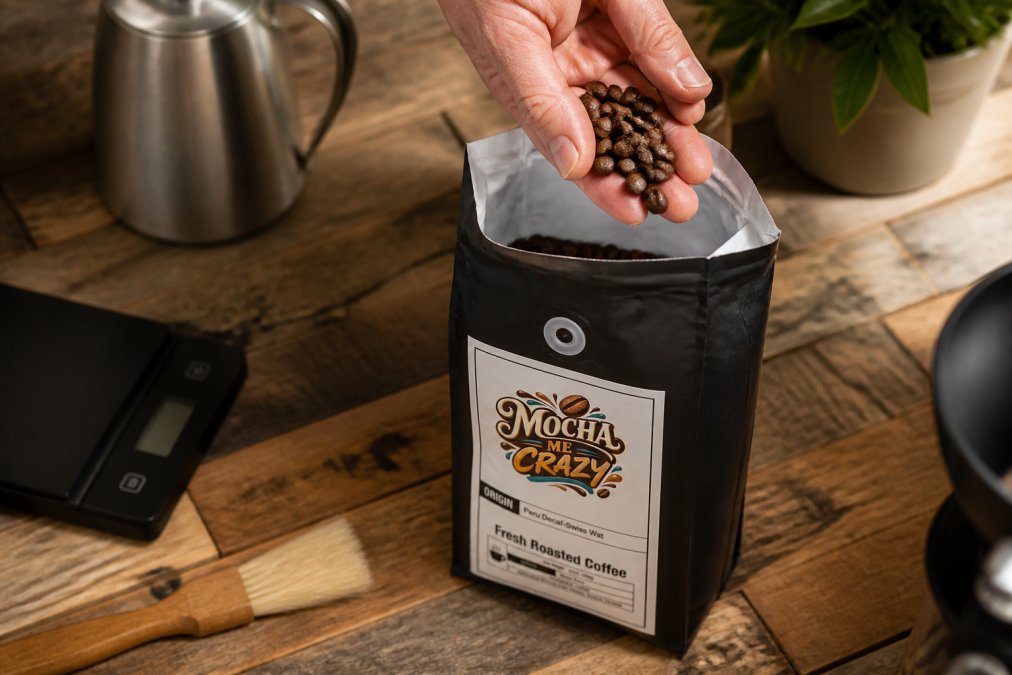
- Look for a degassing valve. Fresh beans off-gas CO2 after roasting. A one-way valve on the bag indicates the roaster understands freshness.
- Smell the beans. Fresh beans have a vivid, complex aroma. Stale beans smell flat or papery.
- Watch for bloom when brewing. When hot water hits fresh grounds, CO2 causes them to bubble and expand. No bloom means the beans are past their prime.
- Check the surface. Fresh dark roast beans often have a slight sheen from natural coffee oils. Dry, dull beans have lost their volatile compounds.
Freshly Roasted Coffee Picks for Sensitive Stomachs
Not all freshly roasted coffee is created equal for sensitive stomachs. Bean origin, roast level, and whether the coffee is caffeinated all factor into the equation. Here are two standout options from Mocha Me Crazy, both roasted to order.
Peru Decaf: Smooth, Low-Acid, and Gut-Friendly
The Peru Decaf is the most stomach-friendly option in the lineup. Single-origin Arabica beans from the Cooperativa Agricola de Servicios Norandino in Peru, roasted to a medium level, produce a cup with notes of caramel, smooth body, and a hint of citrus without sharp afterburn.

Medium roast sits in the sweet spot for acidity reduction without sacrificing flavor complexity. The decaf process removes the caffeine trigger that relaxes the esophageal sphincter, reducing acid reflux risk. At $24.99, it's priced for the quality of a single-origin, roasted-to-order bean.
Best for: People with GERD, acid reflux, or caffeine sensitivity who don't want to give up a full-flavored cup.
Mushroom Coffee Blends: A Stomach-Friendly Twist
Mocha Me Crazy's Coffee with Mushrooms Dark Roast and Coffee with Mushrooms Medium Roast blend specialty-grade coffee with Lion's Mane, Cordyceps, and Reishi mushrooms.
The dark roast version benefits from lower chlorogenic acid, higher NMP, and a smoother pH profile. The mushroom additions, particularly Reishi, have been studied for their potential gut-supportive properties, as noted in functional mushroom research from the National Institutes of Health. Both are available at $24.99 and roasted to order, ensuring peak freshness and maximum NMP content.
| Product | Roast | Caffeine | Best For | Price |
|---|---|---|---|---|
| Peru Decaf | Medium | None | GERD, acid reflux, caffeine sensitivity | $24.99 |
| Mushroom Dark Roast | Dark | Yes | Gut health support, lowest acidity | $24.99 |
| Mushroom Medium Roast | Medium | Yes | Balanced flavor, moderate sensitivity | $24.99 |
Coffee Alternatives for Extreme Sensitivity
Some people reach a point where even the best low-acid, freshly roasted coffee isn't enough. If you've tried dark roast, cold brew, decaf, and filtered water and your stomach still protests, it may be time to step away from coffee entirely.
Chicory root coffee is the closest in flavor profile to brewed coffee. It's naturally caffeine-free and well-tolerated by most people with gastrointestinal distress. Matcha offers caffeine in a different delivery mechanism; the L-theanine in matcha slows caffeine absorption, producing a gentler energy curve. Herbal tisanes and adaptogenic blends contain no caffeine and can be brewed with the same ritual care as coffee. Low-acid coffee concentrates diluted with more water or milk reduce the acid load without eliminating the experience entirely.
The core insight: freshly roasted coffee for sensitive stomachs isn't about settling for a lesser cup. It's about making smarter choices at the bean, roast, and brewing level. Dark roast, Arabica beans, cold brew or filtered drip, and beans roasted recently enough to have their chemistry working in your favor all make a measurable difference.
Managing digestive sensitivity while keeping your morning ritual intact is a real challenge, and generic grocery store coffee makes it harder than it needs to be. Mocha Me Crazy roasts every order on demand, which means the NMP levels are at their peak, the chlorogenic acid has broken down properly, and you're getting beans at the optimal window for both flavor and stomach tolerance. The Peru Decaf and mushroom coffee blends are specifically suited to sensitive stomachs, with sourcing and roast profiles chosen to minimize acidity without sacrificing the cup you actually want to drink. Get started with Mocha Me Crazy and experience freshly roasted coffee that works with your gut, not against it.
Frequently Asked Questions
What roast of coffee is best for sensitive stomachs?
Dark roasts are generally easier on sensitive stomachs than light roasts. The extended roasting process breaks down more chlorogenic acids and produces higher levels of N-methylpyridinium (NMP), a compound that may help reduce stomach acid secretion. Freshly roasted coffee for sensitive stomachs should also be brewed with filtered water and consumed without additives that can worsen heartburn or GERD symptoms.
Does the freshness of coffee beans affect acidity levels?
Yes, freshness matters. Stale coffee beans that have been sitting in a warehouse or on a store shelf for weeks undergo oxidation, which can increase bitterness and gastrointestinal distress. Freshly roasted beans retain a more balanced flavor and a more stable pH level. Ordering roasted-to-order coffee means you get beans at peak freshness, which tends to produce a smoother, less acidic cup compared to pre-packaged options.
How does the brewing method impact stomach sensitivity?
Cold brew produces significantly less acidity than hot drip coffee because cold water extracts fewer acidic compounds during the longer steeping process. A coarser grind, shorter extraction time, and filtered water with balanced mineral content also reduce acidity. For people with GERD or digestive sensitivity, cold brew or a full-immersion method like a French press with a metal filter often causes fewer symptoms than standard drip coffee.
What kind of coffee won't make my stomach hurt?
Low-acid, single-origin Arabica beans roasted to a medium or dark profile are the most stomach-friendly starting point. Decaf options remove most of the caffeine that stimulates acid production, making them a strong choice for people with acid reflux. Mushroom coffee blends that combine specialty-grade beans with adaptogens like Lion's Mane and Reishi are also worth trying, as they may support gut health while delivering a smooth, lower-acid cup.
This article was written using GrandRanker