

7 Healthy Meal Prep Ideas for Students
Last Updated: October 27, 2026
Quick Summary
Healthy meal prep ideas for students transform busy schedules into structured nutrition by preparing meals in advance, eliminating daily food decisions and removing temptation to grab expensive takeout. You cook once on Sunday and eat multiple times throughout the week, saving money, time, and stress while maintaining balanced nutrition during demanding schedules.
- Overnight oats last 3-5 days in the fridge and require no cooking, making them ideal for student breakfasts.
- Grain bowls stay fresh for 4-5 days and cost around $2.50 per serving compared to $12-15 for campus dining.
- Students can eat healthy for $30-50 per week by buying store brands, shopping sales, and purchasing proteins on discount.
- Cooked proteins, grains, and vegetables last 3-4 days in the refrigerator when stored in airtight containers.
- A typical Sunday prep takes 2-3 hours and provides breakfast and lunch for five days plus prepped proteins for dinner.
Table of Contents
- Why Healthy Meal Prep Works for Student Life
- Meal Prep Ideas for Breakfast, Lunch, and Dinner
- High-Protein Meal Prep Ideas on a Budget
- No-Cook Meals for Students During Exam Week
- Cheap Healthy Meals for Students: Budget Planning and Shopping
- Food Safety, Storage, and Reheating Your Prepped Meals
- Start Your Weekly Meal Prep Routine This Week
- Frequently Asked Questions
Why Healthy Meal Prep Works for Student Life
Healthy meal prep ideas for students transform the chaos of busy schedules into structured nutrition.
The real challenge isn't knowing what to eat. Explore natural alternatives to energy drinks that can sustain you through demanding study sessions without relying on caffeine-heavy beverages.
Here's what makes this approach work for student life specifically: it saves money, saves time, and removes the stress of daily cooking decisions.
Whether you're building meals for your study sessions, the principle is the same: preparation beats impulse. You can prep your meals once weekly for convenience.
The American Heart Association's nutrition guidelines for young adults emphasize the importance of consistent meal timing and balanced nutrition for maintaining energy and focus during demanding schedules.
Meal Prep Ideas for Breakfast, Lunch, and Dinner
Breakfast, lunch, and dinner form the foundation of your weekly prep. The key is choosing recipes that taste good cold or reheat well, hold up in a standard dorm fridge, and don't require complicated cooking techniques. Let's break down each meal type.
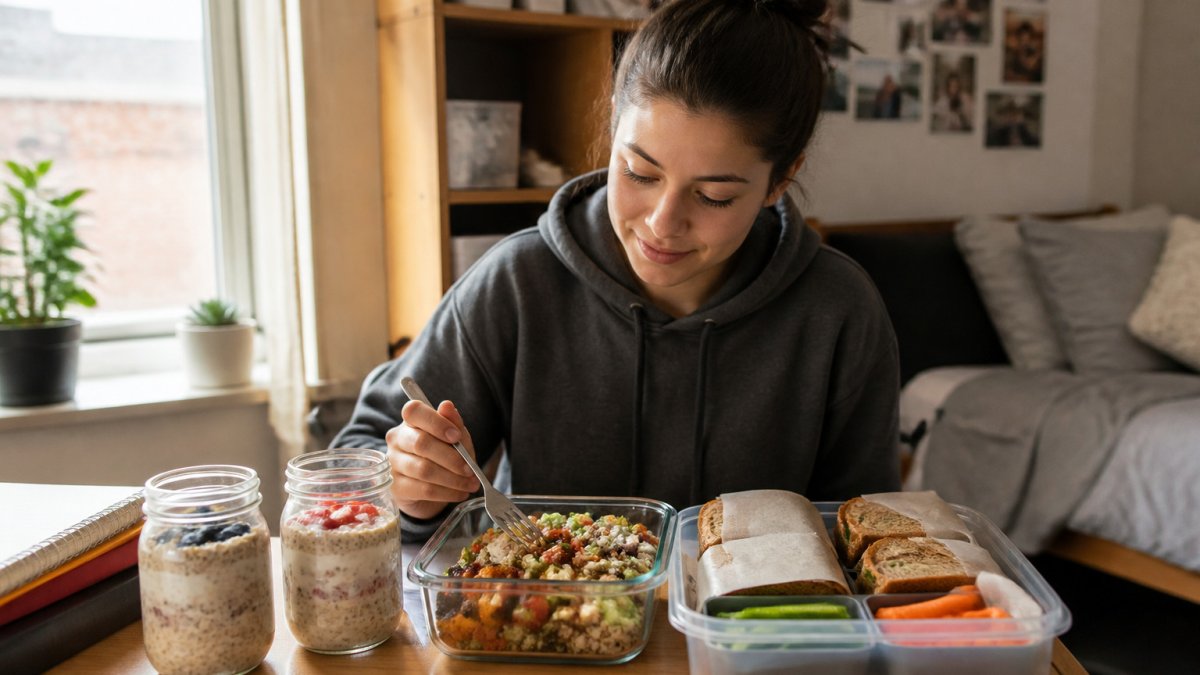
Breakfast: Overnight Oats and Egg Muffins
Overnight oats are the gold standard for student breakfasts. Mix rolled oats, yogurt, milk, and your choice of toppings in a mason jar the night before. Grab it from the fridge in the morning. No cooking required.
Popular overnight oats combinations:
- Oats + yogurt + berries + honey
- Oats + peanut butter + banana + cinnamon
- Oats + almond butter + apple + vanilla
- Oats + coconut milk + mango + chia seeds
Each jar lasts 3-5 days in the fridge. Make 5 jars on Sunday, eat one each weekday.
Egg muffins are savory, protein-packed, and freeze beautifully. Mix eggs with vegetables, cheese, and meat, pour into muffin tins, and bake. Pop them out, store in the fridge, and reheat in 30 seconds. One batch makes 12 muffins. Eat 2 per morning for six days.
Common egg muffin fillings:
- Eggs + spinach + feta + garlic
- Eggs + bell peppers + sausage + onion
- Eggs + broccoli + cheddar + ham
- Eggs + mushroom + cheese + herbs
Lunch: Grain Bowls and Wrap Fillings
Grain bowls are infinitely customizable and stay fresh for 4-5 days. Start with a base (rice, quinoa, or farro), add roasted vegetables, include a protein, and finish with a simple sauce.
Basic grain bowl structure:
- Base: 1 cup cooked grain
- Vegetables: 1.5 cups roasted or raw veggies
- Protein: 4-6 oz chicken, tofu, beans, or lentils
- Sauce: 2-3 tablespoons dressing or sauce
Build five bowls on Sunday. Keep the sauce separate until you're ready to eat so nothing gets soggy.
Wrap fillings prep easily and store flat in the fridge. Cook your filling, cool it, and assemble wraps fresh each morning. Fillings stay good for 5 days.
Popular wrap fillings:
- Shredded chicken + black beans + rice + peppers
- Seasoned ground turkey + lettuce + tomato + avocado
- Roasted chickpeas + hummus + cucumber + spinach
- Tuna salad + celery + carrot + mayo
Dinner: Batch-Cooked Proteins and Stir-Fries
Batch-cooked proteins form the backbone of multiple meals. Cook a large batch of chicken, ground turkey, or beans once, then use it in different dinners throughout the week.
One 2-pound batch of chicken breast yields:
- Monday: chicken with rice and broccoli
- Tuesday: chicken tacos with peppers
- Wednesday: chicken pasta with marinara
- Thursday: chicken salad over greens
- Friday: chicken fried rice with vegetables
Stir-fries are quick, flexible, and reheat well. Cook vegetables, add your protein, toss with sauce. Portion into containers. The entire process takes 20 minutes.
Basic stir-fry formula:
- 2 tablespoons oil
- 1.5 cups mixed vegetables (broccoli, snap peas, bell peppers, carrots)
- 1 pound protein (chicken, tofu, shrimp, or beef)
- 3 tablespoons sauce (soy sauce, ginger, garlic, sesame oil)
- Serve over rice or noodles
High-Protein Meal Prep Ideas on a Budget
Student budgets are tight, so focus on affordable proteins that stretch across multiple meals.
Cheapest protein sources:
- Eggs (under $0.15 per serving)
- Canned beans and lentils (under $0.25 per serving)
- Chicken thighs (cheaper than breasts, more flavorful)
- Ground turkey (versatile, affordable)
- Greek yogurt (doubles as breakfast and snack)
High-protein meal ideas:
- Bean chili (makes 8 servings, costs about $2 per serving)
- Lentil soup (filling, cheap, freezes well)
- Egg scrambles with vegetables (uses inexpensive eggs and bulk vegetables)
- Chickpea curry over rice (plant-based protein, stretches far)
- Turkey meatballs with pasta (cook once, eat multiple ways)
A single batch of bean chili feeds you for three days. One pound of ground turkey makes eight servings. Greek yogurt paired with granola and berries costs less than a campus coffee shop breakfast and delivers more protein.
The math works: spend two hours cooking on Sunday, eat protein-rich meals all week for a fraction of what takeout costs.
No-Cook Meals for Students During Exam Week
Exam week arrives and cooking becomes impossible. No-cook meals keep you fed without adding stress.
No-cook breakfast options:
- Overnight oats (prepared earlier in the week)
- Greek yogurt + granola + berries
- Peanut butter + banana sandwiches
- Cottage cheese + fruit + nuts
- String cheese + whole grain crackers + apple
No-cook lunch options:
- Hummus wraps with vegetables
- Tuna or chicken salad sandwiches
- Antipasto boxes (cheese, olives, cured meat, crackers)
- Peanut butter and energy balls (prepared earlier)
- Salads with pre-cooked grains and canned beans
No-cook snack options:
- Trail mix (nuts, dried fruit, chocolate chips)
- Energy balls (peanut butter, oats, honey)
- Fruit and nut butter
- Cheese and crackers
- Roasted chickpeas (prepared earlier)
The key: prep these items before exam week hits. Make energy balls, roast chickpeas, and assemble snack boxes on Sunday. During exam week, you just grab and eat.
Cheap Healthy Meals for Students: Budget Planning and Shopping
Budget planning separates successful meal prep from abandoned plans. Here's how to do it without stress.
Weekly budget breakdown: Most students can eat healthy for $30-50 per week by shopping strategically. This breaks down to roughly $4-7 per day for all meals and snacks.
Smart shopping strategies:
- Buy store brands instead of name brands (saves 30-40%)
- Shop sales and buy proteins on discount to freeze
- Buy dried beans and lentils instead of canned (cheaper per serving)
- Purchase vegetables that are in season
- Buy rice, pasta, and grains in bulk
- Choose whole chickens over breasts (cheaper per pound)
Sample weekly shopping list ($40 budget):
- Rice or pasta: $3
- Eggs (1 dozen): $4
- Chicken thighs (2 pounds): $6
- Canned beans (4 cans): $4
- Frozen vegetables (3 bags): $6
- Oats and yogurt: $5
- Peanut butter: $3
- Bananas and apples: $4
This list covers breakfasts, lunches, dinners, and snacks for one person for seven days.
Cost per serving math:
- Overnight oats: $0.80 per serving
- Egg muffins: $0.75 per serving
- Grain bowls: $2.50 per serving
- Stir-fries: $1.80 per serving
- Bean chili: $1.20 per serving
Compare this to campus dining ($12-15 per meal) or takeout ($8-12 per meal). Meal prep costs one-fifth to one-tenth as much.
Food Safety, Storage, and Reheating Your Prepped Meals
Safe food storage prevents illness. Follow these guidelines to keep your prepped meals fresh and safe.
Refrigerator storage times:
- Cooked proteins (chicken, turkey, fish): 3-4 days
- Cooked grains (rice, quinoa, pasta): 3-4 days
- Cooked vegetables: 3-5 days
- Overnight oats: 4-5 days
- Mixed salads: 2-3 days (keep dressing separate)
- Soups and stews: 3-4 days
Freezer storage times:
- Cooked proteins: up to 3 months
- Cooked grains: up to 2 months
- Soups and stews: up to 3 months
- Egg muffins: up to 3 months
- Prepared wraps: up to 1 month
Storage best practices:
- Use airtight containers to prevent drying and odor transfer
- Label everything with the date prepared
- Store raw and cooked foods separately on different shelves
- Keep your fridge at 40°F or below
- Never leave cooked food at room temperature for more than two hours
Safe reheating:
- Microwave: reheat to 165°F (use a food thermometer if you have one)
- Stovetop: reheat in a pan over medium heat until steaming
- Oven: reheat covered at 350°F until warm throughout
- Avoid reheating the same meal more than once
Watch out: dorm mini-fridges often don't stay cold enough. If your fridge isn't maintaining proper temperature, reduce storage time by one day for each item.
Dorm-specific storage tips:
- Use clear containers so you can see what you have
- Stack containers efficiently to maximize fridge space
- Keep a small cooler with ice packs for meals you'll eat during the day
- If sharing a fridge, label everything with your name and date
Start Your Weekly Meal Prep Routine This Week
The first week feels overwhelming. It gets easier.
Your first Sunday prep (2-3 hours total):
- Wash and chop all vegetables
- Cook a batch of rice or grains
- Cook a batch of protein (chicken or beans)
- Assemble overnight oats (5 jars)
- Make egg muffins or another breakfast item
- Portion everything into containers
You've now got breakfast and lunch sorted for five days. Dinner requires only reheating your prepped protein and adding fresh vegetables or a quick side.
Weekly rhythm that works:
- Sunday: Prep all breakfasts, lunches, and proteins for the week
- Monday-Friday: Grab prepped meals, add fresh components if desired
- Saturday: Eat leftovers or order takeout as a treat
Start with just breakfast and lunch. Once that feels manageable, add dinner prep. Once that's routine, add snacks.
The first three weeks require discipline. By week four, it becomes automatic.
FDA food safety guidelines for proper storage and handling outline specific temperature requirements and storage times for prepared foods to prevent foodborne illness.
Meal prep removes the friction between intention and action. You intend to eat well. Prep makes it easy. Start with one meal. Build from there.
| Meal Type | Prep Time | Storage Time | Servings per Batch |
|---|---|---|---|
| Overnight oats | 15 minutes | 4-5 days | 5 |
| Egg muffins | 20 minutes | 4 days (fridge) | 12 |
| Grain bowls | 30 minutes | 4-5 days | 5 |
| Stir-fries | 20 minutes | 3-4 days | 4 |
| Bean chili | 40 minutes | 3-4 days | 8 |
| Batch chicken | 25 minutes | 3-4 days | 8 |
USDA MyPlate guidelines for balanced nutrition recommend specific portions of protein, grains, vegetables, and fruits for sustained energy and health.
Frequently Asked Questions
What are easy healthy meals for students to meal prep?
Overnight oats, grain bowls with roasted vegetables and beans, egg muffins, and batch-cooked stir-fries are meal prep ideas for students. Overnight oats need only a jar and refrigerator; grain bowls combine cooked rice or quinoa with canned beans and frozen vegetables; egg muffins bake in bulk; stir-fries reheat quickly in a microwave.
How do students meal prep on a budget with cheap healthy meals?
Buy proteins in bulk (chicken thighs, eggs, canned beans, lentils) and divide into portions. Choose grains like rice, pasta, and oats. Shop sales and buy store brands. Plan meals around what's discounted that week. Calculate cost per serving by dividing total recipe cost by portions. Batch cook on one day.
What are healthy meals students can make without a full kitchen?
No-cook meals include overnight oats (jar and fridge only), peanut butter and banana wraps, yogurt parfaits, trail mix, energy balls made from oats and nut butter, and pre-made salads in containers. For minimal cooking, use a microwave to heat canned soups, beans, or frozen vegetables.
How many days can meal-prepped food stay fresh?
Most cooked meals stay fresh 3-4 days in airtight containers in the refrigerator. Raw vegetables and fruits last 5-7 days if stored properly. Overnight oats keep 4-5 days. Freezer storage extends life to 2-3 months for most dishes. Always label containers with the prep date. If food smells off, looks discolored, or feels slimy, discard it. Reheat leftovers to 165°F before eating. Proper storage in airtight containers and keeping the fridge at 40°F or below prevents foodborne illness.
