

How to Identify High Quality Coffee Beans
Table of Contents
- Why Bean Quality Determines Your Cup
- The Coffee Roast Date Importance: Your First Quality Signal
- How to Tell If Coffee Beans Are Fresh: A Step-by-Step Visual Check
- Arabica vs. Robusta: What the Label Doesn't Tell You
- Processing Methods and Origin Transparency
- How to Store Coffee Beans for Maximum Freshness
- Beyond the Basics: Cupping, Certifications, and Degassing
- Frequently Asked Questions
Last Updated: September 28, 2026
Why Bean Quality Determines Your Cup
Learning how to identify high quality coffee beans starts with one truth: great coffee is grown, not brewed. No grinder or brewer can rescue stale, poorly processed beans, and no flavor syrup can hide them.
This guide from Mocha Me Crazy covers the checks that actually matter, from roast date to packaging valves. Below, we'll show you exactly how to spot the good stuff in under a minute.
Here's the core idea: freshness and sourcing beat brand names every time.
The Coffee Roast Date Importance: Your First Quality Signal
The roast date is the single most useful number on any bag. It tells you how long the beans have been losing flavor since the roaster finished them.
Most supermarket bags show a "best by" date instead. That date says nothing about when the coffee was actually roasted.
Look for a printed roast date, not a best-by date. Beans taste best within two to four weeks of roasting.
How to Tell If Coffee Beans Are Fresh: A Step-by-Step Visual Check
Freshness shows up before you ever brew. A quick look, a squeeze, and a sniff tell you more than any label claim. Run these five checks in order and you can grade a bag in under a minute.
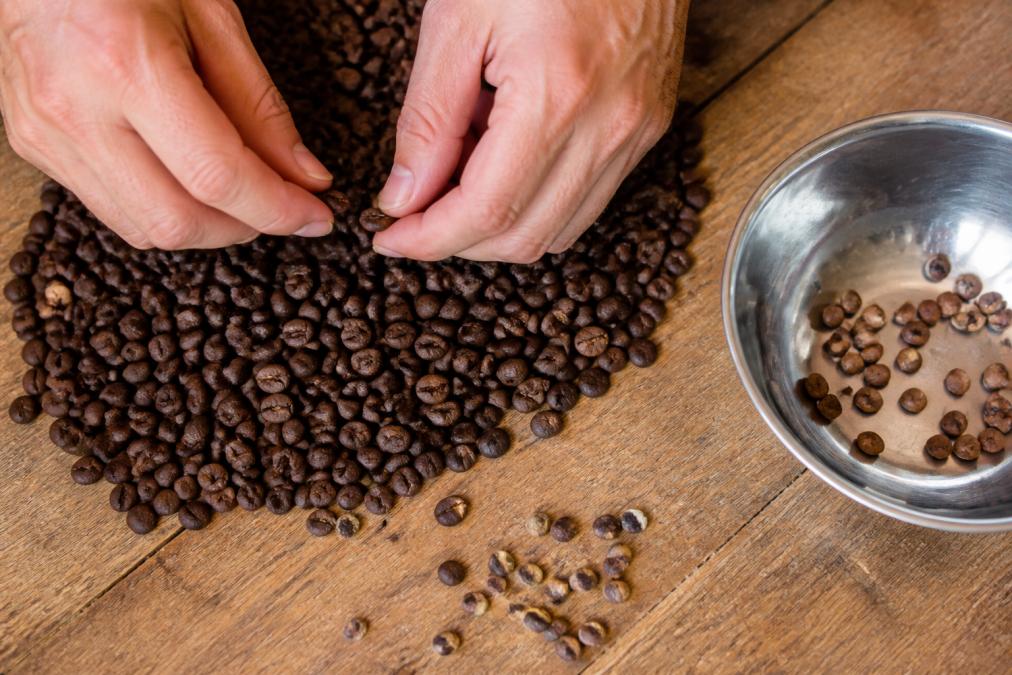
- Check the roast date first
- Look at color and uniformity
- Inspect for defects and oil
- Squeeze for density and smell the beans
- Check the bag's valve and seal
Check Color and Uniformity
Uniform color across the batch signals an even roast. Patchy beans, some light and some dark, usually mean an uneven roast, often from a drum that was overloaded or a roaster that rushed the development phase.
Color also hints at roast level. A medium roast should read like milk chocolate; a dark roast like dark chocolate with a faint sheen. If half the bag looks like one and half like the other, the batch was blended after roasting, not before.
Inspect for Defects and Oil
Look for the defects the specialty trade actually grades against:
- Broken or chipped beans, mechanical damage from processing or handling
- Insect holes, small, dark, pin-sized entry points, usually near the center cut
- Black beans, fully blackened, often from over-fermentation or mold
- Sour or vinegar beans, pale, wrinkled, and smelling sharp
- Quakers, pale, undeveloped beans that stay light through the roast and taste like paper or peanut
- Stones or sticks, non-coffee debris that signals weak sorting
A few defects in a 12-ounce bag are normal. A bag where you can pick out a dozen or more without trying is not.
Oily beans are a warning sign for most roasts. A light sheen is fine on dark roasts, but dull, dry-looking beans often mean old stock. The reverse is also true: beans that are slick and shiny within a few days of the roast date usually mean the roast went too dark.
Squeeze for Density and Smell the Beans
Density is the check most guides skip. Pick up a single bean and press it between your thumb and forefinger. A high-quality bean grown at altitude is dense and resists the squeeze. A low-density bean crushes easily and feels hollow.
Dense beans hold flavor better because they have tighter cell structure and less internal porosity. That is why high-grown lots from regions like Ethiopia, Kenya, and Colombia tend to cup cleaner than low-grown commodity coffee.

Now smell.
Check the Bag's Valve and Seal
A one-way degassing valve on the bag lets carbon dioxide escape without letting oxygen in. If the bag has no valve and is not vacuum-sealed, oxygen has been working on those beans since the day they were packed.
Arabica vs. Robusta: What the Label Doesn't Tell You
Arabica is a coffee species known for sweeter, more complex flavor and lower bitterness. Robusta is a hardier species with more caffeine and a bolder, more bitter taste.
Processing Methods and Origin Transparency
Processing method shapes flavor as much as origin does. Washed beans are rinsed clean after picking, giving a brighter, clearer cup. Natural process beans dry inside the fruit, which adds fruity, wine-like notes.
Here's how the two common methods compare:
| Method | Flavor Style | Acidity | Best For |
|---|---|---|---|
| Washed | Clean, bright | Higher | Pour-over, drip |
| Natural | Fruity, sweet | Lower | Espresso, cold brew |
How to Store Coffee Beans for Maximum Freshness
Oxygen, light, heat, and moisture are the four enemies of fresh coffee. Beat all four and your beans stay lively for weeks.
The Right Container and Conditions
Store whole bean coffee in an airtight, opaque container at room temperature. Keep it away from the stove, the window, and the fridge.
- Skip the freezer for daily-use beans
- Buy whole bean, not pre-ground
- Keep the bag's valve intact if you reuse it
- Grind right before brewing
Beyond the Basics: Cupping, Certifications, and Degassing
Most guides stop at the visual check. The three skills below are what separate a shopper from a taster, and none of the top-ranking pages walk you through them.
The Science of Degassing: Why 'Too Fresh' Can Be Bad
Degassing is the release of carbon dioxide from roasted beans in the days after roasting. It is why truly fresh beans bloom when hot water hits them, that dome of bubbles is trapped CO2 escaping.
A Home Cupping Protocol You Can Actually Run
Cupping is the standard tasting method used to judge coffee. Professionals use it to compare lots side by side without the variables of brewing gear. You can run a simplified version at home with a kettle, a scale, a spoon, and two or three small cups.
- Weigh and grind. Use a 1:16 ratio, about 8.25 grams of coffee to 130 grams of water per cup. Grind coarse, like sea salt.
- Pour and wait. Pour water just off the boil (around 200°F) over the grounds. Start a timer and let it sit for four minutes without stirring.
- Break the crust. After four minutes, a layer of grounds will float on top. Push it aside with a spoon and lean in to smell. This is the aromatic peak.
- Skim and cool. Remove the floating grounds. Let the cup cool for another 8 to 10 minutes.
- Slurp. Take a spoonful and slurp it hard so it sprays across your palate. Slurping aerates the coffee and spreads it across your tongue, which is how you taste sweetness, acidity, and body at once.
Decoding Certification Labels
Certification labels are a shortcut to sourcing quality, but they mean different things. Here is what each one actually verifies:
- USDA Organic, the coffee was grown without synthetic fertilizers or pesticides, verified by a USDA-accredited certifier. It says nothing about flavor or freshness.
- Fair Trade, a minimum price was paid to farmers, plus a social premium for community projects. It speaks to farmer compensation, not cup quality.
- Rainforest Alliance, the farm met environmental and worker-welfare standards covering shade, water, and biodiversity.
- Bird Friendly, the strictest shade standard, certified by the Smithsonian Migratory Bird Center. It requires shade-grown coffee with native tree cover, which often correlates with slower-ripening, denser beans.
Putting It Together
For a shortcut, single-origin beans from a roaster that ships fast give you the best odds. Mocha Me Crazy roasts every order on demand and ships it straight to your door.
Frequently Asked Questions
What is the 15-15-15 coffee rule?
The 15-15-15 rule is a simple guideline for coffee freshness: 15 months for green unroasted beans, 15 days for roasted whole bean coffee, and 15 minutes for ground coffee before flavor starts to fade. While 15 days is a useful benchmark, many specialty roasters recommend enjoying roasted beans within 2 to 4 weeks of the roast date for peak flavor. Whole beans stay fresh longer than pre-ground because less surface area is exposed to oxygen.
How can you tell if coffee beans are stale?
Stale beans lose their aroma and take on a flat, cardboard-like smell. Visually, they may look dull rather than slightly shiny, and they feel lighter because they have released most of their carbon dioxide. When brewed, stale coffee tastes weak or bitter with no sweetness. Check the roast date first, then smell the bag when you open it. If there is no roast date and the beans smell like nothing, they are likely past their prime.
What is the highest grade of coffee bean?
The highest grade is typically Specialty Grade, which means the beans scored 80 points or higher on the Specialty Coffee Association's 100-point scale. This grading evaluates flavor, acidity, body, balance, and absence of defects. Specialty grade beans are also sorted for uniformity and minimal imperfections. Single-origin offerings like Mocha Me Crazy's Ethiopia Natural or Kenya beans often fall into this category, giving you a clear signal of quality before you even open the bag.
Does the roast date matter for coffee quality?
Yes, the roast date is the single most reliable indicator of freshness. Coffee begins losing flavor compounds within days of roasting. Beans roasted within the last 7 to 14 days offer the best balance of degassing and flavor. After 4 to 6 weeks, most beans taste noticeably flat. Always look for a printed roast date, not just a best-by date. Mocha Me Crazy roasts every order on demand.
Freshness is the hardest thing to fake and the easiest thing to check. Look for a real roast date, uniform beans, and clear origin details, then store them right. Mocha Me Crazy roasts to order with carefully sourced single-origin beans and fast delivery, so every cup tastes like it should. Get started with Mocha Me Crazy and make your morning ritual anything but boring.