

Is a Coffee Subscription Cheaper Than Grocery Store?
Table of Contents
- Coffee Subscription vs Grocery Store Coffee: The Real Cost Breakdown
- Coffee Subscription Cost: What You Actually Pay Per Delivery
- Coffee Beans Price Per Ounce: Subscriptions vs Grocery Store Shelves
- Cost Per Cup: The Number That Actually Decides It
- Is a Coffee Subscription Worth It for Your Household?
- Coffee Subscription With No Commitment: Trying It Without the Lock-In
- When the Grocery Store Still Wins
- Conclusion
- Frequently Asked Questions
Last Updated: October 15, 2026
Coffee Subscription vs Grocery Store Coffee: The Real Cost Breakdown
Working out whether a coffee subscription cheaper than buying from the grocery store comes down to one number: cost per cup, and that is exactly what makes a coffee subscription cheaper or not.
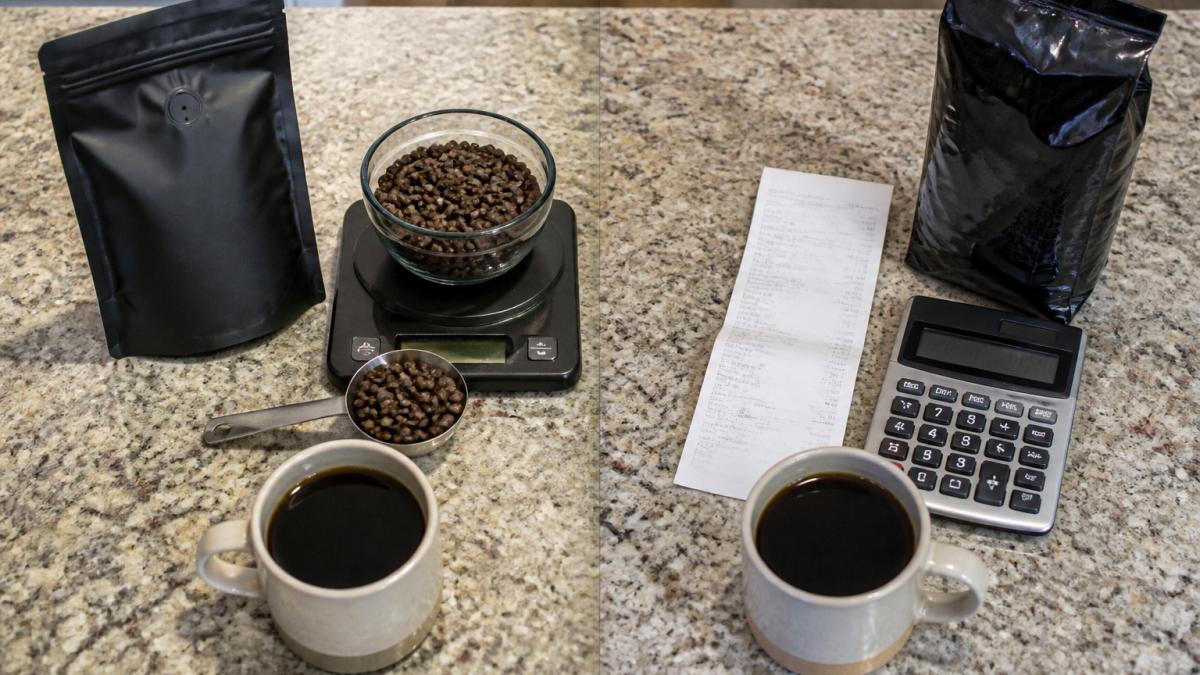
Grocery coffee competes on shelf price; subscription coffee competes on freshness, roast date, and consistency. Pricing them as identical products is where most cost comparisons go wrong.
A bag of coffee is not a fixed unit of value: two bags at the same weight can deliver very different cup counts depending on roast level, grind, and brew method.
| Cost Factor | Grocery Store Coffee | Coffee Subscription |
|---|---|---|
| Sticker price per bag | Often lower | Usually higher |
| Roast date visibility | Rarely printed | Commonly printed |
| Shipping cost | None | Often added |
| Reorder effort | Manual each time | Automatic or manual |
| Bag size options | Limited | Usually several |
Coffee Subscription Cost: What You Actually Pay Per Delivery
The real coffee subscription cost is bag price plus shipping, minus any discount, divided by deliveries per year. Most people forget the shipping line, and that line flips a close comparison.
Start by writing down four numbers for any subscription you're considering:
- Bag size in ounces or grams
- Price per bag
- Shipping cost per delivery, if any
- Delivery frequency, such as every two weeks or every month
Add bag price and shipping for your true cost per delivery, multiply by deliveries per year, then compare that to what you actually spend at the grocery store.
A subscription with a higher bag price but free shipping can beat a cheaper bag with a per-order delivery fee. Run the annual total, not the sticker.
Coffee Beans Price Per Ounce: Subscriptions vs Grocery Store Shelves
Coffee beans price per ounce is the fairest single metric for a like-for-like comparison, because it normalizes for bag size. Divide any bag's total price by its ounces, do the same for the subscription bag, and you're comparing the same thing.
Most comparisons stop there and treat every bag as interchangeable.
| Tier | Typical grocery per-ounce range | Typical subscription per-ounce range | What you're actually buying |
|---|---|---|---|
| Budget store brand, pre-ground | Lowest | Rarely offered | Consistent, mild, no roast date |
| National brand, whole bean | Low to mid | Not applicable | Familiar flavor, occasional roast date |
| Specialty, whole bean, dated | Mid to high | Mid to high | Origin transparency, printed roast date |
| Single-origin or micro-lot | Rarely stocked | High | Traceable farm, small batch, peak freshness |
Within the specialty tier, the per-ounce gap narrows sharply and sometimes inverts once you account for shipping thresholds and recurring-order discounts.
Three adjustments decide which number is real:
- Include shipping in the subscription's per-ounce figure. A $5.99 flat rate on a 12-ounce bag adds roughly $0.50 per ounce, which can erase a headline advantage. Free-shipping thresholds usually sit around $30-$50, so a two-bag order often clears them while a single bag does not.
- Compare regular price to regular price. A grocery sale runs for a week; a subscription price runs all year. Note the sale separately, then compare the everyday numbers.
- Match bag size to consumption. A 2-pound bulk bag only wins per ounce if you finish it before it goes stale. A 12-ounce bag costs more per ounce but wastes less if your household drinks slowly.
Store brands and bulk bags often win on raw per-ounce cost; specialty subscriptions lose on that metric and win on roast date, origin transparency, and consistency. Run the per-ounce number inside a single tier, budget against budget, specialty against specialty, and leave cross-tier comparisons to the quality discussion.
Cost Per Cup: The Number That Actually Decides It
Cost per cup is the only figure that reflects what you actually drink.
Here is the calculation with every assumption written down, so you can swap in your own numbers and find your break-even point.
The five inputs:
- Bag weight in grams. A 12-ounce bag is 340 grams. A 2-pound bag is 907 grams.
- Dose per cup in grams. A common drip dose is 15 grams per 8-ounce cup. A stronger mug might be 18-20 grams. An espresso double shot uses roughly 18 grams for a much smaller drink.
- Delivered cost. Bag price plus shipping, minus any recurring-order or multi-bag discount.
- Cups per bag. Bag weight divided by dose. A 340-gram bag at 15 grams gives roughly 22 cups.
- Waste factor. The share of each bag you actually drink. If you routinely dump the last quarter, your effective cups per bag drop by 25 percent.
Worked example, drip at 15 grams per cup:
| Line | Grocery store | Subscription |
|---|---|---|
| Bag weight | 340 g | 340 g |
| Dose per cup | 15 g | 15 g |
| Cups per bag | ~22 | ~22 |
| Bag price | $9.99 | $19.99 |
| Shipping | $0 | $5.99 |
| Delivered cost | $9.99 | $25.98 |
| Cost per cup | ~$0.45 | ~$1.18 |
| Cost per cup at 25% waste | ~$0.61 | ~$1.57 |
Those numbers are illustrative, the point is the mechanism.
Where the break-even actually sits. The subscription becomes competitive per cup when any of these are true:
- The bag is larger, so shipping spreads across more cups.
- A recurring-order discount or free-shipping threshold applies.
- Your dose is smaller, so each bag yields more cups.
- Your waste is lower because the coffee arrives fresh and you finish it.
The grocery store stays ahead per cup when you buy on promotion, stock up at the sale price, and finish every bag at a steady pace.
Run the same five inputs for your own setup before deciding. Households that get the most value from a subscription are those whose dose, consumption pace, and freshness preference all line up.
60 Pack Single Serve Coffee Capsules →
Is a Coffee Subscription Worth It for Your Household?
Whether a coffee subscription worth it depends on three things: how much you drink, how much you care about roast date, and whether you waste coffee.
Run this quick check:
- You brew at least one cup most days
- You finish a bag before it goes stale
- You notice a difference between fresh-roasted and shelf coffee
- You've thrown out coffee because it went flat
- You want the ordering to happen without thinking about it
Three or more checks and a subscription is likely worth it for you. Two or fewer and the grocery store is probably the better fit for now.
Waste is the hidden cost on both sides.
Mocha Me Crazy roasts to order and ships fast, which keeps the gap between roast and brew short. Our Specialty Coffee Association guidance on freshness notes that flavor degrades over time after roasting, which is the practical argument for buying closer to the roast date rather than the sale date.
Coffee Subscription With No Commitment: Trying It Without the Lock-In
A coffee subscription with no commitment removes the main objection to trying one: the fear of being stuck. If you can pause, skip, or cancel without penalty, the risk of testing drops to almost nothing.
Before you sign up anywhere, confirm four things in writing:
- Can you pause or skip a delivery without a fee?
- Can you cancel at any time, or is there a minimum term?
- Is there a restocking or cancellation fee?
- What happens if a delivery arrives damaged or stale?
You don't need a subscription to test the premise. Mocha Me Crazy sells single orders, so you can buy one bag, brew it against your usual grocery coffee, and let your palate settle the argument. Our House Blend at $24.99 is a medium roast with nutty, sweet chocolate, and mild citrus notes, an easy side-by-side against a standard grocery medium roast. The Breakfast Blend at $24.99 is a smooth South American blend for a lighter start.

For households that want zero brewing effort, our 60 Pack Single Serve Coffee Capsules at $59.99 work out to about a dollar a capsule, and each one is sealed with no oxygen inside so the coffee stays fresh. The 12 Pack at $22.99 is the smaller test size if you want to try before buying in bulk.


When the Grocery Store Still Wins
The grocery store wins in specific, predictable situations. If any of these describe you, stay on the shelf for now.
You drink fewer than a few cups a week. Shipping and per-bag premiums can't be spread across enough cups to make a subscription pay off.
You buy on promotion and stock up.
You don't care about roast date.
You want to grab it today. No delivery schedule beats walking out of the store with a bag in hand.
Conclusion
A coffee subscription is cheaper for some households and more expensive for others, and the deciding factor is cost per cup against your real consumption. Grocery coffee wins on sticker price and convenience; a subscription wins on roast date, consistency, and never thinking about reordering. To test it without a lock-in, start with a single order from Mocha Me Crazy and compare it against your usual bag. We roast every order on demand and ship fast, so one bag tells you whether fresh-roasted coffee is worth the difference.
Frequently Asked Questions
Is it cheaper to buy coffee beans at the grocery store?
On sticker price per bag, grocery store beans usually cost less. But coffee beans price per ounce tells a different story once you factor in roast date and how many cups you actually brew. Mass-market bags can sit on shelves for months, so you may use more grounds per cup to get decent flavor. A coffee subscription cheaper than grocery store only happens when you compare cost per cup, not cost per bag, and when you actually drink everything you buy.
How much does a coffee subscription cost compared with grocery store coffee?
Subscription pricing varies widely. Some plans start around $15 to $25 per delivery for a 12-ounce bag, while others charge more for specialty or single-origin beans. Grocery store coffee can run $8 to $14 for a similar size, but that bag may be weeks or months past its roast date. To compare fairly, divide the total delivered cost (including shipping) by the number of cups you brew from that bag.
Is a coffee subscription worth it if I only drink one cup a day?
For one cup a day, a subscription can still make sense if you pick a smaller bag size or a less frequent delivery schedule. A 12-ounce bag brewed at two tablespoons per cup yields roughly 16 to 20 cups, so one bag can last two to three weeks. If you drink less than that, look for a coffee subscription with no commitment so you can pause or cancel without penalty and avoid unused coffee going stale.
Can I pause or cancel a coffee subscription without a fee?
That depends on the service. Many subscriptions now offer no-commitment terms, which means you can skip a delivery, pause for a month, or cancel outright from your account page. Before you sign up, check the cancellation policy and whether there is a minimum number of deliveries. A coffee subscription with no commitment is the safest way to test whether the coffee actually beats what you were buying at the store.
Does freshly roasted coffee cost more than grocery store coffee?
Yes, usually. Fresh-roasted specialty coffee typically costs more per bag than mass-market grocery brands because the beans are sourced in smaller lots and roasted in small batches close to shipping. The trade-off is flavor and freshness: coffee tastes best within two to four weeks of its roast date, and grocery store bags rarely list a roast date at all. If you value how the coffee tastes black, the higher upfront cost can be worth it.