

Is Organic Matcha Powder Worth the Extra Cost?
Table of Contents
- What Is Organic Matcha Powder and Why Does It Cost More?
- Organic vs Non-Organic Matcha: Farming, Soil, and Pesticide Residue
- Matcha Grading Systems Explained: Ceremonial, Culinary, and Latte-Grade
- How to Identify High-Quality Matcha Before You Buy
- Cost-Per-Serving Breakdown: Organic vs Conventional Matcha
- Flavor, Color, and Froth Quality: Does Organic Certification Change the Cup?
- Storage, Shelf Stability, and Oxidation: Protecting Your Investment
- Verdict: Who Should Pay the Premium for Organic Matcha Powder?
- Frequently Asked Questions
Last Updated: September 27, 2026
What Is Organic Matcha Powder and Why Does It Cost More?
Organic matcha powder is stone-ground green tea made from shade-grown leaves cultivated without synthetic fertilizers or pesticides, and it typically costs more because certified organic farming yields less per acre.
Organic vs Non-Organic Matcha: Farming, Soil, and Pesticide Residue
The core difference comes down to what's sprayed on the leaf and how the soil is managed. Conventional matcha farms can use synthetic fertilizers to boost yield; organic farms rely on compost, crop rotation, and natural soil amendments. But the more useful question for a buyer is not "which is sprayed?", it's "which standard was the leaf actually held to, and who verified it?"

The two certifications you'll see on a matcha tin
Most organic matcha sold here carries one of two marks, and they are not the same program:
- USDA Organic, the domestic certification. USDA Organic Certification standards requires farms to avoid prohibited synthetic substances for at least three years before the first organic harvest, keep buffer zones between organic and conventional fields, and submit to annual third-party inspections by a USDA-accredited certifying agent.
- JAS (Japanese Agricultural Standard) Organic, the Japanese equivalent, issued by a registered certifying body in Japan. Because most matcha is grown in Japan, a JAS mark is common, and many importers treat it as the more relevant credential for the leaf itself.
What the residue data actually shows
This is where most articles wave their hands, so here's the mechanism instead. Organic certification does not guarantee zero pesticide residue. It prohibits most synthetic pesticides, but a few approved substances are allowed, and drift from neighboring conventional fields can deposit trace amounts on organic leaf. The practical difference is the profile of what can show up and the testing regime behind it:
- Conventional tea is tested against maximum residue limits (MRLs) set by the EPA for the domestic market, and by Japan's Positive List system for imports. Those limits permit a long list of approved synthetic chemicals at defined tolerances.
- Organic leaf is held to the certifier's prohibited-substance list, which is far shorter. A positive test for a prohibited synthetic typically triggers decertification, not just a warning.
How to verify a residue claim yourself
A certification mark tells you the farm passed an inspection. It does not tell you what was in this batch. If a brand publishes batch-level third-party testing, a lab report keyed to a lot number, that is a stronger signal than the logo alone. Ask for it. A quality-focused seller should be able to produce one.
Matcha Grading Systems Explained: Ceremonial, Culinary, and Latte-Grade
Matcha grading systems explained comes down to three main tiers: ceremonial, culinary, and latte-grade. Ceremonial grade is the highest quality, made from the youngest shade-grown leaves and intended for traditional whisking with water only.
Here's how the tiers compare:
| Grade | Best For | Flavor Profile | Typical Use |
|---|---|---|---|
| Ceremonial | Traditional preparation | Sweet, umami, low bitterness | Whisked with hot water |
| Latte-grade | Milk-based drinks | Balanced, slightly earthy | Lattes, iced drinks |
| Culinary | Cooking and baking | Bold, astringent | Smoothies, desserts, sauces |
How to Identify High-Quality Matcha Before You Buy
Learning how to identify high-quality matcha starts with color, aroma, and texture. Vibrant green matcha signals fresh chlorophyll content; dull or yellowish powder usually means oxidation or age.
Run through this checklist before you buy:
- Color is bright, vibrant green, not olive or brown
- Aroma is sweet and grassy, not musty or flat
- Texture is fine and silky, with no clumps
- Packaging is opaque and sealed against light
- Harvest date or lot number is printed on the bag
- Certification body is named if labeled organic
Cost-Per-Serving Breakdown: Organic vs Conventional Matcha
Cost-per-serving is where the organic premium gets clearer, and it's the calculation almost no competing article actually does. A typical serving of matcha is about one teaspoon, or roughly 2 grams. That single number lets you compare any two tins on equal footing, regardless of sticker price or tin size.
The formula
Cost per serving = tin price ÷ (tin weight in grams ÷ 2)
Run it on a few common price points:
| Tin size | Price | Servings (~2 g each) | Cost per serving |
|---|---|---|---|
| 30 g conventional | $12 | ~15 | ~$0.80 |
| 30 g organic | $20 | ~15 | ~$1.33 |
| 30 g organic, premium | $30 | ~15 | ~$2.00 |
| 100 g conventional | $25 | ~50 | ~$0.50 |
| 100 g organic | $45 | ~50 | ~$0.90 |
What that means over a month
If you drink one cup a day, that 40-50 cent gap is roughly $12-$15 more per month for organic. If you drink matcha twice a week, it's about $3-$4 more per month, less than a single coffee-shop latte. The premium scales with frequency, so the honest question is not "is organic expensive?" but "how often will I actually drink it?"
Where the premium is wasted
This is the part the price-per-gram math doesn't capture: organic is not a proxy for grade. A certified-organic culinary-grade powder can cost more per gram than a conventional ceremonial-grade powder and still taste harsher in a traditional bowl. You can pay the organic premium and the grade penalty at the same time if you don't check both.
The rule of thumb that follows:
- Ceremonial use (whisked with water): pay for both organic and ceremonial grade. You taste every dollar here.
- Latte use: organic latte-grade is the sweet spot. Milk and sweetener mute subtle flavor differences, so grade matters less than body.
- Baking and smoothies: conventional culinary grade is usually the rational buy. Fruit, sugar, and heat bury the difference, and you're paying a premium you can't detect.
A quick sanity check before you buy
Divide the tin price by the number of servings on the label (or by weight ÷ 2). If two tins land within about 20 cents per serving of each other, buy the one with the named certifier and the fresher grind date, the price difference is noise at that point. If the organic tin is more than double the conventional per serving, ask whether you'll actually drink it in a way that lets you taste the difference.
Flavor, Color, and Froth Quality: Does Organic Certification Change the Cup?
Certification itself doesn't change flavor, but the farming practices behind it often do. Slower-grown organic leaves tend to develop more L-theanine, the amino acid behind matcha's savory umami flavor and calm energy.
Storage, Shelf Stability, and Oxidation: Protecting Your Investment
Matcha is perishable once opened, and oxidation is its main enemy. Light, heat, and air degrade the catechins and antioxidants that make matcha worth buying in the first place.
Verdict: Who Should Pay the Premium for Organic Matcha Powder?
Pay the premium if you drink matcha daily, care about pesticide residue, or want the cleanest flavor profile. Skip it if you're mostly blending matcha into smoothies where subtle differences disappear behind fruit and yogurt.
Frequently Asked Questions
Is it necessary to buy organic matcha?
It depends on how often you drink it and what you prioritize. Organic matcha powder is grown without synthetic fertilizers or pesticides, which matters more with matcha than with steeped tea because you consume the entire leaf. If you drink matcha daily, organic certification reduces your exposure to pesticide residue. If you drink it occasionally or use it mainly in baking, conventional culinary-grade matcha can be a reasonable choice. Neither option is wrong, but the frequency of use should guide your decision.
How much does a good matcha powder cost?
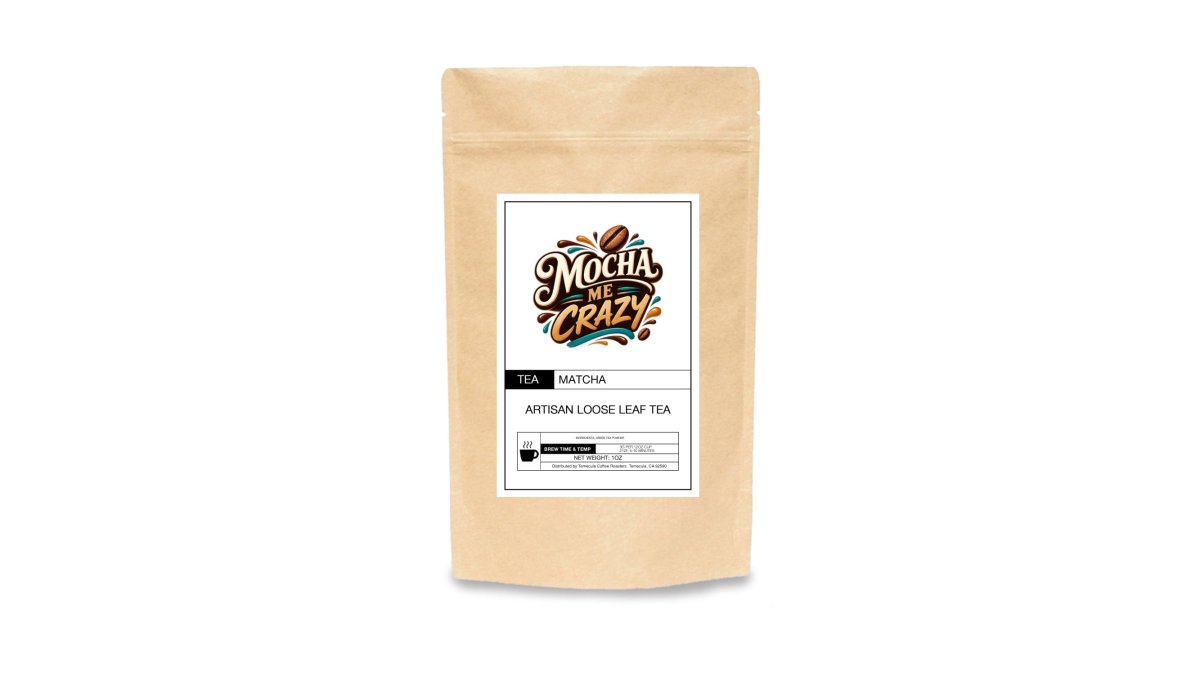
Quality matcha generally starts around $20 to $30 for a small tin, with ceremonial grades climbing higher. Mocha Me Crazy offers matcha at $23.99. Cost alone does not signal quality, so check for vibrant green color, a sweet umami aroma, and fine stone-ground texture before assuming a higher price means a better product. Price per gram matters more than the sticker price on the tin.
Does organic certification guarantee better taste in matcha?
No. Organic certification confirms how the tea was farmed, not how it tastes. Flavor depends on shade-growing, harvesting methods, leaf selection, and how quickly the matcha is stone-ground and shipped. A well-produced conventional matcha can taste better than a poorly stored organic one. Taste comes down to freshness, color vibrancy, and froth quality. Buy from a source that moves inventory quickly and seals tins well, because oxidation flattens flavor faster than any farming method.
Are there health benefits to choosing organic matcha over conventional?
The main benefit is lower pesticide residue exposure. Because matcha is consumed as a whole leaf powder, any residue on the leaf ends up in your cup. Organic farming also supports soil health and avoids synthetic fertilizers. Both organic and conventional matcha contain antioxidants, catechins, and L-theanine, so the nutritional profile is similar. The difference is what else comes along with it. If reducing chemical exposure matters to you, organic is the safer pick.
How can I tell if matcha is high quality before I buy it?
Look for vibrant green color, which signals fresh chlorophyll and minimal oxidation. The powder should feel fine and silky, not gritty, because stone-ground matcha has a smooth texture. A good matcha smells sweet and grassy with umami notes, not dusty or bitter. Check whether the seller names the origin or harvest, since single-origin shade-grown matcha usually outperforms anonymous blends. Finally, buy from sellers who turn inventory quickly.