

Why Matcha Tastes Grassy to Some People: 2026 Guide
Table of Contents
- Why Matcha Tastes Grassy to Some People
- Fresh Vegetal Notes vs. Unpleasant Grassiness
- What Does Matcha Taste Like When It's Made Well?
- Matcha Quality and Grade: How Leaf Selection Changes Flavor
- Why Does Matcha Taste Bitter? The Role of Water Temperature
- The Best Water Temperature for Matcha (and Why It Matters)
- Storage and Freshness: Why Stale Matcha Tastes Grassy
- How to Make Matcha Taste Less Grassy: A Troubleshooting Guide
- Taste Perception and Personal Preference: Why Some People Love It
- Frequently Asked Questions
Last Updated: October 8, 2026
Why Matcha Tastes Grassy to Some People
If you have ever wondered why does matcha taste grassy to some people, the short answer is that grassiness is not a flaw in your palate.

At Mocha Me Crazy, we source artisan teas and roast coffee to order, so we think about freshness the same way we think about flavor.
Below, we break down each cause and show you exactly how to fix it.
Fresh Vegetal Notes vs. Unpleasant Grassiness
**Fresh vegetal notes are the pleasant, sweet-green flavors of good matcha.
Good matcha tastes like steamed greens, cream, and a hint of sweetness. The USDA tea and botanical grading guidance treats leaf condition as a key quality marker, and that same logic applies here.
Here is how to tell them apart:
- Fresh vegetal: soft, sweet, slightly savory, fades into a clean finish
- Unpleasant grassy: sharp, dry, bitter, lingers like cut grass in the sun
- Stale grassy: flat and dusty, with almost no aroma at all
If your matcha hits the second or third note, the problem is fixable.
What Does Matcha Taste Like When It's Made Well?
Well-made matcha tastes smooth and full, with sweet vegetal notes and almost no bitterness. The texture is creamy rather than chalky.
That profile does not happen by accident. It depends on shade-grown leaves, careful processing, and a fresh grind.
A common mistake is judging matcha after one bad cup. One bitter bowl tells you about that bowl, not the tea.
Matcha Quality and Grade: How Leaf Selection Changes Flavor
Matcha grade decides most of what you taste, and the reason is biochemical, not marketing. Higher grades use younger leaves and produce sweeter, smoother cups. Lower grades pull in older leaves and stems, which push the flavor toward bitter and grassy.
Shade-Growing: The Mechanism Behind Sweetness
Shade-growing is the single biggest factor in matcha flavor, and it works through a specific pathway. Growers cover the plants with screens for roughly 20 to 30 days before harvest, cutting sunlight by about 90 percent. That shade slows photosynthesis and shifts the plant's chemistry in two directions at once:
- L-theanine rises. This amino acid is the source of matcha's sweet, savory umami. Shade-grown leaves can carry several times the theanine of unshaded leaves.
- Catechins fall. These polyphenols are the astringent, bitter compounds. Less sun means fewer of them.
The result is a leaf with a higher theanine-to-catechin ratio, which is exactly what reads as sweet and creamy instead of sharp and grassy. Chlorophyll also increases under shade, which is why high-grade matcha is a deep, vivid green.
Stems, Veins, and the Tencha Step
Stems matter just as much as shade. Before milling, producers steam the leaves, dry them, and then strip out stems and veins to create tencha, the raw material that gets stone-ground into matcha.
Processing adds the final layer. Leaves get steamed to halt oxidation, dried, and stone-milled into a powder fine enough to suspend in water. Heat and time both matter here.
What the Grade Names Actually Mean
Grade labels are not regulated the way USDA beef grades are, so treat them as a rough guide rather than a guarantee:
- Ceremonial: youngest spring leaves, full shade, stems removed, stone-ground fine. Built for drinking straight with hot water.
- Culinary or ingredient grade: later harvests, more stems and older leaf material, coarser grind. Built for lattes, baking, and smoothies where milk and sugar mask the edge.
- "Premium" and "ultra-premium": marketing terms with no fixed definition. Judge the powder, not the word.
So when you shop, look for two things:
- A grade that matches your use, ceremonial for drinking, culinary for cooking
- A vibrant green color, which signals fresh leaves and careful handling
A useful rule of thumb: if the label does not name a harvest season or a region, assume it is a blend of later-harvest leaf. That is fine for a latte and disappointing for a straight bowl.
Why Does Matcha Taste Bitter? The Role of Water Temperature
Matcha tastes bitter when hot water pulls out too many tannins. Water above roughly 175°F extracts harsh compounds fast, and bitterness follows within seconds. The grassy note gets louder at the same time.
Green tea is delicate. Boiling water is built for black tea, not this.
Other bitterness triggers include:
- Whisking too slowly, which leaves clumps and uneven extraction
- Using too much powder for the amount of water
- Old matcha, where the sweet compounds have already faded
Fix the temperature first. It is the fastest change with the biggest payoff.
The Best Water Temperature for Matcha (and Why It Matters)
The best water temperature for matcha is 160°F to 175°F. That range extracts flavor and sweetness without dragging out the bitter compounds.
Here is a simple reference:
| Water Temp | Result | Best For |
|---|---|---|
| 140-155°F | Very mild, sweet, low bitterness | Beginners, straight drinking |
| 160-175°F | Balanced, smooth, full flavor | Traditional preparation |
| 180-190°F | Sharp, grassy, noticeably bitter | Culinary use, baking |
| 200°F+ | Harsh and astringent | Avoid for drinking |
No thermometer? Boil water, then let it sit for about five minutes. That lands you near the sweet spot.
Whisking matters too. Use a bamboo whisk and move in a fast W motion for 15 to 20 seconds.
Storage and Freshness: Why Stale Matcha Tastes Grassy
Stale matcha tastes grassy because oxygen and light break down the sweet compounds first. What is left behind are the flat, hay-like notes.
Matcha is fragile. It is a fine powder, so it has far more surface area exposed to air than loose leaf tea does.
Storage rules that actually work:
- Keep it in an airtight container, not the original bag clip
- Store it away from light, in a dark cupboard
- Keep it away from heat and strong smells
The FDA guidance on food storage and shelf life makes the same point for powdered foods generally: air, light, and heat are the three enemies.
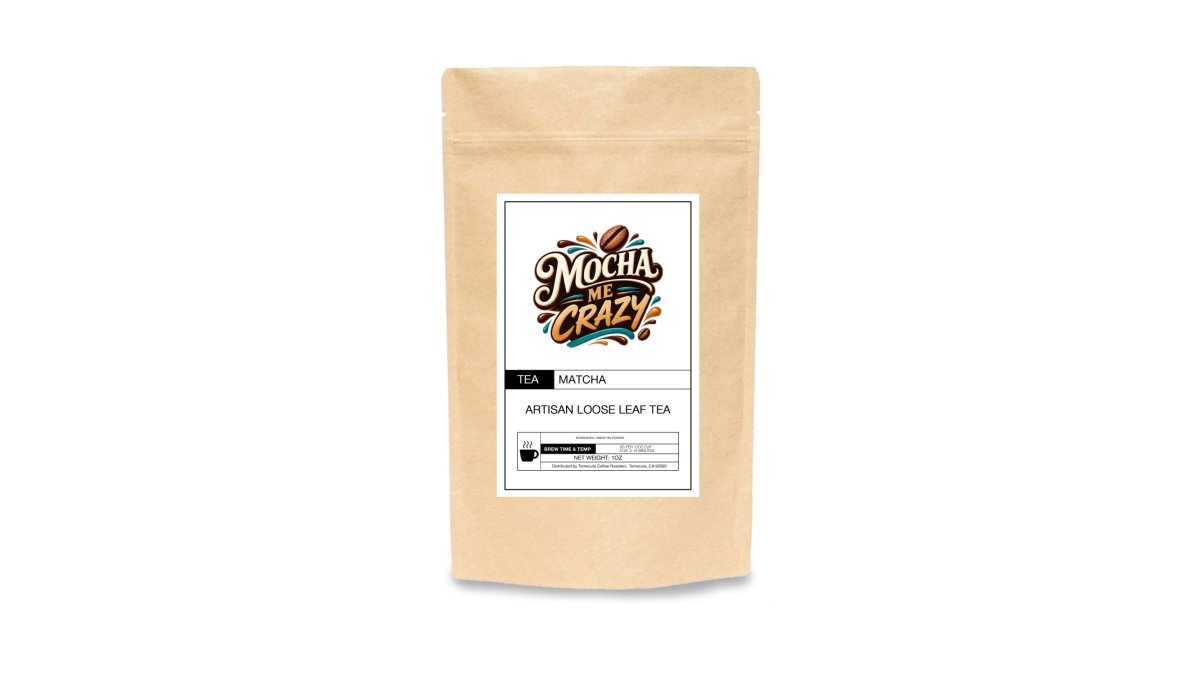
This is also why we care about freshness at Mocha Me Crazy. Our Matcha is crafted for traditional preparation and mindful daily rituals, and fresh stock is the whole point. If you want a roasted, lower-bitterness option, our Hojicha brews smooth with toasted cereal notes instead.

How to Make Matcha Taste Less Grassy: A Troubleshooting Guide
Learning how to make matcha taste less grassy comes down to three checks, in order. Test freshness and grade first, then water temperature and whisking, then flavor balancing.
Step 1: Check Your Matcha's Freshness and Grade
Start here because it is the most common cause. Smell the powder. Fresh matcha smells sweet and green. Stale matcha smells like hay or dust.
Then check the color and the date. Bright green and recently opened means you are fine. Dull, clumpy, or months old means the tea is the problem, not your technique.
If it fails this check, no amount of whisking will save it.
Step 2: Adjust Water Temperature and Whisking
Drop your water to 160-175°F and try again. Use one scoop of powder per 2-3 ounces of water. Whisk fast in a W motion until you get a fine foam.
Most people who think they hate matcha simply used water that was too hot. This step fixes that in one cup.
Step 3: Balance the Flavor with Milk, Cold Foam, or Sweetener
If the tea is good but still too grassy for your taste, balance it. This is not cheating. It is how most matcha drinks are actually made.
Try these:
- Milk or oat milk: softens the sharp edges and adds creaminess
- Cold foam: adds sweetness and a smooth top layer
- Vanilla: rounds out vegetal notes without hiding them
- A light sweetener: honey or simple syrup, added a little at a time
For a milk-based drink, use slightly less water so the flavor stays strong.
Taste Perception and Personal Preference: Why Some People Love It
Taste perception explains the rest, and it is the part most guides skip entirely. Two people can drink the same bowl and describe it completely differently, one tastes sweet cream, the other tastes a lawn. That is not a quality problem. It is biology plus experience.
Bitter Sensitivity Is Genetic
Bitterness is detected by a family of receptors called TAS2R on the tongue. Variation in the genes that code for these receptors changes how strongly a person perceives bitter compounds.
Matcha's catechins and caffeine both trigger bitter receptors. If you are a supertaster, the same bowl that reads as balanced to a non-taster can read as aggressively grassy and bitter to you. The NIH research on taste perception and genetics documents this variation across populations.
Aroma Does Half the Work
What we call "taste" is mostly smell. Volatile compounds in matcha travel up the back of the throat, a pathway called retronasal olfaction, and land on olfactory receptors. The green, hay-like, and marine notes people describe as "grassy" are largely aroma compounds, not taste-bud signals. That is why a stuffy nose flattens matcha's flavor and why a fresh, aromatic powder tastes more complex than a stale one with identical chemistry.
Familiarity and Acquired Taste
Perception is also shaped by exposure. Bitter vegetables, coffee, and dark chocolate all follow the same pattern: the first encounters register as harsh, and repeated exposure shifts the response toward pleasant. Researchers call this mere exposure and conditioned liking. Matcha sits in the same category. Many drinkers who disliked their first bowl come to enjoy it after a few weeks of regular, well-made cups.
What This Means for You
If matcha tastes grassy to you, run the perception checklist before you blame the tea:
- Are you a bitter-sensitive taster? If coffee and grapefruit also read as harsh, you likely are. Start with cooler water and a milk-based drink.
- Is your nose clear? Aromatics matter. Taste when you are not congested.
- How many times have you tried it? One bad cup tells you about that cup, not the tea. Give it five or six well-made attempts.
- What grade are you drinking? A culinary-grade powder in a straight bowl will taste grassy to almost anyone. Try ceremonial before you decide.
The FDA guidance on food storage and shelf life is not the issue here, perception is. Your palate is not wrong. It is just yours, and it can change with practice.
Frequently Asked Questions
Why does matcha taste grassy to some people?
The grassy taste comes from natural compounds in shade-grown tea leaves, and how strongly you notice it depends on matcha quality, freshness, and preparation. Low-quality matcha made from older leaves or stems tastes more grassy, while fresh, high-grade matcha has sweeter vegetal notes. Individual taste perception also plays a role, so two people can drink the same bowl and describe it differently.
Is matcha supposed to taste grassy?
A mild vegetal or grassy note is normal for matcha, especially in lower grades. What you want to avoid is a sharp, lawn-clipping grassiness that lingers. High-quality matcha should taste smooth, slightly sweet, and umami-rich, with grassy notes in the background. If grassiness dominates, the issue is usually grade, freshness, or water temperature rather than matcha itself.
How do you make matcha taste less grassy?
Start with fresher, higher-grade matcha and store it away from air and light. Use water around 160-175°F instead of boiling water, sift the powder to prevent clumps, and whisk briskly until a fine foam forms. If you still want a smoother cup, add milk, cold foam, vanilla, or a light sweetener to balance the flavor without covering up the tea's character.
Does water temperature make matcha taste bitter?
Yes. Water above 180°F pulls out more bitterness and astringency from the tea leaves, which many people read as grassy or harsh. The best water temperature for matcha is typically 160-175°F. Let boiled water cool for a few minutes, or pour it between cups to bring the temperature down before whisking.