

Benefits of Coffee Roasted Within 24 Hours
Table of Contents
- Why Coffee Roasted Within 24 Hours Tastes Different
- The Coffee Degassing Process Explained
- How to Tell If Coffee Beans Are Fresh
- The Best Time to Drink Coffee After Roasting
- Health Benefits of Coffee Roasted Within 24 Hours
- How Storage Affects 24-Hour-Old Beans
- Brewing Adjustments for Peak Freshness
- Frequently Asked Questions
Last Updated: September 17, 2026
Why Coffee Roasted Within 24 Hours Tastes Different
Coffee roasted within 24 hours still holds most of its carbon dioxide, and that trapped gas changes everything about how the cup tastes. This guide from Mocha Me Crazy breaks down what that means for your morning brew, and why so many drinkers mistake "rested" coffee for "better" coffee.
Freshly roasted beans release gas for days. Within the first day, that release is at its peak. The result is a cup that tastes lively, aromatic, and sometimes a little uneven. That tension is the whole story of the benefits of coffee roasted within 24 hours: you get intensity and volatile aromatics you will never find in a bag that has sat on a shelf for weeks, but you also get a brew that behaves differently in the brewer.
Most guides skip that trade-off. They tell you "fresh is best" and stop there. The truth is more interesting.
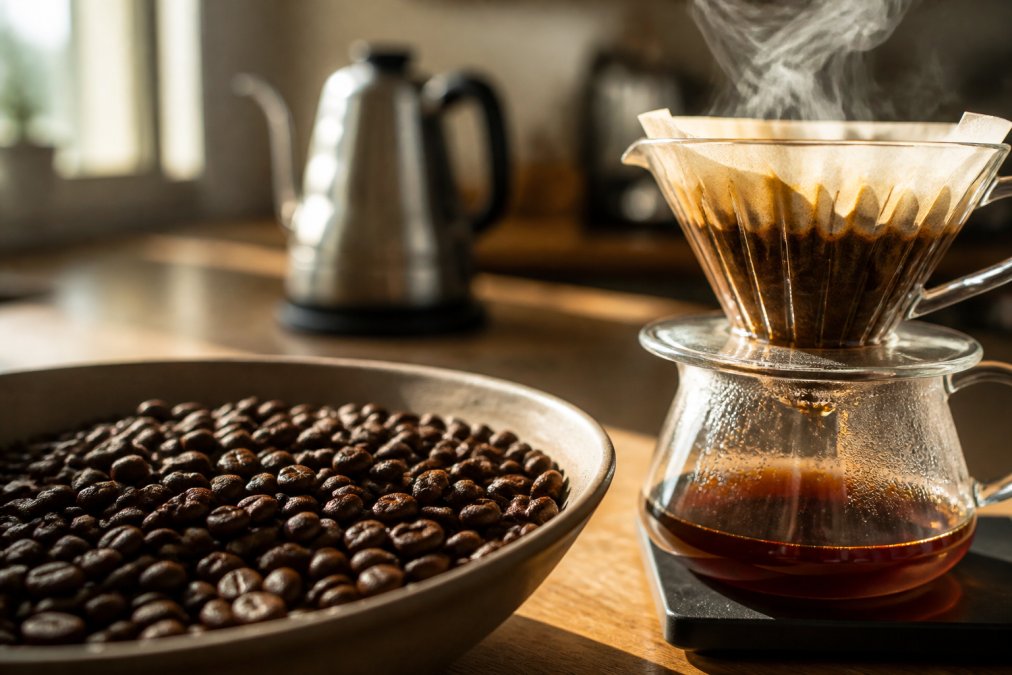
The Coffee Degassing Process Explained
Degassing is the release of carbon dioxide trapped inside coffee beans during roasting. As beans heat, internal pressure builds and creates thousands of tiny gas pockets. After roasting stops, that gas escapes slowly through the bean's cell structure.
The first 24 hours are the most active. Gaseous release is rapid, which is why a bag roasted yesterday smells louder and more complex than one roasted last month. Volatile compounds, the aromatic molecules responsible for fruit, floral, and chocolate notes, are at their most concentrated in this window. Oxidation has barely begun.
Here is the trade-off most people miss: those same volatile compounds make extraction unpredictable. Carbon dioxide repels water, so a 24-hour-old bean resists even saturation. That is why a bean that tastes flat on day one can taste remarkable on day five.
How to Tell If Coffee Beans Are Fresh
Knowing how to tell if coffee beans are fresh comes down to four checks you can run in under a minute.
- Roast date, not best-by date. A roast date tells you when the clock started. A best-by date tells you nothing useful.
- The smell test. Fresh beans smell sweet, bright, and layered. Old beans smell like cardboard or stale bread.
- The bloom. Pour hot water over grounds. Fresh coffee puffs up and bubbles. Flat, quiet grounds are past their window.
- The feel. Fresh beans have a slightly matte, dry surface. Beans that have sat for months look oily and dull.
A common mistake is trusting the bag's "packed on" label.
The Best Time to Drink Coffee After Roasting
The best time to drink coffee after roasting depends on your brewer, but most methods peak between day 3 and day 14. Day one is for the curious. Day three through day ten is where consistency lives.
Health Benefits of Coffee Roasted Within 24 Hours
The health benefits of coffee roasted within 24 hours come mostly from what has not yet degraded. Polyphenols, the antioxidant compounds in coffee, are at their highest concentration early in the bean's life. Chlorogenic acid, the most studied of these, declines as beans age and oxidize, and the decline is not linear. Most practitioners find the steepest drop happens in the first two to three weeks after roasting, then flattens as the bean stabilizes.
The Trade-Off Nobody Names: Sensory vs. Chemical
Here is the angle most guides miss. "Health benefits" and "sensory benefits" are two different clocks running at two different speeds.
- Chemical clock (antioxidants): peaks earliest. Chlorogenic acid is highest in the first days after roasting and declines from there.
- Sensory clock (flavor clarity): peaks later. Volatile aromatics are loud at 24 hours, but carbon dioxide is still repelling water, so extraction is uneven and the cup reads sharp or hollow.
Digestibility and Origin
Digestibility is the other variable. Some drinkers find light roasts easier on the stomach, others find the opposite. Cell structure, acidity, and roast level all play a role. Bean origin adds another layer: washed African coffees tend to read brighter and more acidic, while Indonesian beans land softer and earthier. A 24-hour-old bean has not had time to mellow, so whatever acidity the origin carries arrives at full strength.
How Storage Affects 24-Hour-Old Beans
Storage decides whether your 24-hour beans stay special or fade by the weekend. Oxygen, light, heat, and moisture are the four enemies, and they work fast on a bean this young. But a bean that is still actively degassing adds a fifth problem most storage guides never mention: pressure.
The Degassing Storage Problem
A bean roasted 24 hours ago is still releasing carbon dioxide at a high rate. Seal it in a fully airtight jar with no valve and that gas has nowhere to go. The result is a pressurized container that can pop its lid, bow a tin, or, in the worst case, rupture a sealed bag. This is why roasters ship in bags with a one-way valve rather than a plain zip top.
What to Avoid in the First 72 Hours
- Do not vacuum-seal 24-hour beans. You will pull the escaping gas into a hard brick and stress the seal. Wait until the bean has settled, usually day four or later, before vacuum sealing.
- Do not store in a clear glass jar on the counter. Light degrades the volatile aromatics you paid for, and the jar gives the gas no escape route.
- Do not grind ahead. Grinding multiplies the surface area and accelerates both degassing and oxidation. A ground 24-hour bean can go flat in hours.
Freezing: When It Helps and When It Hurts
The freezer is a legitimate option for longer storage, but timing matters more with young beans. Freezing a 24-hour bean traps it mid-degassing, which can actually preserve the volatile aromatics, but only if you portion it out first and never thaw and refreeze. Every thaw cycle pulls moisture onto the bean surface and degrades the cup.
Brewing Adjustments for Peak Freshness
- Extend the bloom. Give grounds 45 to 60 seconds instead of the usual 30. Let the gas escape before the main pour.
- Grind slightly coarser. Fresh beans extract fast. A coarser grind slows the process and evens out the cup.
- Lower your water temperature. Drop it a few degrees to tame the sharpness that young beans can show.
- Increase your dose slightly. A touch more coffee compensates for the uneven extraction.
- Taste on day one, then again on day four. Track the change so you learn your own preference.
For a bean that shows off this window well, our Whiskey Barrel Aged single origin is aged 30 days in a bourbon barrel and then roasted to order, so it arrives close to the roast date. It is $24.99, and it is a strong pick for anyone who wants to taste what a young bean can do.

Frequently Asked Questions
What is the 2 hour coffee rule?
The 2 hour coffee rule refers to the idea that coffee tastes best within two hours of brewing, not roasting. Once you brew a cup, oxidation begins immediately and the flavor degrades. For beans roasted within 24 hours, the sweet spot for brewing is typically 24 to 72 hours after the roast date. This allows carbon dioxide to escape so water can extract flavor evenly. Brewing too soon after roasting can cause uneven extraction and a sour or flat taste.
How many days after roasting should you drink coffee?
Most coffee reaches its peak flavor between 3 and 14 days after roasting. Beans roasted within 24 hours are still releasing carbon dioxide, which can interfere with extraction. If you brew them immediately, you may notice a muted or uneven taste. Waiting 24 to 72 hours gives the degassing process enough time to settle. After that window, flavor remains strong for about two to three weeks if stored properly in an airtight container away from light and heat.
Is roasted coffee healthier when consumed fresh?
Freshly roasted coffee retains more of its natural compounds, including polyphenols and antioxidants, than coffee that has sat on a shelf for months. The antioxidant profile is highest in the first few weeks after roasting. However, coffee roasted within 24 hours may still be degassing, which affects flavor more than nutrition. For health benefits, the key is drinking coffee within a few weeks of the roast date and choosing lighter roasts, which tend to preserve more of the bean's original compounds.
Does coffee lose flavor within 24 hours of roasting?
No, coffee does not lose flavor within 24 hours of roasting. In fact, it is still developing. The beans are releasing carbon dioxide, a natural byproduct of the roasting process. This degassing can make the coffee taste slightly flat or sour if brewed too soon. The flavor actually peaks a few days after roasting once the carbon dioxide has escaped. For the best cup, try beans roasted within 24 hours but wait another day or two before brewing.
Fresh coffee is a moving target, and that is exactly what makes it worth chasing. Most people never taste a bean inside its first week, which means they never learn what their brewer can actually do. Mocha Me Crazy roasts every order on demand, so your beans arrive close to the roast date, with carefully sourced beans and a simple ordering process built for people who take their morning ritual seriously. Get started with Mocha Me Crazy and taste the difference a fresh roast makes in your cup.