

Benefits of Drinking Freshly Roasted Coffee
Table of Contents
- What Makes Freshly Roasted Coffee Different
- How to Tell If Coffee Beans Are Fresh
- Antioxidants and Chlorogenic Acid: The Science Behind Freshness
- Roast Levels and Their Impact on Nutritional Content
- Understanding the Coffee Degassing Process Explained
- Best Way to Store Roasted Coffee Beans
- Health Benefits You'll Actually Notice
- Frequently Asked Questions
Last Updated: August 31, 2026
What Makes Freshly Roasted Coffee Different
Freshly roasted coffee delivers a dramatically different experience than beans that have sat in storage for weeks or months. The moment a coffee bean is roasted, it begins a chemical transformation that peaks within days and gradually declines. This is why freshly roasted coffee tastes brighter, smells more vibrant, and delivers the full spectrum of flavors the roaster intended.
At Mocha Me Crazy, we roast every order on demand so you experience coffee at its peak. When beans are roasted to order, the volatile compounds that create aroma and flavor complexity remain intact. These compounds, including hundreds of aromatic molecules, start degrading the moment roasting finishes. Coffee that's been sitting in a warehouse for three months has lost much of what made it special in the first place.
The difference isn't subtle. Fresh beans have a glossy, vibrant appearance. Older beans look dull and flat. When you brew fresh coffee, the aroma fills your space immediately. Stale coffee produces a muted, flat smell. The taste follows the same pattern: fresh delivers clarity and complexity, while aged coffee tastes flat and one-dimensional.
This matters because you're paying for quality. Buying premium single-origin beans defeats the purpose if they've been oxidizing on a shelf. Freshly roasted coffee ensures every dollar you spend translates into actual flavor and aroma in your cup.
How to Tell If Coffee Beans Are Fresh
The easiest way to determine freshness is the roast date. Look for a printed date on the bag, ideally within the last two weeks. Coffee reaches its optimal flavor window between 5 and 30 days after roasting (peer-reviewed research). Before day 5, the beans are still degassing heavily and won't extract properly. After 30 days, quality noticeably declines.

Visual inspection provides another clue. Freshly roasted beans have a glossy, oily surface with rich, dark coloring (depending on roast level). The surface should look alive and vibrant. If beans appear dull, grayish, or have a chalky coating, they're past their prime. Fresh beans also feel slightly warm to the touch immediately after roasting, though this fades within hours.
The smell test is reliable too. Open a bag of fresh coffee and inhale deeply. You should detect complex aromas: chocolate, fruit, nuts, or floral notes depending on origin and roast. The aroma should be strong and immediate. If you barely smell anything, the volatile compounds have already escaped into the atmosphere. Stale coffee smells flat and lifeless.
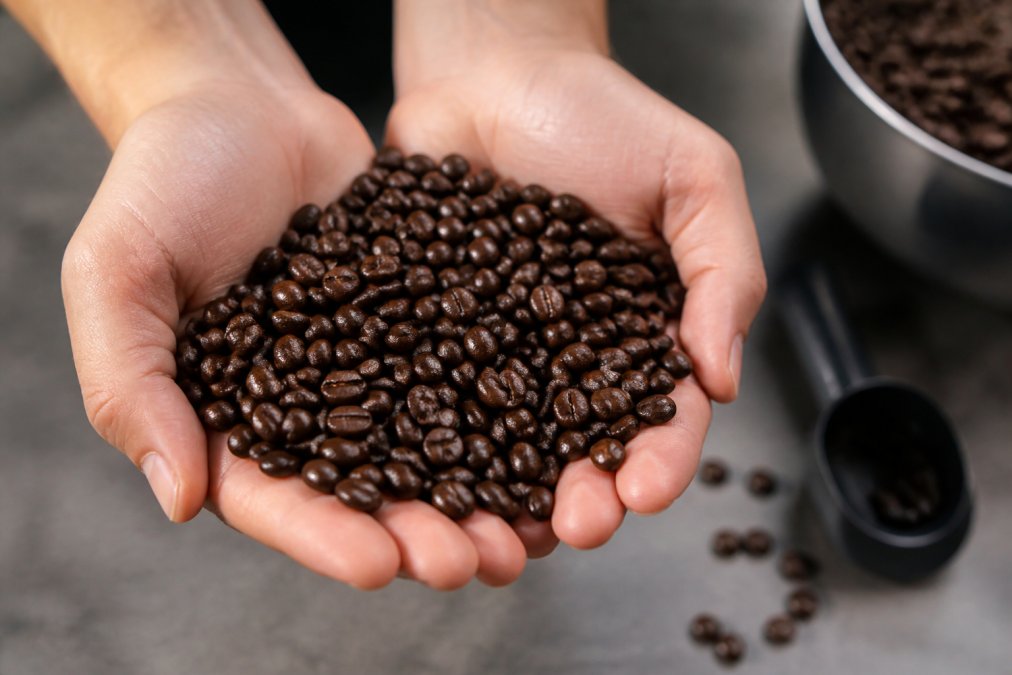
When you grind fresh beans, the aroma intensifies dramatically. This is the degassing process releasing trapped gases. Grinding stale coffee produces minimal aroma change, another sign that volatile compounds have already escaped. If you're buying from a local roaster or service like Mocha Me Crazy, ask when the beans were roasted. Reputable roasters are transparent about roast dates because they're proud of their freshness.
Antioxidants and Chlorogenic Acid: The Science Behind Freshness
Coffee contains powerful antioxidants that protect your cells from oxidative stress. The primary antioxidant in coffee is chlorogenic acid, a polyphenol compound that makes up roughly 5-8% of the bean's dry weight (peer-reviewed research). This compound is one of the most abundant antioxidants in the human diet, and it's present in highest concentration in freshly roasted coffee.
Here's the chemistry: chlorogenic acid is relatively stable during the roasting process but begins breaking down immediately after roasting finishes. The longer beans sit, the more chlorogenic acid degrades into other compounds. This degradation accelerates when beans are exposed to oxygen, heat, or light. After several weeks, the chlorogenic acid content drops measurably. This matters because chlorogenic acid is responsible for many of coffee's documented health benefits.
The bioavailability of these compounds also changes with age. Freshly roasted coffee delivers antioxidants in a form your body can readily absorb. As beans age, oxidation creates new compounds that may be less bioavailable. Brewing method affects this too, paper filters remove some polyphenols, while metal filters allow them through. But the foundation remains: fresh beans contain more active antioxidants than aged ones.
When you drink freshly roasted coffee, you're consuming coffee at its nutritional peak. The chlorogenic acid content is highest, the polyphenol profile is most intact, and your digestive system absorbs these compounds efficiently. This is why coffee scientists and health researchers consistently emphasize freshness as a key variable when studying coffee's health effects.
Roast Levels and Their Impact on Nutritional Content
The roast level dramatically affects both flavor and nutritional profile. Light roasts preserve more chlorogenic acid because the beans spend less time at high temperature. Medium roasts offer a balance between chlorogenic acid retention and flavor development. Dark roasts, roasted longer at higher temperatures, break down more chlorogenic acid but develop different beneficial compounds through the Maillard reaction.
Light roasts contain approximately 10-15% more chlorogenic acid than dark roasts (peer-reviewed research). This makes light roasts technically the most antioxidant-rich option. However, dark roasts develop other beneficial compounds during extended roasting, including polyphenols that form through caramelization. The trade-off is real but not absolute, both light and dark roasts deliver significant antioxidant content compared to coffee that's been sitting in storage for months.
The flavor profile changes dramatically with roast level too. Light roasts taste bright and acidic, with pronounced origin characteristics. You taste the terroir, the specific region's influence on the beans. Medium roasts balance origin flavor with roast-developed notes. Dark roasts emphasize chocolate, caramel, and smoky notes while origin flavor recedes. None of these is objectively "better," but your preference matters for consistency.
Freshness amplifies these differences. A fresh light roast tastes crisp and complex. A stale light roast tastes flat and muted. The roast-specific flavor notes that make each roast level distinct fade quickly in aged coffee. This is why roasters and coffee enthusiasts obsess over freshness, it's the variable that determines whether you actually taste what the roaster intended.
Understanding the Coffee Degassing Process Explained
Degassing is the release of carbon dioxide (CO2) that forms during roasting. When coffee beans roast, they undergo intense chemical reactions that produce CO2 gas. This gas remains trapped inside the bean structure immediately after roasting. Over the following days, this CO2 gradually escapes into the atmosphere.
The degassing process is most aggressive in the first 24-48 hours after roasting. If you brew coffee within the first 12 hours of roasting, the CO2 trapped in the beans interferes with water extraction. The gas creates barriers that prevent water from contacting the coffee solids evenly. This results in under-extraction and a sour, unbalanced cup. This is why roasters recommend waiting at least 24 hours before brewing freshly roasted coffee.
Between days 2 and 14, degassing continues at a slower rate while the coffee reaches its optimal extraction window. During this period, water can penetrate the beans effectively, dissolving the desirable compounds. The flavor is bright, the aroma is complex, and the cup is balanced. This is the peak window for freshly roasted coffee.
After 30 days, degassing is essentially complete, but the coffee has lost much of its aromatic complexity. The volatile compounds that created nuanced flavor have oxidized or escaped. What remains is a flatter, less interesting cup. This is why the 5-to-30-day window matters so much. You're not just waiting for degassing to finish, you're capturing the coffee while its aromatic compounds are still intact.
When you brew coffee, you can observe degassing in action. Fresh coffee produces visible bubbles and foam as trapped CO2 escapes during contact with hot water. Older coffee produces minimal bubbling. This visual difference correlates directly with flavor quality. The more vigorous the degassing during brewing, the fresher the coffee.
Best Way to Store Roasted Coffee Beans
Storage conditions determine how quickly coffee degrades after roasting. The primary enemies are oxygen, heat, light, and moisture. Each of these accelerates the breakdown of desirable compounds and the development of stale flavors.
Airtight containers are essential. Oxygen causes oxidation, which degrades chlorogenic acid and aromatic compounds. A sealed container with a one-way valve (which lets CO2 escape without letting oxygen in) is ideal during the first week. After degassing is complete, move beans to an airtight container without a valve. Glass or opaque plastic works well, avoid clear containers that expose beans to light.
Temperature matters significantly. Store beans at room temperature, ideally between 60-70°F. Heat accelerates degradation. Never store coffee in the refrigerator or freezer, the temperature fluctuations and moisture exposure cause more damage than room-temperature storage. A cool, dark cabinet or pantry is perfect.
Light degrades coffee quality. UV light penetrates clear bags and containers, accelerating oxidation. This is why quality roasters use opaque bags with one-way valves. If you transfer beans to a storage container, choose opaque glass or ceramic. Keep the container in a dark location, away from direct sunlight or bright kitchen lights.
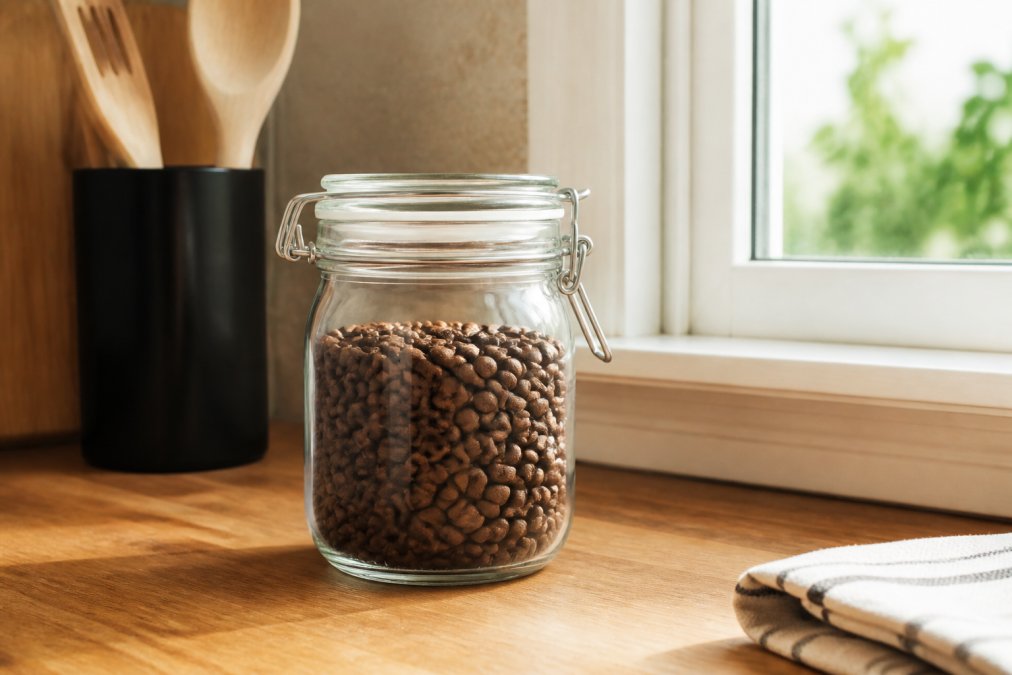
Moisture is often overlooked but critical. Coffee is hygroscopic, it absorbs moisture from the air. High humidity environments cause beans to absorb water, which promotes mold growth and flavor degradation. Keep beans in a dry environment, ideally below 60% relative humidity. Avoid storing coffee above the stove or near a sink where steam and humidity are elevated.
For long-term storage beyond 30 days, freezing is acceptable if done correctly. Place beans in an airtight container, then seal that container in a freezer bag to prevent moisture absorption. Freeze at 0°F or below. When you're ready to use them, remove the bag and let it come to room temperature before opening, this prevents condensation. Frozen beans maintain quality for several months, though flavor gradually declines.
The practical reality: buy only what you'll consume within 30 days. This ensures you're always drinking coffee at or near peak freshness. If you love coffee enough to care about flavor, freshness is the single most important variable you control. Storage matters, but nothing replaces drinking coffee soon after roasting.
Health Benefits You'll Actually Notice
Drinking freshly roasted coffee delivers measurable improvements in how you feel and perform. The antioxidant content is highest in fresh beans, and your body absorbs these compounds more effectively. Regular coffee consumption supports several health markers, though the benefits are most pronounced when you're drinking fresh coffee consistently.
Metabolic rate increases when you drink coffee. Caffeine stimulates your central nervous system, which increases energy expenditure. This effect is more pronounced with fresh coffee because the caffeine is accompanied by other compounds that enhance absorption. You'll notice this as increased alertness and sustained energy, not the jittery spike followed by a crash that stale coffee often produces.
Digestive comfort improves with fresh coffee for many people. Chlorogenic acid supports healthy stomach acid production and may reduce inflammation in the digestive tract. Stale coffee, which has degraded chlorogenic acid, often causes more stomach upset. If you've experienced coffee-related digestive issues, switching to freshly roasted coffee frequently resolves the problem.
Cognitive function sharpens within 30-60 minutes of drinking fresh coffee. The caffeine combined with other bioactive compounds supports focus, memory, and mental clarity. The effect is more noticeable with fresh coffee because the compound profile is more complete. You'll experience sustained mental performance without the afternoon crash that stale coffee often causes.
Cardiovascular health benefits from regular coffee consumption, particularly when the coffee is fresh. The polyphenols and chlorogenic acid support healthy blood vessel function and may improve insulin sensitivity. These benefits accumulate over time with consistent consumption. The key word is consistent, occasional coffee drinking doesn't produce the same benefits as daily habits.
Sleep quality may improve or worsen depending on timing and sensitivity. Fresh coffee's more complete compound profile means more consistent caffeine delivery. If you drink coffee after 2 PM, you'll likely experience sleep disruption. But morning coffee consumption, even fresh coffee with its higher caffeine bioavailability, typically doesn't interfere with sleep for most people.
The real benefit of freshly roasted coffee is the experience itself. It tastes better, smells better, and delivers more of what makes coffee worth drinking. This isn't just subjective, it's backed by the chemistry of coffee degradation and the antioxidant content differences between fresh and aged beans. When you drink Mocha Me Crazy's roasted-to-order coffee, you're experiencing coffee at its peak. The flavor is brighter, the aroma is more complex, and the health-supporting compounds are most intact.
Freshly roasted coffee isn't a luxury, it's the only way to experience what coffee is actually supposed to taste like. The difference between fresh and stale coffee is as dramatic as the difference between ripe and overripe fruit. If you've been buying pre-roasted coffee from grocery stores or mass-market roasters, switching to freshly roasted coffee on demand will change how you think about your morning ritual. Mocha Me Crazy roasts every order to order, delivering coffee within days of roasting with our carefully sourced single-origin beans like our Brazil Santos medium roast and our Colombia single origin. Get started today and taste the difference freshness makes.

Frequently Asked Questions
Q: Does freshly roasted coffee have more antioxidants than stale coffee?
A: Yes. Freshly roasted coffee contains higher levels of chlorogenic acid and polyphenols, the primary antioxidants that begin degrading after roasting. Within the first 5-7 days post-roast, antioxidant concentration peaks. After two weeks, oxidation accelerates and bioavailability decreases, meaning your body absorbs fewer protective compounds. This is why freshly roasted coffee delivers stronger health benefits than beans sitting in warehouse inventory for months.
Q: What is the coffee degassing process and why does it matter?
A: Degassing is the release of CO2 trapped inside coffee beans during roasting. For the first 24-48 hours after roasting, beans emit significant volatile compounds that affect flavor and nutrient extraction. Freshly roasted beans still in active degassing phase require different brewing techniques to extract optimal antioxidants and flavor. Once degassing completes (around day 7), the beans reach peak extraction potential. This is why timing matters: too fresh and extraction is uneven; too old and antioxidants have oxidized.
Q: How long should you wait to drink freshly roasted coffee?
A: The ideal window is 5-7 days after roasting. During this period, degassing has largely completed, volatile compounds have stabilized, and chlorogenic acid and polyphenols remain at their highest concentrations. Brewing immediately after roasting (within 24 hours) can result in over-extraction and bitterness. Waiting more than 3-4 weeks allows oxidation to degrade antioxidants and flatten flavor. Roasted-to-order services like Mocha Me Crazy time delivery to hit this sweet spot.
Q: Does roast level affect the health benefits of freshly roasted coffee?
A: Significantly. Light roasts retain the most chlorogenic acid because shorter roasting times preserve heat-sensitive polyphenols. Medium roasts maintain substantial antioxidant content while developing more complex flavor. Dark roasts lose some chlorogenic acid to heat degradation but gain other beneficial compounds like melanoidins. However, freshness matters more than roast level: a week-old light roast outperforms a month-old dark roast in antioxidant delivery. Choose your preferred roast profile, but prioritize freshness for maximum health impact.
This article was written using GrandRanker