

How to Set Up a Coffee Subscription Service
Table of Contents
- Step 1: Define Your Coffee Subscription Business Model
- Step 2: Source Premium Coffee Beans and Select Your Roasting Strategy
- Step 3: Set Price Tiers and Configure Recurring Billing Software for Coffee
- Step 4: Master Coffee Packaging and Shipping Logistics
- Step 5: Understand FDA Food Labeling Requirements for Coffee
- Step 6: Reduce Coffee Subscription Churn Rate Strategies
- Step 7: Launch Your Coffee Subscription Service and Market Your Value Proposition
- Frequently Asked Questions
Last Updated: September 2, 2026
Step 1: Define Your Coffee Subscription Business Model
A coffee subscription service is a recurring revenue model where customers receive freshly roasted beans on a predictable schedule, weekly, bi-weekly, or monthly, rather than making one-off purchases. The model hinges on predictability: customers know when their next delivery arrives, and you know exactly how much inventory to roast.
Your first decision is whether to roast-to-order or work with pre-roasted inventory. Roasted-to-order eliminates the freshness problem that plagues traditional retailers. At Mocha Me Crazy, we roast every order on demand, which means customers receive beans at peak flavor rather than beans that sat in a warehouse for weeks. This transforms your value proposition from "good coffee" to "maximum flavor and aroma in every cup."
Most subscription models offer three tiers: entry-level for casual drinkers, mid-tier for enthusiasts, and premium for connoisseurs seeking rare single-origins or frequent shipments. Each tier should reflect genuine differences in bean quality, roast profiles, or shipping frequency.
| Subscription Tier | Typical Frequency | Best For |
|---|---|---|
| Entry | Monthly, 8oz | Budget-conscious drinkers |
| Core | Bi-weekly, 12oz | Regular home brewers |
| Premium | Weekly, 1lb or custom | Coffee enthusiasts |
Your fulfillment strategy also matters: Will you ship nationwide or start regional? Will you offer pause options so customers can skip a month without canceling? A common mistake is launching with rigid subscription structures that trap customers. Businesses that retain subscribers longest make the subscription feel like a benefit, not a commitment.
Step 2: Source Premium Coffee Beans and Select Your Roasting Strategy
Your sourcing strategy determines whether your coffee feels like a commodity or a luxury. Single-origin coffees from a specific region, farm, or cooperative command higher prices and create stronger brand identity than blends. A Peru single origin with tasting notes of salted caramel and citrus tells a story; a generic "medium roast blend" does not.
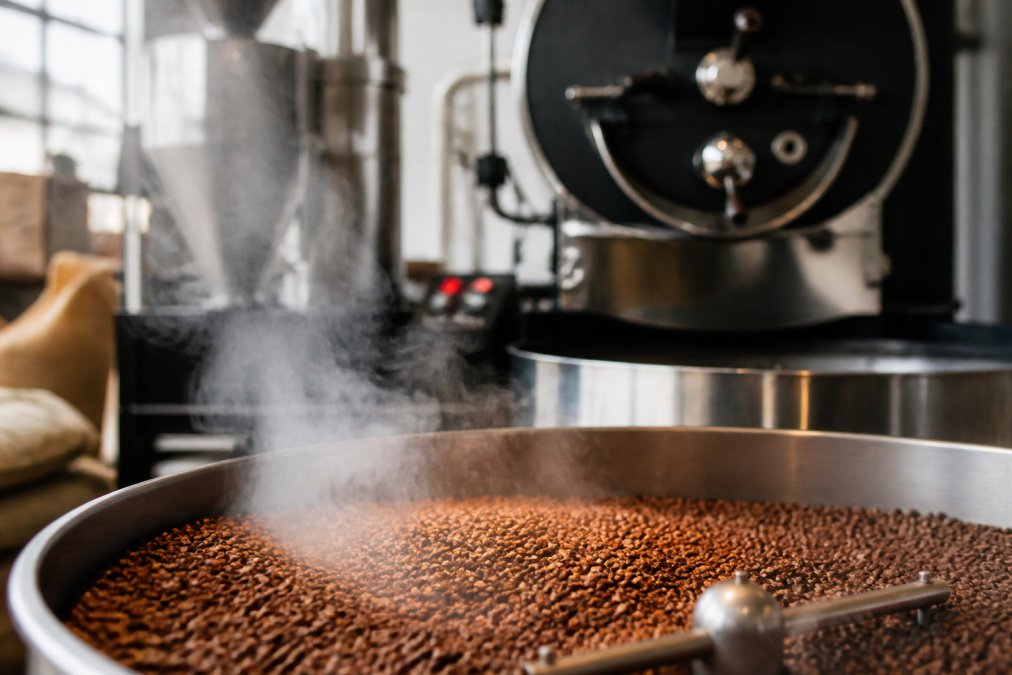
Direct relationships with coffee farmers or cooperatives are the gold standard. When you can name the grower, the altitude, and the processing method, your customers feel the difference in quality and story. Mocha Me Crazy sources carefully selected beans. This specificity builds trust and justifies premium pricing.
Your roasting strategy splits into two paths: roasted-to-order or batch roasting. Roasted-to-order means you roast each customer's beans within 24 hours of shipment, guaranteeing peak freshness. Batch roasting is more efficient but sacrifices the freshness guarantee that subscription customers expect. For a premium coffee subscription, roasted-to-order is the stronger positioning.
If you roast to order, you need accurate demand forecasting. Many subscription services use a rolling forecast: orders placed Monday through Wednesday are roasted Thursday and Friday, shipped Friday or Saturday. This rhythm keeps beans fresh while maintaining predictable operations.
Step 3: Set Price Tiers and Configure Recurring Billing Software for Coffee
Pricing requires balancing bean cost, roasting margin, and customer expectations. If your cost of goods is 25-30% of retail price, your gross margin is 70-75%. From that margin, you cover roasting labor, packaging, shipping, customer acquisition, and platform fees.
Roasted-to-order models can price higher than batch-roasted competitors because freshness has real value. Entry-level subscriptions typically start around $25-35 per month for 8 ounces of a house blend. Mid-tier plans run $40-60 for 12 ounces of single-origin selections. Premium tiers reach $80-120+ for rare roasts shipped weekly.
Mocha Me Crazy's Best Sellers Sample Pack at $26.99 for six 2-ounce packs gives new subscribers a low-risk way to discover preferences. This trial-to-subscription conversion path is critical: many customers won't commit to a full subscription without tasting your coffee first.

Your recurring billing software must handle several non-negotiable features:
- Automated billing on a predictable schedule
- Easy pause and resume functionality without canceling
- Frequency changes (monthly to bi-weekly, etc.)
- One-click cancellation
- Transparent upcoming charge notifications
- Failed payment retry logic with customer notifications
Common platforms include Shopify with Recharge, WooCommerce with Subbly, or dedicated subscription management tools. Your billing system must feel transparent; customers should know exactly when they're being charged and for what.
Step 4: Master Coffee Packaging and Shipping Logistics
Coffee packaging serves two functions: protecting freshness and communicating brand identity. Whole beans oxidize when exposed to light, heat, and air. Your packaging must minimize all three.
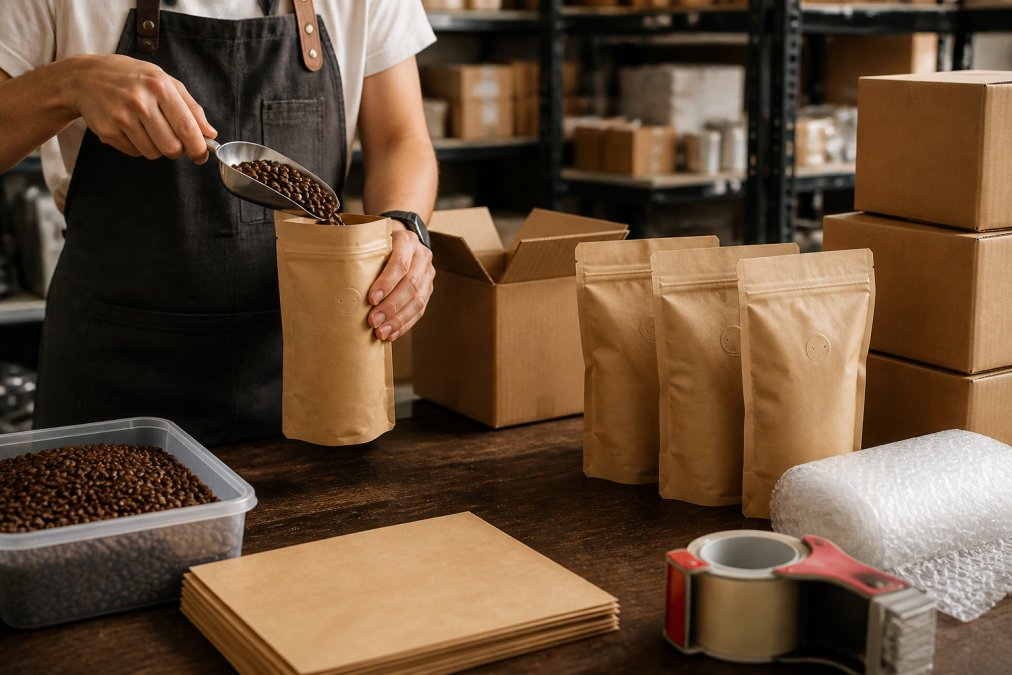
One-way degassing valves are non-negotiable for roasted-to-order coffee. These valves let CO2 escape (which coffee releases for 24-48 hours after roasting) without letting oxygen in. Kraft paper bags with these valves are the industry standard for premium subscriptions.
Bag sizes matter. Eight-ounce bags are the entry-level standard, but 12-ounce and 1-pound options give customers choice. Some subscriptions offer customization: customers select roast level, bean origin, and grind size. This personalization increases perceived value and reduces taste mismatches that drive cancellations.
Your fulfillment must align with your roasting schedule. If you roast Thursday-Friday, ship Friday-Saturday. This timing ensures beans arrive within 5-7 days of roasting, still at peak freshness. Shipping delays are the fastest way to lose a customer.
Whole beans stay fresh longer than pre-ground, but some customers want convenience. A practical approach: default to whole beans, but allow customers to select pre-ground if they prefer.
Packaging sustainability is becoming table stakes. Customers expect recyclable or compostable packaging, especially in the premium segment. Kraft paper bags are recyclable; the one-way valve is typically plastic, a trade-off between freshness and sustainability.
Step 5: Understand FDA Food Labeling Requirements for Coffee
Coffee is a food product regulated by the Food and Drug Administration (FDA). Your packaging must comply with FDA labeling requirements for packaged foods, which mandate specific information on every bag.
Required label elements include:
- Product name ("Medium Roast Colombia Single Origin")
- Net weight (in both ounces and grams)
- Ingredient statement (for roasted coffee, this is simply "Coffee" or "Roasted Coffee Beans"; for flavored varieties, list the flavoring agents)
- Manufacturer name and address
- Nutrition facts panel
- Allergen statements (if applicable)
For single-origin coffees, you can include origin information, altitude, tasting notes, and processing method on the label. This appeals to enthusiasts and justifies premium pricing.
Flavored coffees require additional care. According to FDA guidance on food additives, flavoring agents must be food-grade and properly listed. Mocha Me Crazy's flavored coffees use high-quality flavoring oils. The label must disclose "natural flavoring" or "artificial flavoring" depending on the source.

Avoid health claims unless you can substantiate them. A safer approach is to describe the ingredient (Lion's Mane, Cordyceps, Reishi mushrooms) without making explicit health claims.
Step 6: Reduce Coffee Subscription Churn Rate Strategies
Churn is the silent killer of subscription businesses. A 5% monthly churn rate means you lose half your customer base every 14 months. Reducing churn to 2-3% monthly transforms your business economics.
The biggest churn drivers are taste mismatches, delivery delays, and price sensitivity. Each is preventable.
Taste profiling reduces mismatches. When customers sign up, ask about their brewing method, roast preference, and flavor profile. Do they like bright, fruity coffees or dark, chocolatey ones? Use these inputs to recommend specific origins in their first shipment. Mocha Me Crazy's Sample Packs serve this function: new customers taste multiple options before committing to a recurring subscription, dramatically increasing retention odds.
Personalized recommendations based on past orders also reduce churn. If a customer has ordered three Central American single-origins, recommend a new Central American origin or a blend with similar tasting notes.
Communication matters. Send customers a note before each shipment explaining what they're getting and why. This transforms a transaction into a relationship.
Pause and skip options are essential. A customer who can pause their subscription for a month is more likely to resume than one forced to cancel.
Price increases drive churn. If you must raise prices, do it gradually and with notice. A customer who receives a message explaining the increase is more likely to accept it than one who sees a surprise charge.
| Churn Driver | Symptom | Prevention |
|---|---|---|
| Taste mismatch | Customer cancels after 1-2 shipments | Taste profiling, sample packs before subscription |
| Stale coffee | Customer reports "tastes old" | Roasted-to-order, fast shipping (5-7 days) |
| Price shock | Unexpected charge or rate increase | Clear communication, gradual increases |
| Low engagement | Customer forgets they're subscribed | Email before shipment, personalized recommendations |
| Convenience friction | Hard to pause or change frequency | One-click pause, easy modification options |
Step 7: Launch Your Coffee Subscription Service and Market Your Value Proposition
Your launch strategy depends on whether you're starting from scratch or adding a subscription tier to an existing business. Your value proposition must answer: "Why should I pay more for your coffee than the bag I can buy at Whole Foods?"
The answer is specific: "We roast your beans within 24 hours of shipment, which means you get maximum flavor and aroma in every cup. Beans sitting in a warehouse for weeks lose volatile aromatic compounds that define the coffee's taste."
Your go-to-market strategy should include:
-
Sample pack strategy. Mocha Me Crazy's Best Sellers Sample Pack and Single Origin Favorites Sample Pack at $26.99 each are low-friction entry points. New customers can try multiple origins before committing to a subscription.
-
Email marketing to your existing customer base. If you already sell coffee, your email list is gold. A targeted campaign offering a discounted first month can convert a portion of your list.
-
Content marketing around the subscription experience. Write about the difference between roasted-to-order and batch roasting. Explain how to taste coffee like a professional. Share customer stories about how switching to a subscription changed their morning ritual.
-
Partnerships with complementary brands. Team up with pour-over equipment makers, espresso machine retailers, or coffee equipment subscription boxes.
-
Transparent pricing and no-risk guarantee. Make cancellation easy and advertise it. "Try your first month risk-free. Cancel anytime." This converts skeptics into customers.
Your marketing should emphasize convenience, discovery, and ritual. Remote professionals value knowing fresh coffee arrives on schedule. Enthusiasts appreciate discovering new origins each month. Everyone values eliminating the "oh no, I'm out of coffee" moment.
According to industry research on subscription coffee preferences, customers cite freshness (78%), discovery (62%), and convenience (71%) as top reasons they subscribe.
Setting up a coffee subscription service requires attention to sourcing, roasting, packaging, compliance, and customer retention. The businesses that win aren't the ones with the best beans; they're the ones that deliver consistently fresh coffee, make the subscription experience frictionless, and build a community of customers who view their subscription as part of their daily ritual.
Mocha Me Crazy demonstrates how roasted-to-order positioning creates a defensible advantage. When you roast every order on demand and ship within days, you're not just selling coffee, you're selling the promise of maximum flavor and aroma in every cup. That promise, backed by transparent sourcing and easy subscription management, builds customer loyalty and reduces churn.
Start with business model clarity, nail your sourcing and roasting rhythm, get packaging and compliance right, and obsess over reducing churn. The rest flows from executing those fundamentals well. Ready to launch your subscription? Explore Mocha Me Crazy's Best Sellers Sample Pack or Single Origin Favorites Sample Pack to see how roasted-to-order freshness changes the customer experience.

Frequently Asked Questions
Q: How do I set up recurring billing for a coffee subscription service?
A: Use a subscription management platform like Shopify, Subbly, or Cratejoy that integrates automated billing cycles. Configure your billing frequency (weekly, biweekly, or monthly), set payment retry rules for declined cards, and establish clear cancellation policies. Test your billing flow with a small test order before launch to ensure customers receive confirmation emails and invoices automatically.
Q: What's the best way to reduce churn in a coffee subscription business?
A: Implement coffee subscription churn rate strategies by offering flexible shipping intervals (biweekly, monthly, or custom), allowing customers to pause without canceling, and creating a taste profile system so subscribers receive personalized recommendations. Send re-engagement emails when customers skip orders, offer loyalty discounts for commitments, and gather feedback quarterly. Provide a freshness guarantee, roast-to-order coffee shipped within 24 hours justifies premium pricing and reduces cancellations from customers dissatisfied with stale alternatives.
Q: What are the FDA food labeling requirements for coffee I need to follow?
A: FDA food labeling requirements for coffee mandate that every package display the product name, net weight in ounces or grams, ingredient list (if blended or flavored), manufacturer name and address, and allergen warnings if applicable. Include roast date or best-by date for freshness transparency. If you make health claims (e.g., 'boosts energy'), they must be substantiated. Store your compliance documentation and test reports. Consider consulting a food labeling specialist for flavored or specialty coffees to avoid violations.
Q: How much should I charge for a coffee subscription to stay profitable?
A: Calculate unit economics: if green beans cost $4-6 per pound and roasting adds $1-2, your cost per 12-ounce bag is roughly $4-5. Add packaging ($0.50-1), shipping ($3-5), and platform fees. Price single bags at $18-24 and subscriptions at $15-20 per bag (10-20% discount for recurring orders). This yields 50-60% gross margin. Test pricing with small batches and adjust based on conversion rates and customer feedback before scaling.
This article was written using GrandRanker