

Why Does Store Bought Coffee Taste Bitter? Fix It
Table of Contents
- The Real Reason Store Bought Coffee Tastes Bitter
- The Store-Bought Supply Chain Problem
- How to Tell If Coffee Beans Are Fresh
- How to Store Coffee Beans to Keep Them Fresh
- Brewing Fixes: How to Reduce Bitterness in Coffee
- Should You Switch to Fresher Beans?
- Conclusion
- Frequently Asked Questions
Last Updated: September 5, 2026
The Real Reason Store Bought Coffee Tastes Bitter
Store bought coffee tastes bitter primarily because of over-extraction during brewing, but the deeper culprit is often the age of the beans themselves. When coffee sits on a shelf for months, it undergoes oxidation, which degrades the delicate oils and sugars that create sweetness and complexity. Stale beans lose their aromatic compounds, leaving behind only the harsh, woody compounds that register as a bitter aftertaste on your palate.
At Mocha Me Crazy, we understand the frustration: someone blames their brewing technique, yet the real problem is that they are fighting beans that lost their flavor profile weeks before the bag was opened. Bitterness in coffee is the result of soluble compounds like chlorogenic acid and tannins being pulled into your cup. Fresh beans balance these with natural sugars; stale beans have no such defense. Below, we will show you exactly how to identify stale coffee, fix your brewing variables, and decide whether switching to fresher beans is worth it.
The Store-Bought Supply Chain Problem
The mass-market coffee supply chain is built for shelf life, not flavor. Most commercial beans are roasted in massive batches, then packed into bags that may sit in a warehouse, on a truck, and finally on a grocery store shelf for weeks or months before you buy them.
The Oxidation Timeline
Coffee is at its peak flavor within days of roasting (peer-reviewed research). As time passes, the beans release carbon dioxide and absorb oxygen, accelerating oxidation. This is why a bag from the supermarket often tastes flat and bitter no matter how carefully you brew it. Many brands also use dark roasts because the roasting process itself masks defects from lower-quality beans, but dark roast levels naturally produce more of the carbon-heavy compounds that read as bitter on the tongue.
The Pre-Ground Problem
Ground coffee oxidizes dramatically faster than whole beans. When coffee is ground, the surface area increases exponentially, exposing the delicate oils and aromatic compounds to oxygen. A whole bean might stay reasonably fresh for two to three weeks after roasting. Ground coffee loses its volatile aromatics within days, sometimes within hours if the bag is opened and resealed repeatedly (PubMed).
Most grocery store coffee is pre-ground, which means the oxidation process begins at the roasting facility, not in your kitchen. The coffee you buy has already lost the compounds that create sweetness, acidity, and complexity. What remains are the stable, bitter compounds that survive oxidation. This is why pre-ground grocery coffee tastes bitter even when you brew it perfectly.
The 'Best By' Date Illusion
Grocery store coffee typically carries a 'best by' date rather than a roast date. That date is often set 12 to 18 months after roasting, which tells you nothing about freshness (the FDA). A bag with a 'best by' date 18 months out could have been roasted last week or last year. Without a roast date, you cannot know.
Some specialty brands have started printing roast dates on grocery store bags, but they are the exception. If you see only a 'best by' date, assume the coffee is already past its prime. The flavor window for coffee is roughly two to four weeks after roasting. After that, the beans are not dangerous, they just taste flat, woody, and bitter.
The Dark Roast Masking Effect
Many commercial roasters choose dark roast profiles for a practical reason: dark roasting destroys the volatile compounds that indicate defects in low-quality beans. A dark roast can make a mediocre bean taste uniformly bitter rather than inconsistently sour or vegetal. But dark roasting also produces more phenylindanes, the compounds responsible for harsh, lingering bitterness. The result is a cup that is bitter by design, not by accident.
What This Means for Your Cup
The freshness gap is the single biggest variable separating a memorable cup from a mediocre one. When you buy coffee that was roasted months ago, you are not tasting the origin, the processing method, or the roaster's skill. You are tasting the degradation of those qualities. Understanding this supply chain reality reframes the problem: the bitterness may not be your fault at all.
How to Tell If Coffee Beans Are Fresh
Fresh coffee beans are the foundation of any good brew, and you can assess them without being a professional cupper. The most reliable indicator is the roast date printed on the bag. If you see only a "best by" date, assume the coffee is already past its prime. A bag roasted within the last two to four weeks will still perform well, but the sweet spot is within the first week after roasting.
The aroma test is equally telling. Freshly roasted beans release a potent, sweet fragrance that fills the room when you open the bag. Stale beans smell flat, dusty, or even slightly sour. When you brew fresh coffee, the bloom is dramatic: the grounds swell and bubble as trapped carbon dioxide escapes. If your coffee barely blooms and looks like wet sand, that is a sign the beans are old and the volatile aromatics are gone.
You can also examine the beans themselves. Fresh beans have a matte, oily surface with visible character, while older beans often look dry and dull. Roast level matters here, so compare beans of the same roast when judging appearance. If you are buying whole beans, grind them at home right before brewing, since ground coffee loses its volatile compounds far faster than whole beans.
How to Store Coffee Beans to Keep Them Fresh
Once you have fresh beans, proper storage is what keeps them that way. The enemies of coffee are oxygen, light, heat, and moisture. Exposure to any of these accelerates oxidation and strips away the delicate flavors that counteract bitterness.
The best storage method is an airtight, opaque container kept at room temperature. Keep it away from the stove, the window, and any other heat source. Avoid the refrigerator and freezer for daily-use beans, as the moisture and temperature fluctuations cause condensation that damages the beans and absorbs odors from other foods. Buy whole beans and grind only what you need for each brew to preserve the coffee oils and aromatics for as long as possible.
| Storage Mistake | What Happens | Better Approach |
|---|---|---|
| Clear glass jar on the counter | Light degrades flavor compounds | Use an opaque, airtight container |
| Storing in the fridge | Moisture and odors contaminate beans | Keep at room temperature in a dark spot |
| Buying pre-ground coffee | Oxidation happens rapidly after grinding | Grind whole beans right before brewing |
| Leaving the bag open | Oxygen accelerates staleness | Seal the bag or transfer to a canister |
Brewing Fixes: How to Reduce Bitterness in Coffee
If your beans are reasonably fresh but still taste bitter, the problem is likely in your brewing method. Over-extraction happens when too much water passes through the grounds, pulling out the harsh, bitter compounds that dissolve last. But the fix is not a single lever, it depends on the brewing method you use.
The Chemistry of Over-Extraction
Bitterness in coffee comes from two primary compound families: chlorogenic acid lactones and phenylindanes. Chlorogenic acid lactones form during roasting and extract early in the brew, contributing a pleasant, tea-like bitterness. Phenylindanes form during darker roasts and extract later, contributing a harsh, lingering bitterness. When you over-extract, you are pulling disproportionate amounts of phenylindanes into the cup.
Your grind size determines the surface area exposed to water. A finer grind exposes more surface area, accelerating extraction. If your grind is too fine, water channels through the bed unevenly, over-extracting some grounds while under-extracting others. The result is a cup that tastes both bitter and sour simultaneously, the hallmark of uneven extraction.
Method-Specific Troubleshooting
Drip Machines: Most automatic drip brewers spray water over the grounds in a fixed pattern. If your machine has a single spray head, the grounds in the center extract more than those at the edges. Coarsen your grind slightly and ensure the basket is level. Also check the shower head for mineral buildup, scale restricts water flow and extends brew time.
French Press: The immersion method extracts continuously until you press the plunger. Bitterness here usually comes from steeping too long. The standard protocol is four minutes, but if your coffee tastes bitter, reduce to three minutes and coarsen your grind. The metal mesh filter also lets fine particles through, which continue extracting in your cup as you drink. Pour your French Press coffee through a paper filter if you want to eliminate that sediment-driven bitterness.
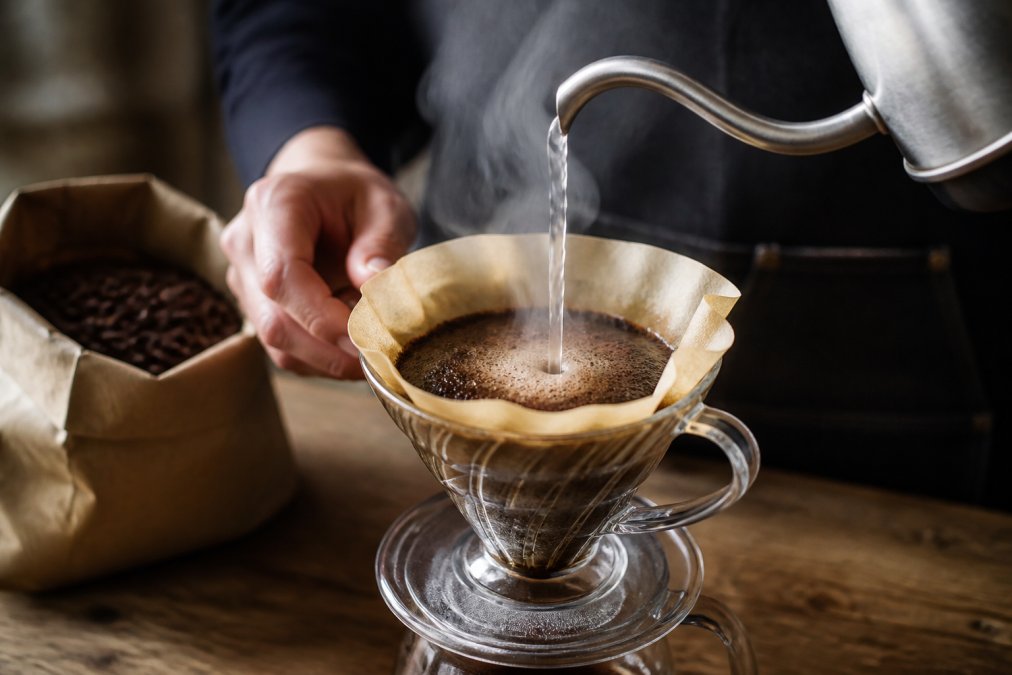
Pour Over: This method is the most sensitive to technique. The pour rate, height, and pattern all affect extraction. A common mistake is pouring too aggressively, which agitates the grounds and extends contact time. Use a gooseneck kettle and pour in slow, concentric circles. Keep the total brew time between 2:30 and 3:30 for a standard 12-ounce brew. If your coffee tastes bitter, your total time is likely running long, coarsen your grind and maintain a steady, gentle pour.
Espresso: If you are pulling bitter shots, the issue is usually a combination of grind size and dose. A bitter shot often means the water is channeling through the puck, over-extracting parts of the coffee. Coarsen your grind slightly and ensure you are tamping evenly. Your shot should take 25 to 30 seconds to yield about 2 ounces. If it runs longer, the grind is too fine.
Water Chemistry: The Overlooked Variable
Water is 98 percent of your cup, yet most guides ignore its chemistry. Total dissolved solids (TDS) and pH directly affect extraction. Water with very low TDS, below 100 parts per million, under-extracts coffee, producing sour, weak flavors. Water with very high TDS, above 250 parts per million, over-extracts, pulling out bitter compounds aggressively. If your tap water is hard, you may be fighting a losing battle regardless of grind size.
A simple fix is to use filtered water. Most pitcher filters reduce chlorine and moderate mineral content without stripping everything out. If you want precision, look for water specifically formulated for coffee brewing, which typically targets a TDS around 150 parts per million and a pH near 7.0. The difference is subtle but measurable: coffee brewed with balanced water tastes sweeter and rounder, with bitterness receding into the background.
Work Through These Variables One at a Time
- Coarsen your grind slightly and brew again.
- Check your water temperature stays between 195 and 205 degrees Fahrenheit.
- Confirm you are using the correct brew ratio for your method.
- Clean your brewer thoroughly, including the filter basket and carafe.
- Rinse your paper filter with hot water before adding coffee grounds.
- Test your water with a simple TDS meter if bitterness persists despite other fixes.
Should You Switch to Fresher Beans?
You can fix grind size, adjust water temperature, and clean your equipment, but you cannot restore flavor to beans that were stale before you opened the bag. If your store bought coffee consistently tastes bitter despite your best brewing efforts, the beans themselves are the limiting factor. Fresher beans are more forgiving of minor brewing mistakes because their natural sweetness and acidity mask small errors in extraction.
Roasted-to-order coffee changes the equation. When beans are roasted on demand and shipped quickly, you receive them in their optimal window, with the full flavor profile intact. The difference is most obvious in the cup: a smooth finish, genuine sweetness, and tasting notes that actually match the bag's description. For many coffee drinkers, this shift eliminates the bitterness problem entirely without demanding they become expert brewers.
The practical test is simple. Buy the freshest beans you can find, note the roast date, and brew them using your current method. If the bitterness disappears or drops dramatically, freshness was your issue all along. If you still taste harshness, you know to refine your brewing technique next.
Conclusion
Bitter store bought coffee is rarely a single mistake; it is usually the combination of stale beans and brewing variables working against you. Start by checking the roast date and storage conditions, then adjust your grind size, water temperature, and equipment cleanliness. These steps resolve most bitterness complaints without any change to your shopping habits.
For those who want to eliminate the freshness variable completely, roasted-to-order coffee removes the guesswork. Mocha Me Crazy roasts every order on demand, so your beans arrive in their flavor window rather than after months of warehouse storage. Our carefully sourced blends are crafted for maximum flavor and aroma, with a simple ordering process that delivers freshness to your door. Get started with Mocha Me Crazy and taste what your coffee is supposed to be.
Frequently Asked Questions
Is it normal for coffee to taste bitter?
Some bitterness is natural in coffee, but it shouldn't be the dominant flavor. Bitterness comes from compounds like chlorogenic acid and caffeine that are released during extraction. A balanced cup has sweetness and acidity to offset the bitter notes. If your coffee tastes overwhelmingly bitter, it's usually a sign of over-extraction, stale beans, or water that's too hot. Fixing your grind size and water temperature will reduce bitterness significantly.
Does the roast level affect coffee bitterness?
Yes. Dark roasts taste more bitter because the roasting process breaks down sugars and creates new bitter compounds. However, a dark roast's bitterness is different from the harsh, sour bitterness of stale or over-extracted coffee. If you're sensitive to bitter taste, a light or medium roast like our House Blend offers a smoother, brighter profile with less bitterness. The roast date matters more than the roast level for avoiding unpleasant flavors.
How does oxidation affect the flavor of store-bought coffee?
Oxidation is the main reason store-bought coffee tastes bitter. Once coffee beans are roasted, they begin reacting with oxygen in the air. This process degrades the delicate oils and compounds that create sweet, complex flavors. The beans go stale, and bitter flavors become more prominent. Most store-bought coffee sits in warehouses and on shelves for months before you buy it. Coffee roasted to order, like ours at Mocha Me Crazy, skips that stale window entirely.
How do I fix coffee that tastes bitter?
Start with your grind size. If your coffee tastes bitter, your grind is likely too fine, causing over-extraction. Make it coarser. Next, check your water temperature; it should be between 195-205°F. Water that's too hot will scorch the grounds. Finally, check your brew ratio. Use about 1-2 tablespoons of coffee per 6 ounces of water. If those fixes don't work, your beans might be stale. Try a fresher roast to see an immediate difference.
This article was written using GrandRanker