

La Colombe Alternatives for Home Brewing
Table of Contents
- Why Home Brewers Switch From La Colombe
- How to Tell if Coffee Beans Are Fresh
- Best Coffee Beans for Cold Brew at Home
- DIY Home-Frothing Techniques for Cold Brew
- Cost-Per-Serving Breakdown: Canned vs. Home Brewed
- Flavor Profile Comparison: What Sets Alternatives Apart
- Dietary-Specific Alternatives
- Conclusion
Last Updated: August 25, 2026
Why Home Brewers Switch From La Colombe
Most coffee enthusiasts reach a breaking point with canned cold brew. The convenience is real, but the freshness isn't. By the time a bottled product reaches your kitchen, the beans have been sitting in a warehouse for weeks, sometimes months. The flavor flattens. The aroma disappears. You're paying premium prices for something that tastes like it's been waiting.
This is where the la colombe alternative for home brewing conversation starts. Home brewers who've invested in quality beans and proper technique don't want to backtrack to mass-produced options. They want control over freshness, flavor profile, and cost. They want cold brew that tastes like it was made yesterday, not six months ago.
At Mocha Me Crazy, people discover that roasting-to-order beans fundamentally change what's possible in a cold brew setup. The difference isn't subtle. Fresh whole beans retain the oils, aromatics, and complexity that give cold brew its body and mouthfeel. Stale beans produce thin, bitter liquid.

The real reasons home brewers abandon canned alternatives come down to three things: control, freshness, and economics. When you brew at home with freshly roasted beans, you're not paying for packaging, distribution, and retail markup. You're paying for the coffee itself. That math shifts everything.
How to Tell if Coffee Beans Are Fresh
Fresh coffee beans are the foundation of any cold brew that tastes like it should. But freshness isn't obvious at a glance. You need to know what to look for.

Signs of Freshness in Whole Bean Coffee
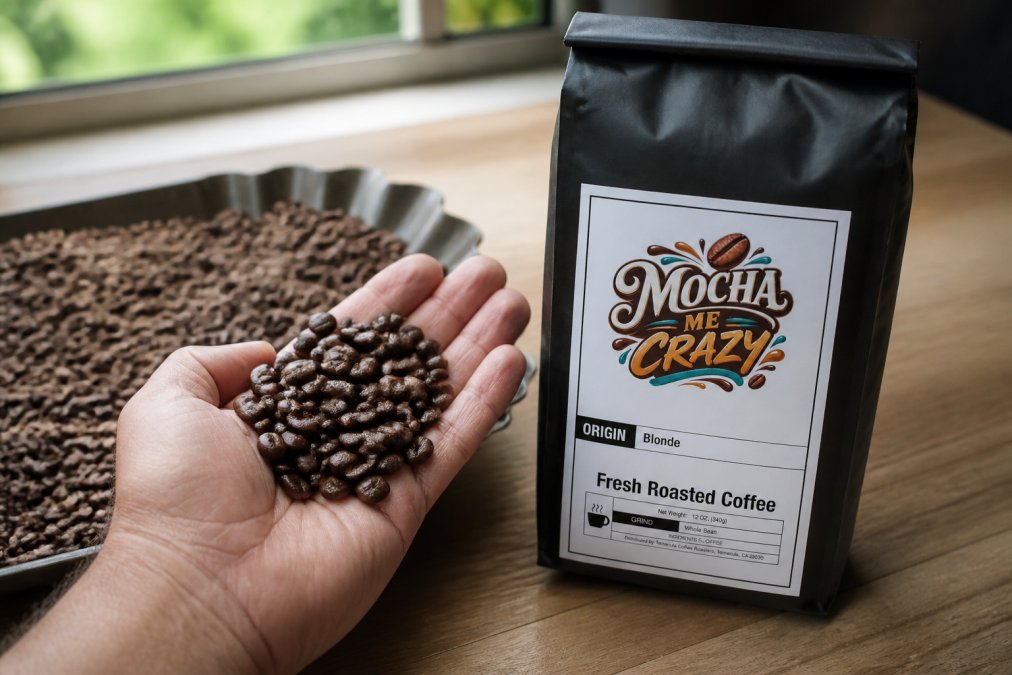
The most reliable indicator of freshness is the roast date. Look for a printed or stamped date on the bag, not a "best by" date, but the actual date the beans were roasted. Beans roasted within the last two weeks are ideal for cold brew. After four weeks, the flavor begins to noticeably decline. After eight weeks, you're working with stale coffee (peer-reviewed research).
Beyond the date, visual cues matter. Fresh beans have a slight sheen from residual oils. The color should be rich and even, dark roasts appear nearly black, medium roasts show brown tones, light roasts look tan or cinnamon-colored. Beans that look dull or grayish have oxidized and lost flavor compounds.
Smell is another quick test. Open a bag of fresh beans and you should detect a strong coffee aroma, clean, complex, sometimes with hints of chocolate, nuts, or fruit depending on the roast. Stale beans smell flat or musty. If there's no aroma, the beans have been sitting too long.
Roast Date vs. Brew Date
The roast date matters more than you'd think. Beans actually improve slightly in the first 3-5 days after roasting as CO2 continues to escape and flavors settle (peer-reviewed research). This is why the best cold brew uses beans that are at least a few days old but no older than 3-4 weeks.
Some home brewers make the mistake of brewing immediately after receiving fresh beans. The coffee will taste sharp and underdeveloped. Wait a week. The flavor rounds out. The extraction becomes cleaner. Then you have a 2-3 week window where the beans are in their prime for cold brew.
Track your brew dates too. Cold brew concentrate stays fresh in the refrigerator for about two weeks. After that, oxidation accelerates and the flavor deteriorates (the FDA). Make smaller batches more frequently rather than one massive batch that sits for a month.
Best Coffee Beans for Cold Brew at Home
Not all beans are created equal for cold brew. The immersion brewing method extracts differently than espresso or pour-over, which means certain roast levels and bean origins perform better.
Roast Levels That Work Best
Medium and dark roasts are the workhorses of cold brew. Light roasts can work, but they require more precision and tend to produce thinner body and higher acidity, which some people prefer, but most don't for cold brew.
Dark roasts deliver the creamy consistency and smooth flavor profile that defines good cold brew. The longer roasting time breaks down acids and develops deeper, more stable flavor compounds. A French roast or full city roast creates that rich, full-bodied cup with low acidity.
Medium roasts offer a middle ground. They retain more origin character than dark roasts, you'll taste more of the bean's terroir, the growing region's influence, while still providing good body and balanced sweetness. A medium roast works particularly well if you're using cold brew to make cold brew lattes or adding milk.
The grind size matters too. Cold brew requires a coarse grind, similar to French press consistency. Fine grinds over-extract during the long steeping period and create bitterness. Coarse grounds slow extraction and produce cleaner, sweeter results.
Mocha Me Crazy Cold Brew Blends
The Mocha Me Crazy Cold Brew Coffee is specifically engineered for immersion brewing. It's a dark French roast with coarse grounds, no additives, just 100% coffee. The blend emphasizes the smooth, low-acid character that makes cold brew approachable even for people with sensitive stomachs.
For a slightly lighter touch, the Cold Brew Coffee medium blend offers smooth chocolate, toffee, and floral tones. It's designed for both cold brew and nitro applications, giving you flexibility in how you use it.
If you're building a cold brew routine, the Latin American Blend at $24.99 provides nutty hints with mild fruity tones and a gentle cocoa aftertaste. The shade-grown, environmentally friendly processing means you're getting quality beans without the industrial footprint of mass-produced alternatives.

DIY Home-Frothing Techniques for Cold Brew
The creamy, frothy texture of a nitro cold brew or a frothed cold brew latte is achievable at home without expensive equipment. You have several options depending on your budget and preference.
The simplest method uses a handheld milk frother, the same tool used for lattes. Fill a glass halfway with cold brew, add your milk or dairy alternative (oat milk works exceptionally well), and froth for 30-45 seconds. The frother creates micro-foam by introducing air into the liquid. The result is a creamy, smooth texture that mimics what you'd get from a café nitro tap.
A French press offers another approach. Pour cold brew and milk into the press, pump the plunger up and down vigorously for 20-30 seconds, then pour into your cup. This creates larger bubbles and a foamier head, more like a traditional cappuccino.
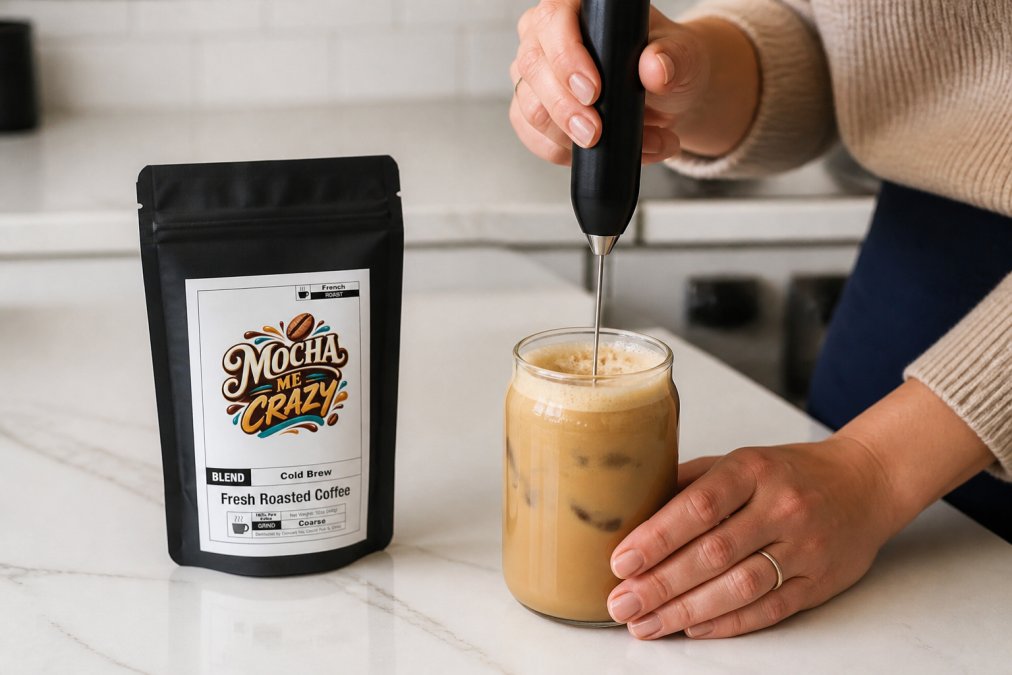
For a more involved approach, an immersion blender works well. Combine cold brew and milk in a tall glass, insert the blender, and pulse for 10-15 seconds. The blender creates fine, stable foam. This method requires more cleanup but produces professional-quality texture.
The key variable across all methods is temperature. Cold milk froths differently than room-temperature milk. Experiment with your preferred milk at different temperatures to see which produces the texture you want. Oat milk and other plant-based options often froth better than dairy milk because of their fat and protein structure.
Cost-Per-Serving Breakdown: Canned vs. Home Brewed
The economics of home brewing versus buying canned cold brew shift dramatically once you do the math.
A typical canned cold brew costs between $3 and $5 per bottle, depending on the brand and where you buy it. That's roughly 12-16 ounces. Over a week of daily consumption, you're spending $21 to $35.
Home brewing with freshly roasted beans costs significantly less. A bag of quality beans at $24.99 yields approximately 40-50 servings of cold brew concentrate, depending on your brewing ratio. That works out to roughly $0.50 to $0.62 per serving before milk or additions. Even if you add oat milk at $0.30 per serving, you're at under $1 per finished drink.
The break-even point happens in your first week. By week two, the savings compound. Over a month, home brewing costs roughly $20-30 for daily cold brew versus $84-140 for canned alternatives. That's a $50-110 monthly difference.
The hidden cost in canned products is freshness loss. You're paying for a product that's already lost flavor and aroma. With home brewing, you're capturing the peak window of freshness, which means better taste per dollar spent.
Flavor Profile Comparison: What Sets Alternatives Apart
The sensory difference between fresh home-brewed cold brew and canned alternatives is immediate and obvious.
Canned cold brew typically tastes flat, the acidity is muted, the aromatics are gone, and the body feels thin. The flavor leans toward generic "coffee" rather than the specific characteristics of the beans used. This happens because cold brew concentrate loses volatile compounds during storage and shipping.
Fresh home-brewed cold brew has presence. You taste the origin, the terroir of the beans. A Latin American blend shows nutty, chocolatey notes. An African blend brings brightness and subtle fruit. The body is fuller, the mouthfeel is creamy, and the finish is clean rather than bitter.
Caffeine Content and Extraction Methods
Cold brew extraction is different from hot brewing, which affects caffeine content. Cold water extracts caffeine more slowly than hot water, but the long steeping time (12-24 hours) means cold brew typically contains slightly more caffeine than hot coffee of the same strength.
A typical cup of hot coffee contains roughly 95-200 mg of caffeine depending on brew method and strength. Cold brew concentrate, when diluted at a standard ratio, delivers similar caffeine levels, usually in the 150-240 mg range per 8-ounce serving. The difference is that cold brew's caffeine hits more gradually because you're consuming it cold, which slows absorption slightly.
The extraction method also determines flavor clarity. Hot water extraction pulls more oils and fine particles, creating body but sometimes muddiness. Cold water extraction is cleaner, you get the flavor compounds without the sediment. This is why cold brew tastes brighter and less bitter than hot coffee made from the same beans.
Mouthfeel and Creamy Consistency
Mouthfeel is where home-brewed cold brew excels. Fresh beans retain their oils, which create a naturally creamy texture. When you add milk or a dairy alternative, the combination produces that luxurious, full-bodied sensation that makes cold brew feel indulgent.
Canned products often feel thin by comparison because the oils have oxidized during storage. They've lost the viscosity that gives cold brew its characteristic body. Even adding milk doesn't fully compensate for this loss.
The texture also depends on grind size and steeping time. Coarser grinds with longer steep times (18-24 hours) produce smoother, creamier results than finer grinds with shorter times. Home brewers control these variables. Canned producers optimize for shelf stability, not flavor.
Dietary-Specific Alternatives
Not everyone can drink regular coffee. Sensitivity, allergies, or personal preference create demand for alternatives that deliver similar energy and ritual without the drawbacks.
For people with caffeine sensitivity, brewing a shorter steep time (8-10 hours instead of 18-24) reduces caffeine extraction while maintaining flavor. You get a gentler caffeine hit with the same taste profile.
For those with digestive sensitivity, freshly roasted cold brew is often gentler than hot coffee or canned alternatives. The lower acidity and slower caffeine absorption mean fewer stomach irritations. The freshness matters here, stale beans develop compounds that trigger sensitivity more easily.
Dairy-free options are straightforward. Oat milk, almond milk, or coconut milk all work well in cold brew. Oat milk froths best and creates the creamiest texture. Many home brewers find they prefer oat milk in cold brew even if they drink dairy milk in hot coffee.
For those avoiding caffeine entirely, cold brew concentrate can be made from decaf beans. The brewing method and freshness still matter, decaf cold brew from fresh beans tastes significantly better than decaf from stale beans or canned decaf products.
| Dietary Need | Best Approach | Key Consideration |
|---|---|---|
| Caffeine sensitivity | Shorter steep (8-10 hours) | Reduces extraction without losing flavor |
| Digestive sensitivity | Fresh beans, cold brew method | Lower acidity than hot coffee |
| Dairy-free | Oat milk or plant-based milk | Froths well, creamy texture |
| Caffeine-free | Decaf beans, standard brew | Freshness still critical |
| High caffeine need | Longer steep (20-24 hours) | Maximizes extraction |
Conclusion
The shift from canned cold brew to home brewing isn't about being precious or overly committed. It's about economics and taste. Fresh beans cost less per serving, taste noticeably better, and give you control over the final product. You're not paying for packaging or months of storage. You're paying for coffee.
Mocha Me Crazy's roasted-to-order approach eliminates the freshness gap that makes canned alternatives taste flat. The Cold Brew Coffee blend is specifically formulated for immersion brewing, coarse grounds, dark roast, zero additives. You get maximum flavor and aroma in every cup, with beans roasted within days of arrival. Start with a single bag and see the difference freshness makes. Your morning ritual will thank you.
Frequently Asked Questions
Q: How do I know if my cold brew coffee beans are actually fresh?
A: Fresh coffee beans have a glossy surface with visible oils, especially in dark roasts, and release aroma when you open the bag. Check the roast date on the label, beans roasted within 2-4 weeks are ideal for cold brew. Stale beans look dull and won't produce the rich body and smooth mouthfeel that make cold brew special. Mocha Me Crazy roasts every order on demand, so your beans arrive at peak freshness.
Q: What are the best coffee beans for cold brew at home?
A: Dark and medium-dark roasts work best for cold brew because they develop lower acidity levels and create a naturally smooth, creamy consistency. Look for beans with tasting notes like chocolate, toffee, or cocoa rather than bright fruity profiles. Coarse grounds are essential, they slow extraction and prevent over-steeping. Mocha Me Crazy's Cold Brew blend is specifically formulated for this method with a dark French roast and coarse grind, designed to deliver that café-quality taste every time.
Q: Is freshly roasted coffee really worth the extra cost compared to store-bought cold brew?
A: Yes, when you calculate cost-per-serving. A $24.99 bag of freshly roasted beans makes approximately 40-50 servings of cold brew concentrate, working out to about $0.50 to $0.62 per serving before milk or additions. Store-bought canned cold brew typically costs $3-$5 per serving. Beyond price, freshly roasted beans deliver superior flavor profile, better body and viscosity, and no artificial additives. The freshness also means better extraction, so you get more value from every ounce.
Q: Can I make frothy cold brew at home without buying pre-made canned versions?
A: Absolutely. Use a handheld milk frother with your choice of dairy or non-dairy milk, oat milk creates the best micro-foam and pairs well with cold brew's natural sweetness. Froth for 30-45 seconds until you see a thick layer of bubbles, then pour over your cold brew concentrate. This DIY approach costs less than half of pre-made nitro cold brew and gives you control over the frothy texture, sweetness balance, and milk choice.
This article was written using GrandRanker